
Ball Mill vs Vertical Mill: Particle Size Distribution and Grinding Efficiency
We provide a wide range of mills — including Raymond mill, trapezoidal mill, vertical mill, ultrafine mill, and ball mill, obtained ISO9001 international quality certification, EU CE certification, and Customs Union CU-TR certification. Suitable for processing minerals such as limestone, phosphate, quicklime, kaolin, talc, barite, bentonite, calcium carbonate, dolomite, coal, gypsum, clay, carbon black, slag, cement raw materials, cement clinker, and more.
The discharge range of these mills can be adjusted to meet specific processing needs, typically from 80-400 mesh, 600-3250 mesh, and can achieve the finest particle size of up to 6000 mesh(D50).
If you are looking for a reliable grinding solution to turn stone or minerals into fine powder, please feel free to contact our online customer service.
Ball Mill vs Vertical Mill: Particle Size Distribution and Grinding Efficiency
The choice between a ball mill and a vertical roller mill (VRM) is a critical decision in mineral processing and many other grinding-intensive industries. Each technology offers distinct advantages in terms of particle size distribution (PSD), energy consumption, operational costs, and overall efficiency. Understanding these differences is key to optimizing a plant’s performance and profitability.
Fundamental Operational Differences
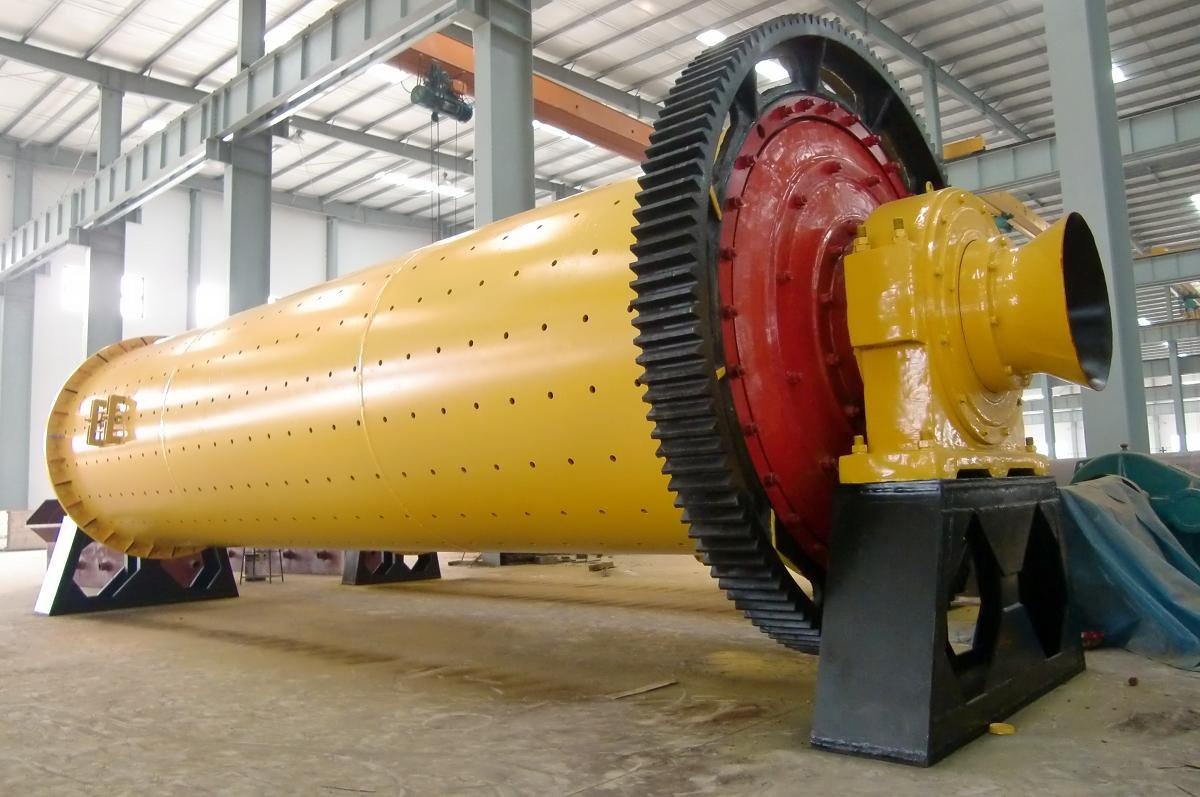
Ball mills are horizontal rotating cylinders filled with grinding media, typically steel balls. The material is crushed and ground by the impact and attrition created as the mill rotates. This method is well-established and reliable but is often characterized by higher energy consumption, broader particle size distributions, and significant heat generation.
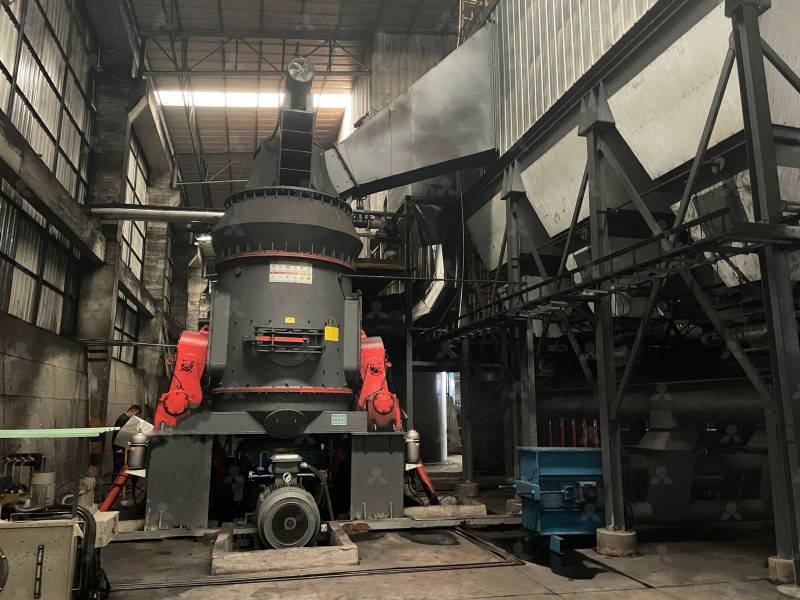
In contrast, Vertical Roller Mills employ a bed-compaction principle. Material is fed onto a rotating grinding table and is crushed under hydraulic pressure by grinding rollers. The ground material is then transported by an air stream to a high-efficiency classifier. This process is inherently more efficient, as it applies pressure directly to the material bed rather than relying on the random impact of tumbling balls.
Key Performance Comparison: PSD and Efficiency
The most significant advantage of a VRM is its superior energy efficiency. By grinding and classifying in a single unit and utilizing a more efficient grinding mechanism, VRMs can reduce specific energy consumption by 30% to 50% compared to a traditional ball mill. This translates directly to lower operating costs.
Furthermore, VRMs offer superior control over the particle size distribution. The integrated dynamic classifier allows for precise cuts and a steeper PSD curve, resulting in a more consistent product with fewer ultra-fines or oversize particles. This is crucial for applications where product fineness and uniformity directly impact downstream processes or final product quality.
Introducing a Superior Solution: The MW Ultrafine Grinding Mill
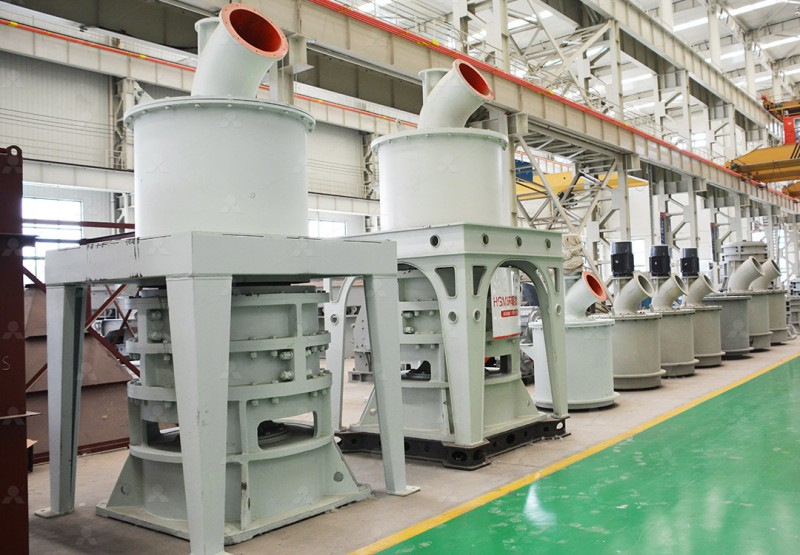
For operations requiring ultra-fine powders with exceptional consistency, the traditional ball mill versus VRM debate is elevated by a third, more advanced option. Our MW Ultrafine Grinding Mill is engineered for customers who need to produce high-quality ultra-fine powder efficiently.
This machine excels where others fall short. It achieves an adjustable fineness between 325-2500 meshes with a precise screening rate of d97≤5μm in a single pass, thanks to its advanced German-designed cage-type powder selector. More importantly, it delivers this precision with higher yield and lower energy consumption—production capacity is 40% higher than jet mills and twice that of ball mills, while system energy use is only 30% of a jet mill’s.
Its innovative design eliminates rolling bearings and screws in the grinding chamber, removing common failure points and enabling external lubrication without shutdown for true 24/7 continuous operation. Coupled with an efficient pulse dust collector and muffler, the MW Mill ensures an eco-friendly production process that meets national environmental standards.
Conclusion
While ball mills remain a viable option for certain applications, Vertical Roller Mills represent a leap forward in grinding technology, offering unparalleled efficiency and control. For the most demanding ultra-fine grinding applications, the MW Ultrafine Grinding Mill stands as the pinnacle of performance, combining energy savings, operational reliability, and superior product quality in a single, robust package.
Frequently Asked Questions (FAQ)
- Q: Can a Vertical Mill handle the same feed size as a Ball Mill?
A: Typically, VRMs require a finer feed (often <10-20mm) compared to some ball mills, necessitating more pre-crushing. Our MW Mill accepts a feed size of 0-20mm. - Q: Which mill type offers a narrower Particle Size Distribution?
A: Vertical Mills, with their integrated dynamic classifiers, generally provide a tighter and more controllable PSD compared to the broader distribution often produced by ball mills. - Q: Is the maintenance more complex on a Vertical Mill?
A: While VRM components like rollers and tables are heavy, designs like our MW Mill feature maintenance-friendly designs. The absence of internal bearings and screws and the ability to lubricate externally significantly simplify upkeep and reduce downtime. - Q: For ultra-fine grinding (<10μm), which technology is preferred?
A: Specialized ultra-fine mills like our MW Ultrafine Grinding Mill are specifically designed for this purpose, offering far greater efficiency and control than a ball mill could achieve in this fineness range.