
Activation Process for Producing Active Calcium Carbonate Powder
We provide a wide range of mills — including Raymond mill, trapezoidal mill, vertical mill, ultrafine mill, and ball mill, obtained ISO9001 international quality certification, EU CE certification, and Customs Union CU-TR certification. Suitable for processing minerals such as limestone, phosphate, quicklime, kaolin, talc, barite, bentonite, calcium carbonate, dolomite, coal, gypsum, clay, carbon black, slag, cement raw materials, cement clinker, and more.
The discharge range of these mills can be adjusted to meet specific processing needs, typically from 80-400 mesh, 600-3250 mesh, and can achieve the finest particle size of up to 6000 mesh(D50).
If you are looking for a reliable grinding solution to turn stone or minerals into fine powder, please feel free to contact our online customer service.
Activation Process for Producing Active Calcium Carbonate Powder
The production of high-quality active calcium carbonate powder is a sophisticated process that transforms raw limestone into a versatile, value-added material with enhanced properties. Unlike standard ground calcium carbonate (GCC), active calcium carbonate undergoes a surface modification process, typically involving stearic acid or other coupling agents, which renders it hydrophobic and improves its compatibility with polymer matrices. This activation is critical for applications in plastics, rubber, sealants, and paints, where the powder acts as more than just a filler—it becomes a functional reinforcement agent. The journey from quarry to premium powder hinges on two core stages: precise ultrafine grinding and controlled surface activation.
The Critical Role of Ultrafine Grinding
Activation efficiency is intrinsically linked to particle size and surface area. A larger, more reactive surface area allows for more uniform and effective coating of the modifying agent. Therefore, the initial comminution step is not merely about size reduction; it is about creating the optimal particle morphology for subsequent chemical treatment. The grinding mill must produce a consistent, narrow particle size distribution with minimal contamination. Traditional ball mills often struggle with high energy consumption, broad particle distribution, and potential iron contamination, which can adversely affect the whiteness and chemical purity of the final product.
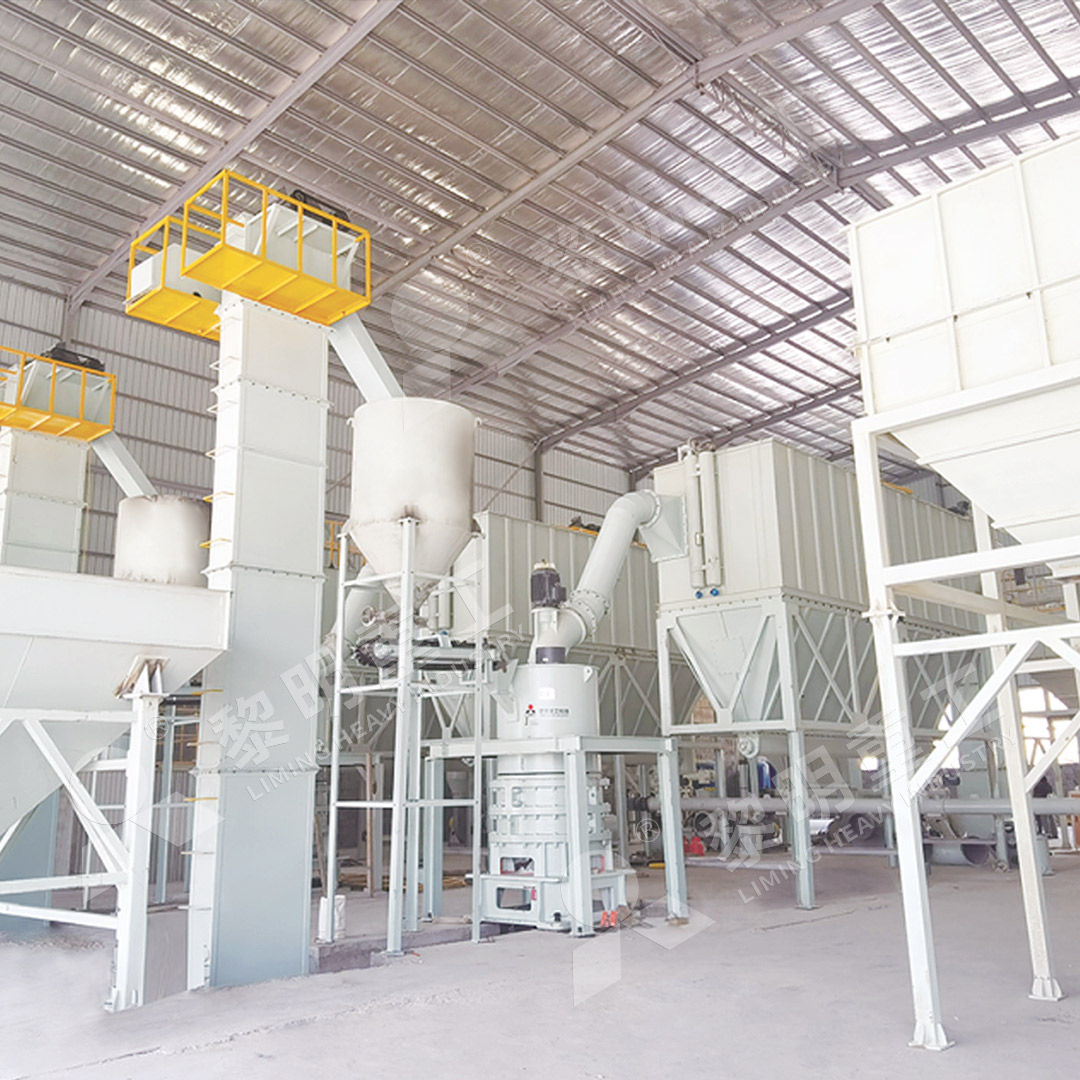
This is where advanced grinding technology makes a decisive difference. For operations targeting the high-end active calcium carbonate market, the MW Ultrafine Grinding Mill presents a compelling solution. Engineered for precision, this mill features a cage-type powder selector based on German technology, enabling precise fineness adjustment between 325 and 2500 meshes. Its unique design, with no rolling bearings or screws in the grinding chamber, eliminates common failure points and prevents iron pollution from mechanical wear—a crucial factor for maintaining product purity. Furthermore, its higher yield and 30% lower system energy consumption compared to jet mills translate directly into improved production economics.
The Surface Activation Stage
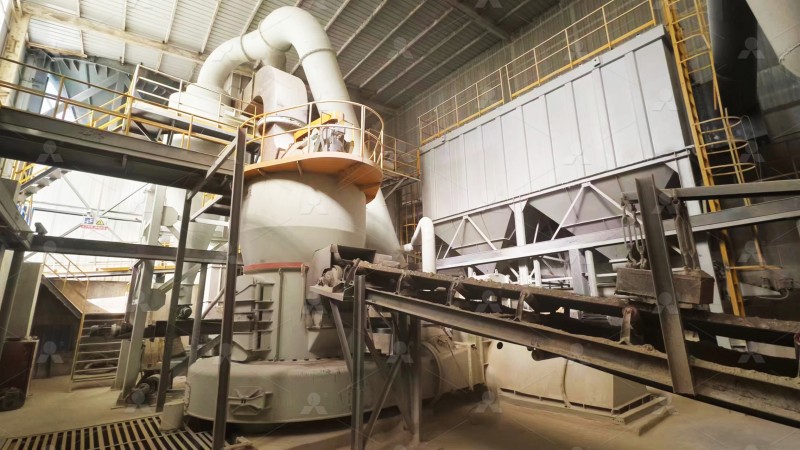
Following ultrafine grinding, the dry powder is introduced into a high-speed mixer or reactor, often a heated plough-share or paddle mixer. Here, the surface modifier—commonly a heated stearic acid emulsion or titanate coupling agent—is sprayed onto the vigorously agitated powder. The mechanical energy and heat facilitate the chemical reaction where the hydrophilic head of the stearic acid molecule bonds to the calcium carbonate surface, leaving the hydrophobic tail oriented outward. This process must be meticulously controlled; insufficient modifier leads to incomplete coverage and poor performance, while excess modifier can cause agglomeration and waste.
Integration and Final Processing
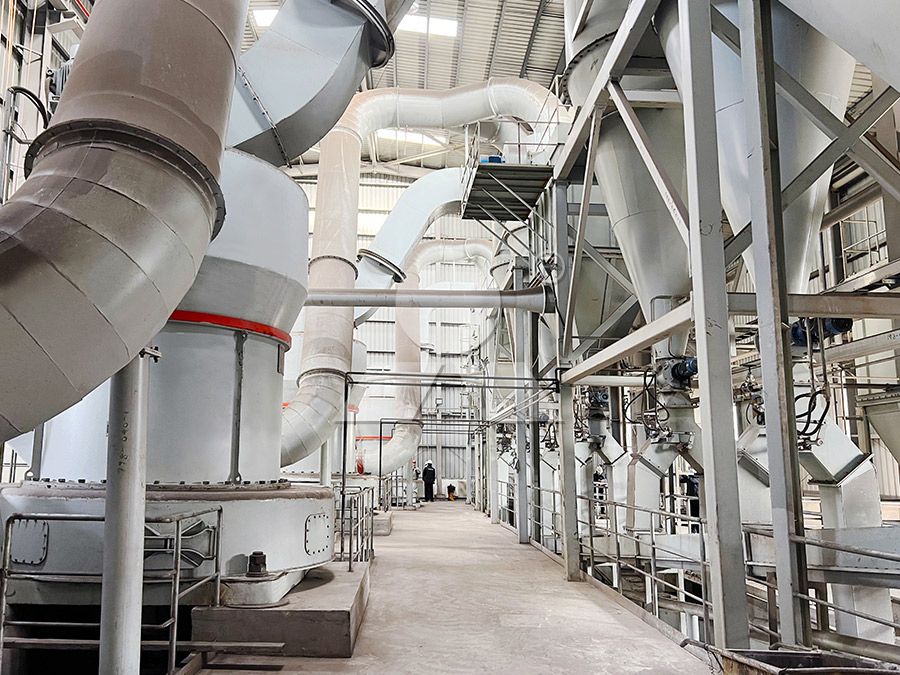
The activated powder is then cooled and often subjected to a final, gentle de-agglomeration step to break up any soft aggregates formed during coating. A final precision classification may be used to ensure the target particle size distribution is met. For producers looking to streamline their entire process from raw material to packaged active powder, a vertical grinding system offers remarkable integration. The LUM Ultrafine Vertical Grinding Mill is particularly noteworthy. Integrating grinding, classifying, and conveying, it employs multi-head powder separating technology and a unique roller shell design that promotes efficient grinding with very low iron content. Its reversible structure allows for easy maintenance of grinding rollers, minimizing downtime. The ability to accurately control grinding parameters ensures the consistent feedstock quality that the activation stage demands.
Conclusion: A Symphony of Precision Engineering
Producing premium active calcium carbonate is a testament to precision process engineering. It requires not only an understanding of surface chemistry but also access to grinding equipment capable of delivering ultra-pure, consistently fine powder with high efficiency. Investing in the right milling technology, such as the MW or LUM series mills, establishes a robust foundation for the entire activation line, ensuring product quality, operational reliability, and long-term competitiveness in the specialty chemicals market.
Frequently Asked Questions (FAQs)
- What is the key difference between ordinary and active calcium carbonate?
Ordinary calcium carbonate is a simple filler. Active calcium carbonate has its surface chemically modified (e.g., with stearic acid), making it hydrophobic and allowing it to bond better with polymers, thereby improving mechanical properties like strength and impact resistance in composites. - Why is ultrafine grinding so important before the activation step?
Ultrafine grinding increases the specific surface area of the particles exponentially. A larger, cleaner surface area allows for more complete and uniform coating by the surface modifier, leading to higher activation efficiency and superior final product performance. - How does the MW Ultrafine Grinding Mill help maintain product whiteness?
The MW Mill’s design eliminates rolling bearings and screws in the grinding chamber, drastically reducing the risk of iron contamination from mechanical wear. This preserves the natural whiteness of the limestone, which is a critical quality parameter. - Can the same mill be used for both grinding and the activation reaction?
No. Grinding and activation are separate unit operations. A mill like the MW or LUM is used for dry, mechanical size reduction. Activation requires a separate heated mixer/reactor where the powder and liquid modifier are intensively blended under controlled conditions. - What are the main advantages of a vertical mill like the LUM for this process?
Vertical mills like the LUM offer integrated drying, grinding, and classification in a compact footprint. They provide stable product quality with low iron content, high energy efficiency, and easier maintenance—all factors that contribute to a reliable and cost-effective feedstock supply for activation. - What particle size (mesh) is typically targeted for active calcium carbonate?
While it varies by application, active calcium carbonate is often produced in the range of 800 to 2500 meshes (approximately 18 to 5 microns). Finer particles provide greater surface area for modification and reinforcement effects.