
ACM Vertical Mill for Powder Coating Production
We provide a wide range of mills — including Raymond mill, trapezoidal mill, vertical mill, ultrafine mill, and ball mill, obtained ISO9001 international quality certification, EU CE certification, and Customs Union CU-TR certification. Suitable for processing minerals such as limestone, phosphate, quicklime, kaolin, talc, barite, bentonite, calcium carbonate, dolomite, coal, gypsum, clay, carbon black, slag, cement raw materials, cement clinker, and more.
The discharge range of these mills can be adjusted to meet specific processing needs, typically from 80-400 mesh, 600-3250 mesh, and can achieve the finest particle size of up to 6000 mesh(D50).
If you are looking for a reliable grinding solution to turn stone or minerals into fine powder, please feel free to contact our online customer service.
ACM Vertical Mill for Powder Coating Production
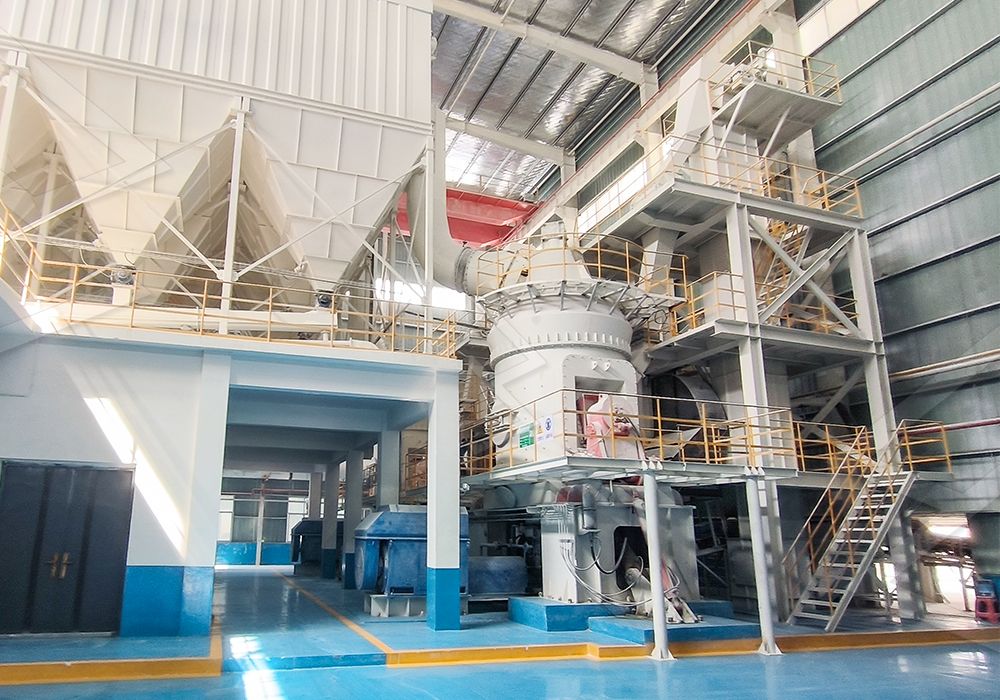
The production of high-quality powder coatings demands precision, consistency, and efficiency at every stage. Among the most critical processes is the grinding and classification of raw materials—such as polyester resins, epoxy hardeners, pigments, and fillers—into a uniform, ultra-fine powder. This is where the selection of grinding technology becomes paramount. Vertical roller mills, specifically engineered for ultrafine applications, have emerged as the industry benchmark, offering superior control over particle size distribution (PSD), lower energy consumption, and enhanced operational stability compared to traditional horizontal ball or jet milling systems.
The Critical Role of Particle Size in Powder Coatings
In powder coating formulations, particle size directly influences key performance characteristics: fluidization, electrostatic application efficiency, film thickness control, and final finish quality (gloss, texture, and durability). An ideal PSD is narrow and consistently within the 15-50 micron range. Traditional mills often struggle with over-grinding, leading to excessive fines that hamper fluidization, or under-grinding, which causes surface defects. A modern vertical mill addresses these challenges head-on through integrated high-efficiency classifiers and precise grinding mechanics, ensuring a repeatable, optimal PSD batch after batch.
Advantages of Vertical Mill Architecture for Coating Production
The vertical configuration offers inherent benefits for powder coating plants. Its compact footprint saves valuable factory floor space. The material flow, driven by gravity and an integrated air system, is more streamlined, reducing internal residence time and minimizing the risk of heat-sensitive material degradation—a common concern with thermoset polymers. Furthermore, the enclosed, negative-pressure design is intrinsically cleaner, containing dust and aligning with stringent plant hygiene and operator safety standards.
Introducing the MW Ultrafine Grinding Mill: Engineered for Precision
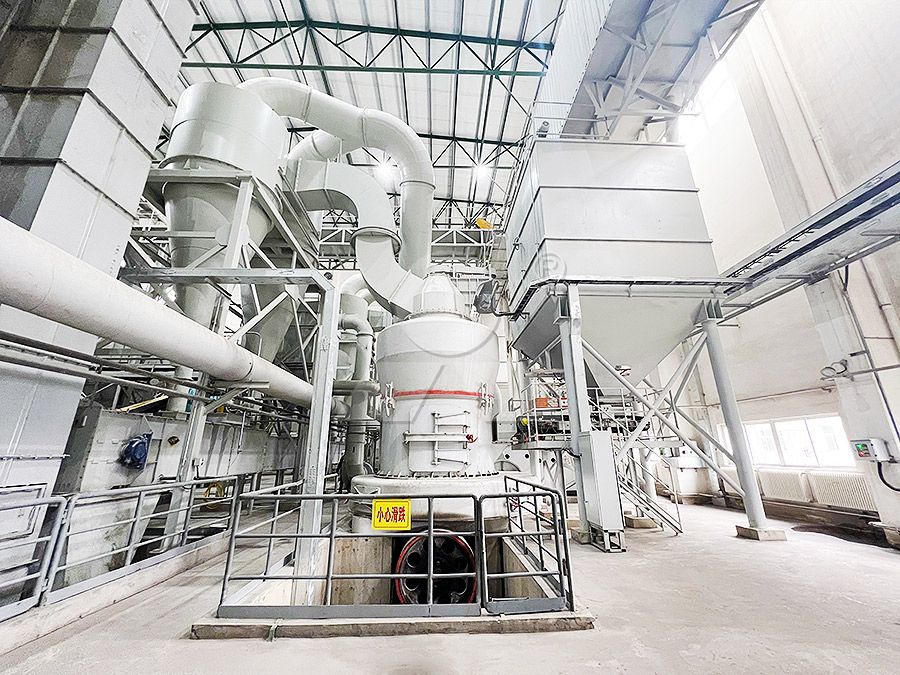
For operations requiring exceptional fineness and purity, the MW Ultrafine Grinding Mill stands out. Designed for customers who need to make ultra-fine powder, this mill is a robust solution for advanced powder coating formulations. It handles an input size of 0-20 mm with a capacity range of 0.5-25 tph, making it suitable for both pilot-scale development and full-scale production.
Its core strength lies in its adjustable fineness, achievable between 325-2500 meshes, courtesy of a German-technology, cage-type powder selector. This allows for precise tailoring of the powder’s cut point. A significant design innovation is the absence of rolling bearings and screws within the grinding chamber. This eliminates critical failure points, preventing contamination from lubricant leaks and machine damage from loose components, thereby ensuring unparalleled product purity—a non-negotiable in coating production. The mill is also equipped with an efficient pulse dust collector and muffler, making the entire production process environmentally compliant with minimal dust and noise.
Integrating the LUM Ultrafine Vertical Grinding Mill for High-Volume Efficiency
When the production focus shifts to high volume without compromising on quality, the LUM Ultrafine Vertical Grinding Mill presents an optimal choice. With an input size of 0-10 mm and a capacity of 5-18 tph, it integrates the latest grinding roller and powder separating technologies. Its unique roller shell and lining plate grinding curve are designed to generate a stable material layer easily, enabling a high rate of finished product in a single pass. This design directly enhances whiteness and cleanliness by reducing repeated grinding and associated iron contamination.
Operational stability is guaranteed through double position-limiting technology, which protects the mill from destructive vibration. For maintenance, its reversible structure allows grinding rollers to be easily swung out of the mill body, facilitating quick inspection and part replacement, drastically reducing costly downtime—a vital consideration for continuous production lines.
Conclusion: A Strategic Investment for Quality and Sustainability
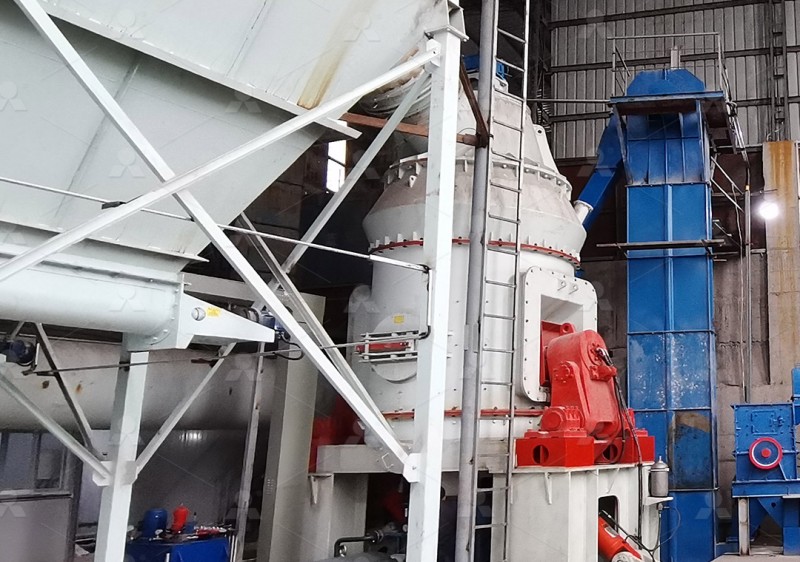
Selecting the right grinding mill is a strategic decision that impacts product quality, production cost, and environmental footprint. Vertical roller mills, particularly advanced models like the MW and LUM series, provide the technological edge needed in today’s competitive powder coating market. They deliver the precise particle control, operational reliability, and energy efficiency required to produce superior coatings while supporting sustainable manufacturing goals through reduced waste and lower energy consumption. Investing in such technology is not merely an equipment upgrade; it’s a commitment to excellence and future-ready production.
Frequently Asked Questions (FAQ)
- Why is a vertical mill preferred over a traditional ball mill for powder coating production?
Vertical mills offer a more compact design, significantly lower energy consumption (30-50% less), better control over particle size distribution, and reduced iron contamination. They also operate with less noise and dust, aligning better with modern environmental and safety standards. - How does the MW Mill ensure the purity of the powder, crucial for coatings?
The MW Ultrafine Grinding Mill is designed with no rolling bearings or screws inside the grinding chamber. This critical feature eliminates risks of lubricant leakage and metallic wear debris contaminating the product, ensuring high-purity output essential for coating color and performance. - Can these mills handle the heat-sensitive materials often used in powder coatings?
Yes. The efficient material transport and grinding mechanism in vertical mills like the LUM series reduce material lingering time. Combined with the option for integrated air cooling, this minimizes heat buildup, protecting the properties of heat-sensitive resins and additives. - What level of fineness can be achieved, and how is it controlled?
Mills like the MW series can achieve fineness between 325 and 2500 meshes. Control is achieved through advanced, adjustable cage-type powder selectors (classifiers). Operators can accurately set the classifier speed to define the cut point, ensuring a consistent and narrow particle size distribution. - How complex is the maintenance for these vertical mills?
Designs prioritize ease of maintenance. For instance, the LUM mill features a reversible structure that allows the grinding roller to be easily moved out for servicing. External lubrication points and digitally machined, high-precision parts also contribute to longer service intervals and simpler upkeep. - Are these systems environmentally friendly?
Absolutely. Both the MW and LUM mills are equipped with high-efficiency pulse jet dust collectors that capture over 99.9% of particulates, ensuring clean exhaust. Mufflers and sound enclosures control noise pollution. The systems are designed to operate under negative pressure, preventing any dust spillage into the workshop.