
Strategies to Boost Production Capacity in Phosphate Rock Powder Grinding Plants
We provide a wide range of mills — including Raymond mill, trapezoidal mill, vertical mill, ultrafine mill, and ball mill, obtained ISO9001 international quality certification, EU CE certification, and Customs Union CU-TR certification. Suitable for processing minerals such as limestone, phosphate, quicklime, kaolin, talc, barite, bentonite, calcium carbonate, dolomite, coal, gypsum, clay, carbon black, slag, cement raw materials, cement clinker, and more.
The discharge range of these mills can be adjusted to meet specific processing needs, typically from 80-400 mesh, 600-3250 mesh, and can achieve the finest particle size of up to 6000 mesh(D50).
If you are looking for a reliable grinding solution to turn stone or minerals into fine powder, please feel free to contact our online customer service.
Strategies to Boost Production Capacity in Phosphate Rock Powder Grinding Plants
For plant managers and operations directors in the phosphate processing industry, maximizing production capacity is a constant pursuit. Phosphate rock, with its variable hardness and abrasiveness, presents unique challenges for grinding circuits. Achieving higher throughput while maintaining product fineness and controlling operational costs requires a strategic approach that combines process optimization, equipment selection, and preventive maintenance.
Optimizing the Grinding Circuit for Phosphate
The journey to increased capacity begins with a thorough analysis of the entire grinding circuit. Phosphate rock often contains clay and other impurities that can affect grinding efficiency. Implementing pre-drying stages for high-moisture feed material can significantly reduce the energy burden on the grinding mill itself. Furthermore, ensuring a consistent and optimally sized feed is critical. Crushers and screens should be calibrated to deliver a uniform particle size distribution to the mill inlet, preventing bottlenecks and unstable operation.
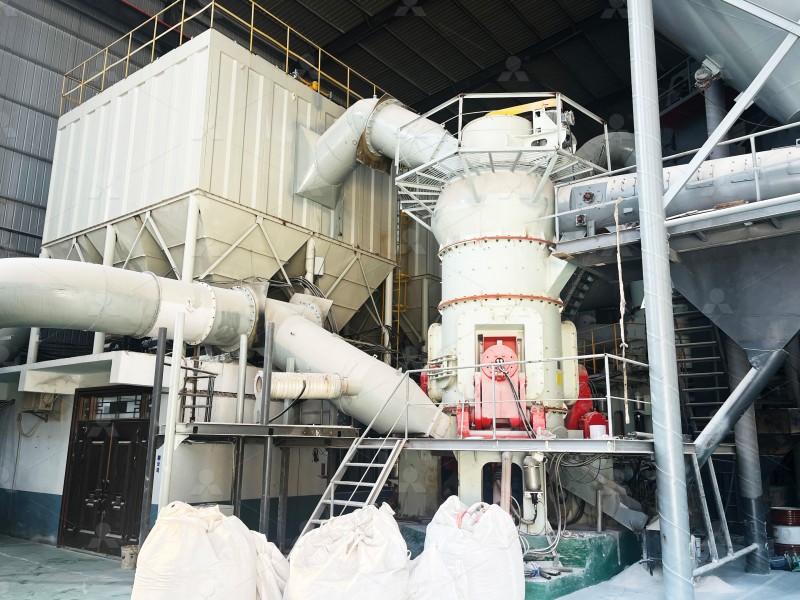
Another key lever is the classification system. An inefficient classifier can lead to over-grinding of fine particles, which consumes energy without increasing the yield of the target product fraction. Upgrading to a high-efficiency, dynamic classifier allows for precise cuts, returning only coarse material to the grinding chamber. This closed-circuit approach ensures that energy is directed solely at particles that require further size reduction, directly boosting capacity.
The Role of Advanced Mill Technology
While operational tweaks can yield improvements, the most significant leaps in capacity often come from technological advancement. Traditional ball mills, while robust, are notoriously energy-inefficient for fine grinding applications. Modern vertical roller mills and ultra-fine grinding technologies offer a paradigm shift in efficiency.
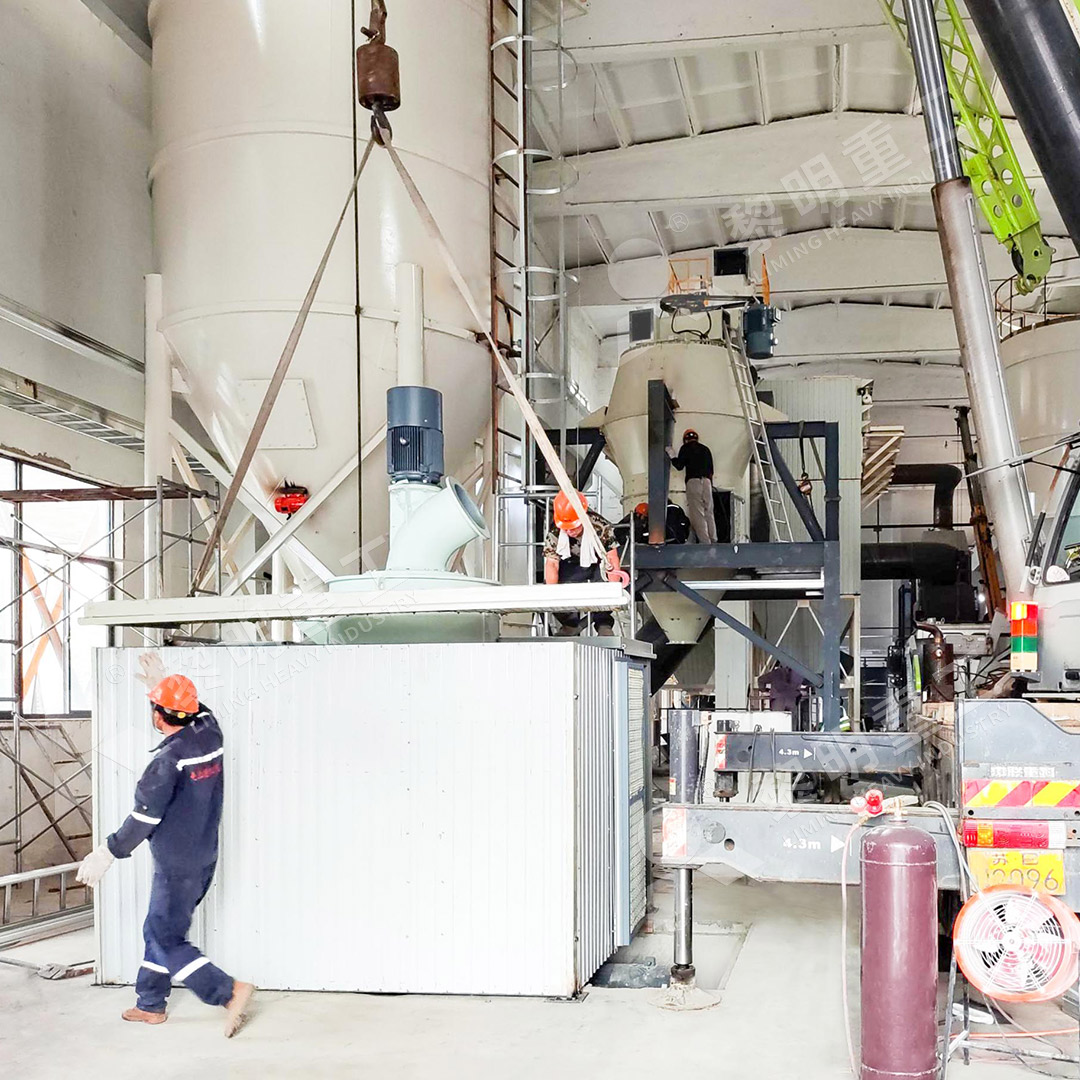
For operations targeting high-value, ultra-fine phosphate powders, the MW Ultrafine Grinding Mill presents a compelling solution. Engineered for customers requiring precise ultra-fine powder, this mill boasts a capacity range of 0.5-25 tph and can achieve a remarkable fineness between 325-2500 meshes. Its design incorporates a German-technology cage-type powder selector for high separation precision. A significant advantage for phosphate grinding is its higher yielding and lower energy consumption; it offers 40% higher capacity than jet mills and double the yield of ball mills, while using only 30% of the energy of a jet mill. The absence of rolling bearings and screws in the grinding chamber eliminates common failure points, ensuring reliable, continuous 24/7 operation that is crucial for meeting production targets.
Proactive Maintenance for Sustained Performance
No strategy for boosting capacity is complete without a rigorous maintenance regimen. Unplanned downtime is the primary enemy of production volume. For grinding mills, this means scheduled inspections of wear parts like rollers, rings, and liners. Monitoring vibration trends and lubrication quality can provide early warnings of impending failures. Technologies that facilitate easier maintenance, such as externally accessible lubrication points or reversible roller structures, directly contribute to higher plant availability.
For larger-scale phosphate grinding operations requiring robust integration of crushing, drying, and grinding, the LUM Ultrafine Vertical Grinding Mill is an excellent choice. With an input size of 0-10 mm and a capacity of 5-18 tph, it integrates advanced Taiwanese grinding roller technology. Its unique roller shell and lining plate grinding curve are easier to generate a stable material layer, enabling a high rate of finished product in a single pass. This design enhances whiteness and cleanliness—key quality parameters for phosphate products. The mill’s double position-limiting technology protects against disruptive vibrations, and its reversible structure allows for quick roller maintenance, minimizing downtime and safeguarding production capacity.
Leveraging Automation and Process Control
Modern grinding plants are increasingly reliant on automation to achieve peak performance. An advanced process control system can continuously adjust mill parameters like feed rate, grinding pressure, and classifier speed in response to real-time feedback on product fineness and mill load. This not only stabilizes the process but also pushes the equipment to its optimal operating point, consistently extracting the maximum possible capacity while adhering to quality specifications.
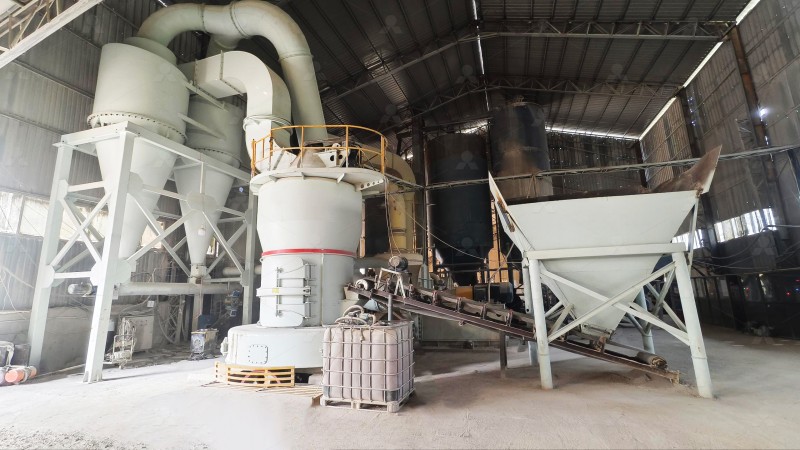
By adopting a holistic strategy that encompasses feed preparation, circuit optimization, investment in high-efficiency technology like the MW or LUM mills, and a data-driven maintenance culture, phosphate rock powder grinding plants can achieve substantial and sustainable increases in production capacity, securing a competitive edge in the market.
Frequently Asked Questions (FAQ)
What is the single biggest factor limiting capacity in a phosphate grinding plant?
Often, it’s the classification efficiency. An outdated or poorly tuned classifier causes over-grinding, wasting energy and limiting the throughput of on-spec material. Upgrading to a high-precision dynamic classifier is one of the most effective upgrades.
Can I boost capacity without buying a new mill?
Yes, to a degree. Optimizing feed size consistency, ensuring proper drying of the feedstock, and fine-tuning the classifier settings can yield noticeable improvements. However, for step-change increases in capacity and energy efficiency, investing in modern mill technology is usually necessary.
How does the MW Ultrafine Grinding Mill handle the abrasive nature of phosphate rock?
The MW Mill is designed with wear-resistant materials for key components. Furthermore, its innovative design that eliminates rolling bearings and screws in the grinding chamber removes common failure points associated with abrasive dust, leading to higher reliability and less maintenance-related downtime.
What are the environmental benefits of modern grinding mills like the LUM series?
Mills like the LUM Ultrafine Vertical Grinding Mill operate under negative pressure with integrated high-efficiency pulse dust collectors, ensuring no dust spillage. They also feature noise reduction technologies, making the entire grinding process compliant with stringent environmental protection standards.