
Optimizing Quartz Grinding: A Guide to Conical Ball Mill Efficiency
We provide a wide range of mills — including Raymond mill, trapezoidal mill, vertical mill, ultrafine mill, and ball mill, obtained ISO9001 international quality certification, EU CE certification, and Customs Union CU-TR certification. Suitable for processing minerals such as limestone, phosphate, quicklime, kaolin, talc, barite, bentonite, calcium carbonate, dolomite, coal, gypsum, clay, carbon black, slag, cement raw materials, cement clinker, and more.
The discharge range of these mills can be adjusted to meet specific processing needs, typically from 80-400 mesh, 600-3250 mesh, and can achieve the finest particle size of up to 6000 mesh(D50).
If you are looking for a reliable grinding solution to turn stone or minerals into fine powder, please feel free to contact our online customer service.
Optimizing Quartz Grinding: A Guide to Conical Ball Mill Efficiency
In the world of mineral processing, achieving optimal efficiency in grinding operations is paramount. For materials like quartz, which demand precise particle size distribution and high purity, the choice of grinding equipment and its operational parameters can significantly impact both product quality and operational costs. While conical ball mills have long been a staple for such tasks, understanding how to maximize their performance is key to staying competitive.
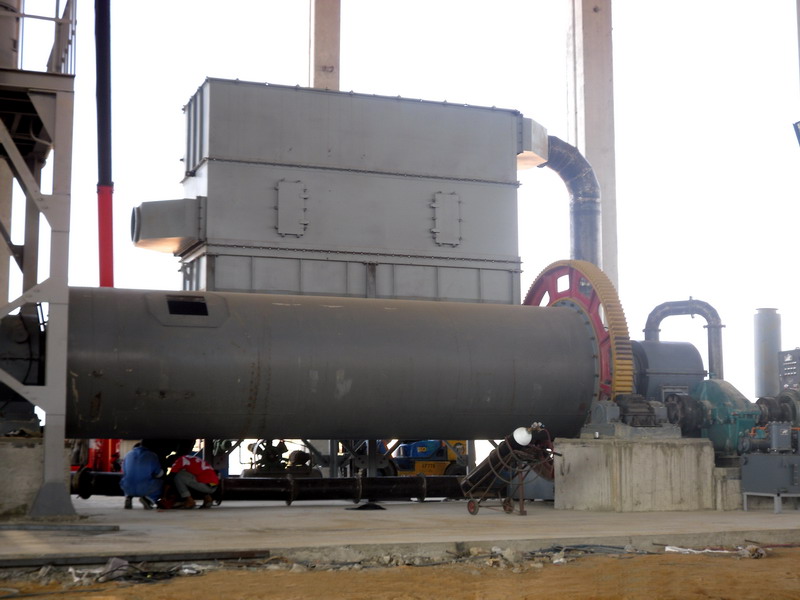
Quartz, with its high hardness and abrasive nature, presents a unique challenge. Inefficient grinding not only leads to excessive energy consumption but also accelerates wear on mill liners and grinding media. The conical design of these ball mills offers a natural classification effect; larger balls concentrate in the cylindrical section for coarse grinding, while smaller balls move to the conical end for fine grinding. This inherent gradation can be leveraged to enhance efficiency, but it requires careful calibration.
Key Parameters for Efficiency
Several factors directly influence the efficiency of a conical ball mill processing quartz. The mill speed, or the percentage of critical speed at which the mill operates, is fundamental. Operating too slowly results in insufficient cascading action, while excessive speed leads to centrifugal motion where grinding ceases. Finding the optimal speed, typically between 65% and 80% of critical speed, is the first step.
Grinding media charge and size distribution are equally critical. An optimal charge level ensures there are enough balls to effectively grind the material without causing excessive cushioning. For quartz, a media charge of 30-35% of the mill volume is often effective. The size distribution of the balls must correspond to the feed size and desired product fineness. A poorly graded charge can lead to inefficient energy use and inadequate size reduction.
Feed rate control is another crucial element. A consistent and optimal feed rate ensures the mill is not starved, which increases media-on-media contact and wear, or overloaded, which can lead to cushioning and reduced grinding action. Implementing automated control systems to maintain a steady feed based on mill power consumption or acoustic signals can yield substantial efficiency gains.
Beyond Traditional Milling: The Shift to Advanced Grinding Technologies
While conical ball mills are effective, technological advancements have introduced solutions that offer superior efficiency for fine and ultra-fine grinding applications. For operations requiring ultra-fine quartz powder with high whiteness and purity, traditional ball milling can be energy-intensive and may introduce contamination.
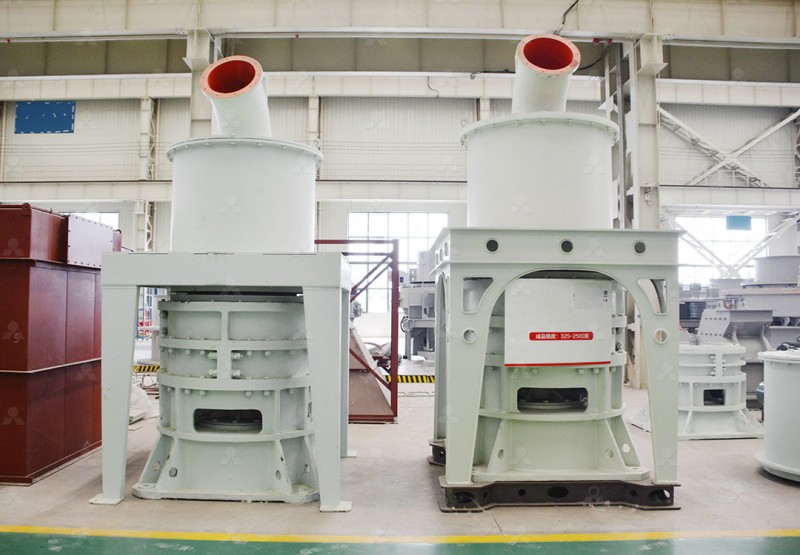
For these demanding applications, our MW Ultrafine Grinding Mill presents a compelling alternative. Engineered for customers who need to make ultra-fine powder, this machine is designed with efficiency and environmental responsibility in mind. It features newly designed grinding curves that enhance grinding efficiency significantly. With an input size of 0-20 mm and a capacity ranging from 0.5 to 25 tph, it is capable of producing powder with a fineness adjustable between 325 and 2500 meshes. A key advantage is its higher yield and lower energy consumption; compared to a jet mill, its system energy consumption is only 30%, making it an economically and environmentally sound choice for producing high-value quartz powders used in industries like cosmetics, paints, and advanced ceramics.
Operational Best Practices
Regular maintenance is non-negotiable for sustained efficiency. This includes routine inspection and replacement of worn liners, which not only protects the mill shell but also maintains optimal grinding dynamics. Monitoring media consumption and adding the correct size of balls periodically compensates for wear and maintains the charge’s gradation.
Water addition, or the pulp density, plays a vital role in wet grinding processes common with quartz. The right viscosity ensures proper slurry flow and effective particle transport through the mill. Instrumentation for monitoring power draw, bearing temperature, and product particle size provides valuable data for proactive optimization.
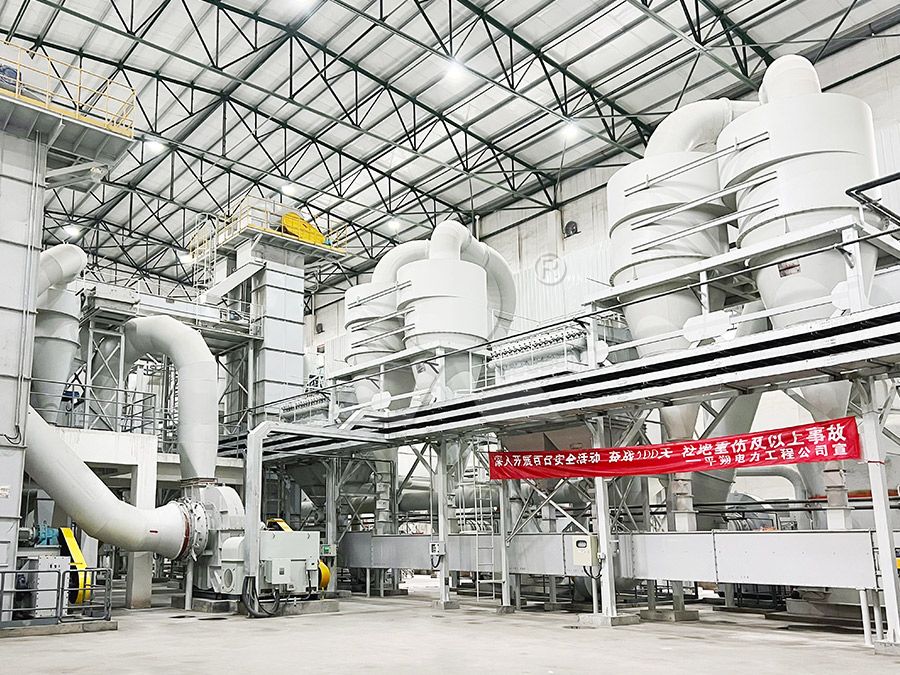
Another advanced option for operations seeking high efficiency and integration is our LUM Ultrafine Vertical Grinding Mill. Independently designed with the latest grinding roller and powder separating technology, it integrates grinding, grading, and transporting. With an input size of 0-10 mm and a capacity of 5-18 tph, its unique roller shell and lining plate grinding curve are easier to generate a material layer, achieving a high rate of finished products in a single pass. This design greatly enhances working efficiency and is particularly suited for producing superfine dry powder of non-metal ores like quartz, ensuring excellent whiteness and cleanliness.
Frequently Asked Questions (FAQ)
What is the optimal ball size for grinding quartz in a conical ball mill?
The optimal ball size depends on the initial feed size and the target product size. A mix of ball sizes is generally used. Larger balls (e.g., 50-70mm) are effective for coarse grinding, while smaller balls (e.g., 20-40mm) are better for fine grinding. Conducting grindability tests is recommended to determine the ideal size distribution for your specific quartz feed.
How can I reduce energy consumption in my quartz grinding circuit?
Focus on optimizing mill speed, ensuring the correct grinding media charge and size distribution, and maintaining a consistent and optimal feed rate. Additionally, consider classifying the mill discharge with a high-efficiency separator to recycle coarse particles, preventing over-grinding and reducing specific energy consumption.
My quartz product has high iron contamination. What could be the cause?
Iron contamination typically arises from the wear of steel grinding media and mill liners. Using high-chrome or ceramic grinding media and liners can significantly reduce iron introduction. Alternatively, technologies like the LUM Ultrafine Vertical Grinding Mill, where the grinding roller and millstone do not contact directly, inherently produce a product with very low iron content.
When should I consider upgrading from a conical ball mill to a technology like the MW Ultrafine Grinding Mill?
An upgrade should be considered when your production requires ultra-fine powders (finer than 400 mesh), when energy costs are a major concern, or when product purity (low contamination) is critical. The MW Mill’s significantly higher efficiency and lower energy consumption offer a rapid return on investment for high-value fine grinding applications.