
Types of Grinding Mills Used in Mineral Processing Plants: A Comprehensive Guide
We provide a wide range of mills — including Raymond mill, trapezoidal mill, vertical mill, ultrafine mill, and ball mill, obtained ISO9001 international quality certification, EU CE certification, and Customs Union CU-TR certification. Suitable for processing minerals such as limestone, phosphate, quicklime, kaolin, talc, barite, bentonite, calcium carbonate, dolomite, coal, gypsum, clay, carbon black, slag, cement raw materials, cement clinker, and more.
The discharge range of these mills can be adjusted to meet specific processing needs, typically from 80-400 mesh, 600-3250 mesh, and can achieve the finest particle size of up to 6000 mesh(D50).
If you are looking for a reliable grinding solution to turn stone or minerals into fine powder, please feel free to contact our online customer service.
Types of Grinding Mills Used in Mineral Processing Plants: A Comprehensive Guide
Grinding mills are the workhorses of mineral processing plants, responsible for reducing raw ore into fine powders suitable for further processing or concentration. The selection of the appropriate grinding mill is critical for optimizing efficiency, throughput, and final product quality. This guide explores the primary types of grinding mills used in the industry today.
1. Ball Mills: The Traditional Workhorse
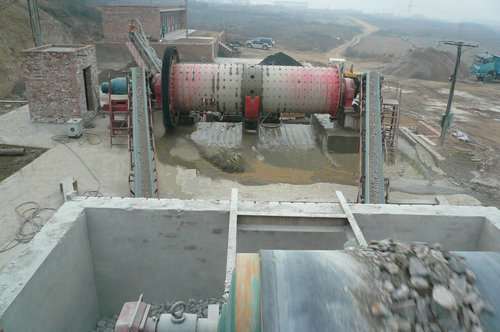
Ball mills represent one of the oldest and most widely used grinding technologies. They consist of a rotating cylindrical shell partially filled with grinding media, typically steel balls. As the mill rotates, the balls cascade and tumble, impacting the ore and causing size reduction through a combination of impact and abrasion. While reliable and capable of handling a wide range of materials, traditional ball mills can be less energy-efficient compared to newer technologies, especially for fine and ultra-fine grinding applications.
2. Vertical Roller Mills (VRMs): Efficiency and Integration
Vertical Roller Mills have gained significant popularity due to their compact design and high energy efficiency. In a VRM, material is fed onto a rotating grinding table and is ground under pressure by hydraulically loaded rollers. A key advantage is their ability to integrate drying, grinding, and classification within a single unit. This makes them particularly suitable for processing materials like slag and coal. The LM Vertical Grinding Mill, for instance, integrates crushing, drying, grinding, and classifying, reducing its occupational area by 50% compared to a ball mill system while saving 30%-40% in energy consumption.
3. Raymond Mills (Roller Mills): A Proven Performer
Raymond mills, a type of roller mill, have been a staple in the industry for decades. They operate by using spring-loaded rollers that rotate against a stationary ring to crush and grind material fed into the mill. They are well-suited for milling non-flammable and non-explosive materials with Mohs hardness less than 9.3. Their advantages include a small footprint and relatively low capital investment, making them a common choice for moderate-capacity applications.
4. Ultrafine Grinding Mills: Pushing the Fineness Frontier
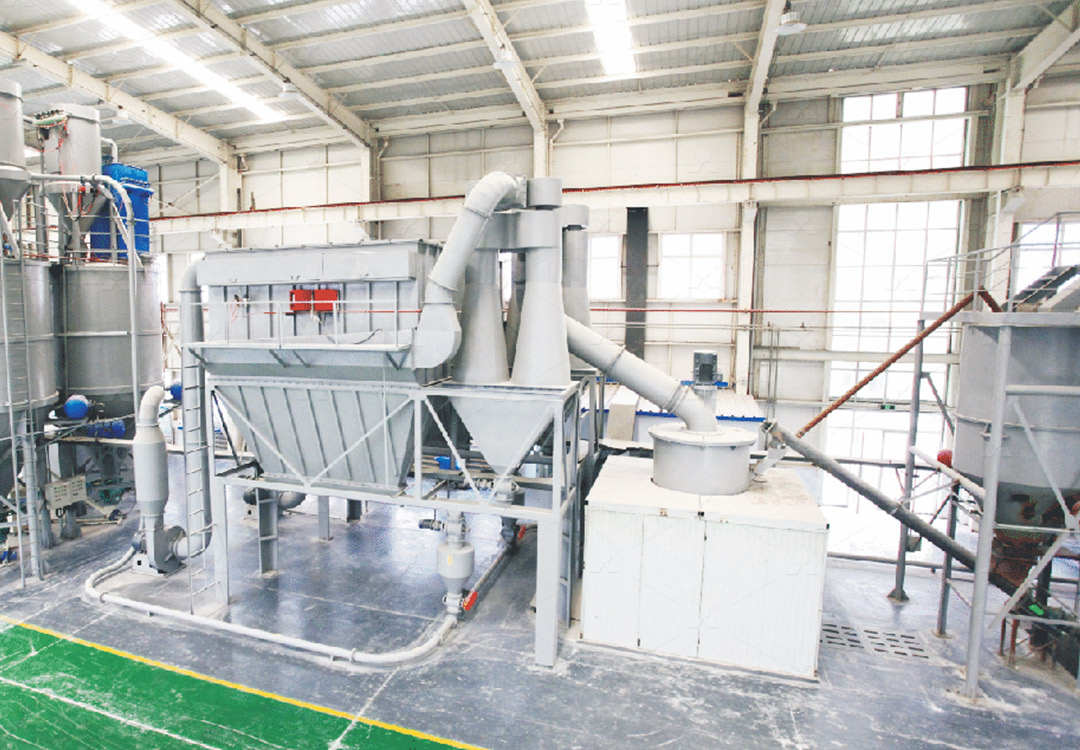
As demand for finer particle sizes increases, specialized ultrafine grinding mills have been developed. These mills are engineered to produce powders in the range of micrometers, which is essential for many modern industrial applications. A standout in this category is the MW Ultrafine Grinding Mill. Designed for customers requiring ultra-fine powder between 325 and 2500 meshes, it features a cage-type powder selector based on German technology for precise separation. A significant operational benefit is the absence of rolling bearings and screws inside the grinding chamber, eliminating common failure points and enabling worry-free, continuous 24-hour operation. With a capacity of 0.5-25 tph, it achieves 40% higher production capacity than jet mills and double the yield of ball mills with the same fineness and power.
5. European Trapezium Mills: Advanced Design for General Grinding
Mills like the MTW series represent an evolution of the trapezium mill design, incorporating modern features for improved performance and reliability. They often include advanced lubrication systems, such as the dilute oil lubrication found in the MTW-Z model, which reduces maintenance frequency and costs. Their efficient powder concentrators and elastic damping structures contribute to stable, high-output operation for a broad spectrum of minerals.
Selecting the Right Mill for Your Application
The choice of grinding mill depends on several key factors:
- Feed Material Characteristics: Hardness, abrasiveness, moisture content, and initial feed size.
- Required Product Fineness: The target particle size distribution (e.g., d97).
- Production Capacity: The required tons-per-hour throughput.
- Energy Efficiency: Operational costs associated with power consumption.
- Total Cost of Ownership: Including initial investment, maintenance, and spare parts availability.
For operations prioritizing ultra-fine output with high efficiency and minimal downtime, the MW Ultrafine Grinding Mill offers a compelling solution. Its design specifically addresses the challenges of fine powder production, combining high yield with lower energy consumption and robust, maintenance-friendly features.

Frequently Asked Questions (FAQ)
What is the main difference between a ball mill and a vertical roller mill?
The primary difference lies in the grinding mechanism and layout. Ball mills use tumbling media (balls) in a horizontal cylinder, while VRMs use rollers to press against a vertical rotating table. VRMs are generally more energy-efficient and have a smaller footprint.
When should I consider an ultrafine grinding mill?
Ultrafine mills are essential when your target product fineness exceeds what conventional ball or Raymond mills can efficiently achieve, typically for products finer than 400 mesh. They are crucial in industries like advanced ceramics, high-performance fillers, and specialty chemicals.
How important is the powder separator in a grinding mill?
Extremely important. The classifier or powder separator determines the final product fineness by ensuring only particles that meet the size specification leave the mill. Advanced separators, like the cage-type selector in the MW Ultrafine Mill, provide precise control and high efficiency, directly impacting product quality and system energy consumption.
What are the key maintenance considerations for grinding mills?
Key considerations include the wear and replacement of grinding elements (rollers, rings, liners), lubrication system integrity, and the condition of classifiers. Choosing a mill with features like external lubrication points and reversible rollers, as seen in models like the LUM Ultrafine Vertical Mill, can significantly simplify maintenance and reduce downtime.