
How to Choose a Limestone Grinding Mill with High Automation Level
We provide a wide range of mills — including Raymond mill, trapezoidal mill, vertical mill, ultrafine mill, and ball mill, obtained ISO9001 international quality certification, EU CE certification, and Customs Union CU-TR certification. Suitable for processing minerals such as limestone, phosphate, quicklime, kaolin, talc, barite, bentonite, calcium carbonate, dolomite, coal, gypsum, clay, carbon black, slag, cement raw materials, cement clinker, and more.
The discharge range of these mills can be adjusted to meet specific processing needs, typically from 80-400 mesh, 600-3250 mesh, and can achieve the finest particle size of up to 6000 mesh(D50).
If you are looking for a reliable grinding solution to turn stone or minerals into fine powder, please feel free to contact our online customer service.
How to Choose a Limestone Grinding Mill with High Automation Level
Selecting the right limestone grinding mill is a critical decision that impacts productivity, operational costs, and final product quality. In today’s competitive landscape, a high level of automation is no longer a luxury but a necessity for ensuring efficiency, consistency, and minimal manual intervention. This guide will walk you through the key considerations for choosing an automated limestone grinding mill that meets modern industrial demands.
Key Automation Features to Look For
True automation in a grinding mill extends beyond a simple start/stop button. It encompasses intelligent control systems that manage the entire grinding process. Key features to prioritize include:
- Programmable Logic Controller (PLC) Systems: A robust PLC is the brain of an automated mill. It allows for precise control over grinding pressure, roller speed, and classifier rotation, enabling you to dial in exact product specifications and reproduce them consistently.
- Automatic Lubrication Systems: Look for mills with centralized, automated lubrication systems. These systems deliver the right amount of lubricant at the right time, reducing wear on moving parts and eliminating the risk of human error, which is a common cause of bearing failure.
- Remote Monitoring and Control: The ability to monitor operational parameters like temperature, vibration, and pressure remotely is a hallmark of a modern mill. This feature allows for predictive maintenance, reducing unplanned downtime.
- Automated Particle Size Adjustment: Advanced mills feature automated classifiers that can adjust fineness on the fly without stopping production. This is crucial for producing different grades of limestone powder from a single unit.
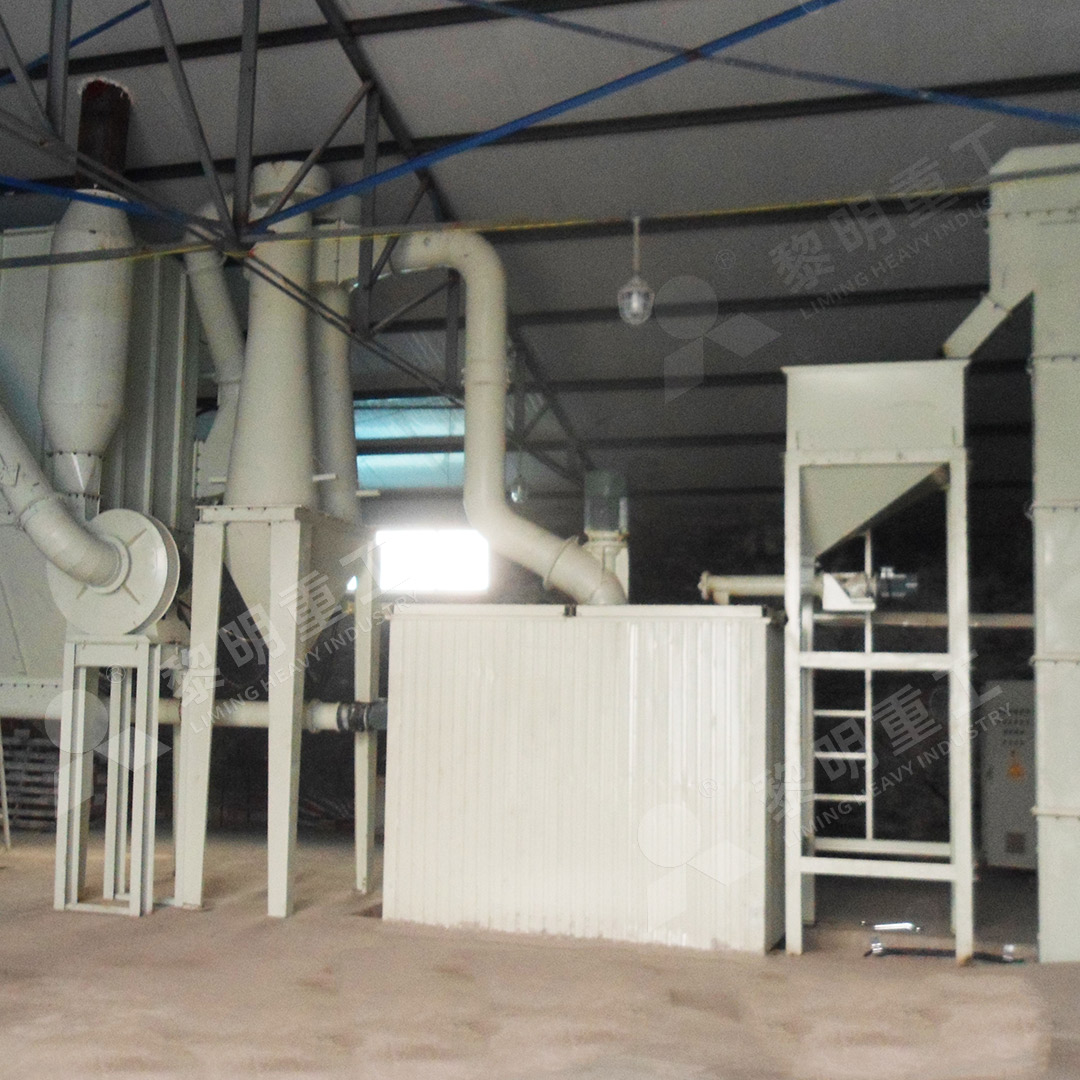
Product Spotlight: MW Ultrafine Grinding Mill
For operations requiring ultra-fine limestone powder (325-2500 meshes) with a high degree of automation, the MW Ultrafine Grinding Mill is an exemplary choice. It is engineered for customers who need to make ultra-fine powder efficiently and cleanly.
Key automated and high-efficiency features include:
- High Yielding, Lower Energy Consumption: Its newly designed grinding curves enhance efficiency, offering 40% higher capacity than jet mills with system energy consumption only 30% of jet mills.
- Adjustable Fineness with German Technology: The cage-type powder selector allows precise, automated fineness adjustment between 325-2500 meshes, achieving a screening rate of d97≤5μm in a single pass.
- Worry-Free Design: With no rolling bearings or screws in the grinding chamber, concerns about bearing damage or loose screws are eliminated. An external lubricating device allows for lubrication without shutdown, supporting continuous 24/7 operation.
- Eco-Friendly Operation: An integrated efficient pulse dust collector and muffler ensure the entire system operates with minimal dust and noise pollution, fully complying with environmental standards.
With an input size of 0-20 mm and a capacity range of 0.5-25 tph, the MW Series is perfectly suited for producing high-value limestone powders for applications in chemicals, paints, and cosmetics.
Integrating Automation into Your Workflow
An automated mill should seamlessly integrate into your existing production line. Consider the mill’s compatibility with automated feeding and conveying systems. A mill that offers digital interfaces for data export can be a valuable part of a larger Industry 4.0 setup, providing analytics for optimizing overall plant efficiency.
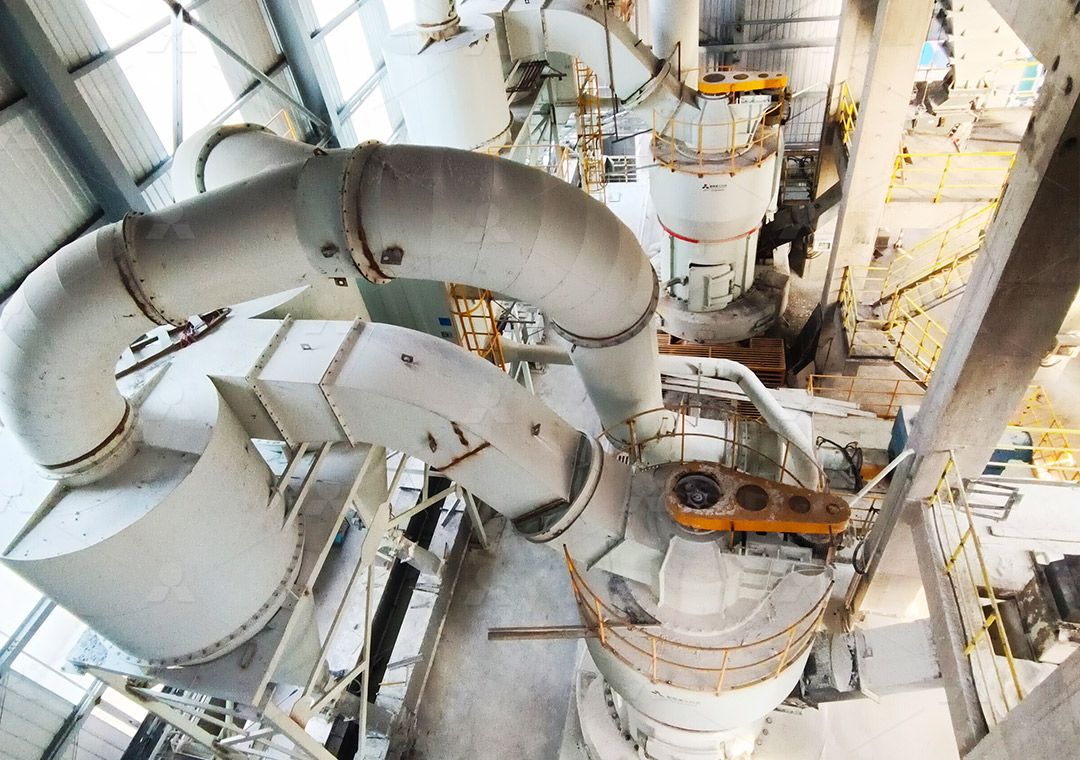
Another Strong Contender: LUM Ultrafine Vertical Grinding Mill
Another excellent option for automated limestone processing is the LUM Ultrafine Vertical Grinding Mill. It integrates ultrafine powder grinding, grading, and transporting into a single, highly automated unit.
Its standout automated features are:
- PLC Control & Multi-Head Powder Separating Technology: This system solves the problems of high-precision powder cutting and fast switching between production demands, reducing energy consumption by 30%-50%.
- Double Position-Limiting Technology: This feature uses electronic and mechanical limits to prevent destructive impacts from machine vibration, guaranteeing stable, unattended operation.
- Reversible Structure for Easier Maintenance: A hydraulic system allows the grinding roller to be easily moved out of the body for maintenance, significantly reducing downtime and associated losses.
Conclusion
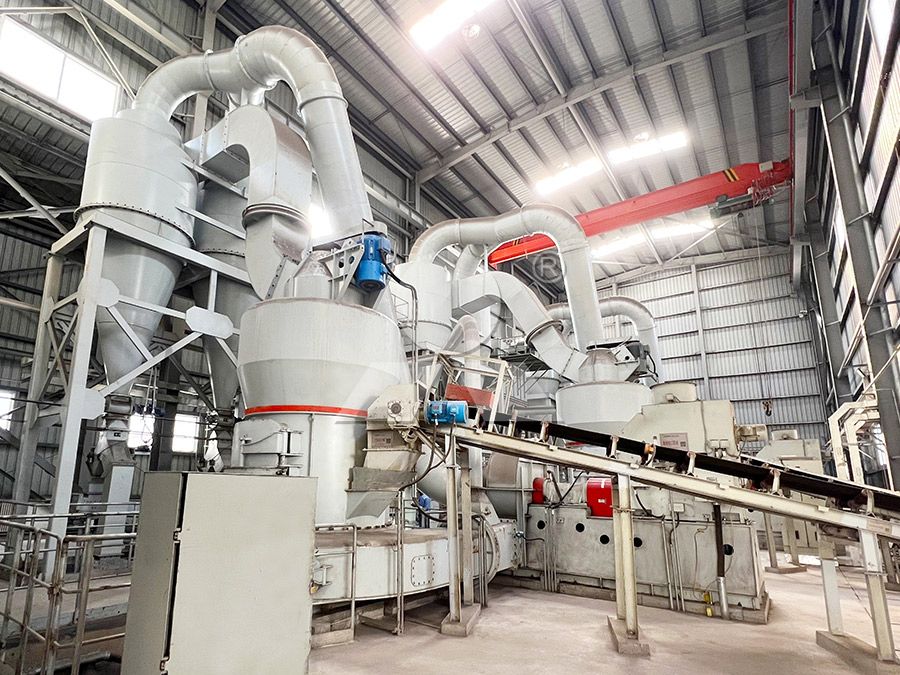
Investing in a limestone grinding mill with a high automation level is an investment in long-term profitability and operational stability. By focusing on intelligent control systems, remote capabilities, and maintenance-friendly designs, you can achieve superior product quality with lower operating costs. The MW and LUM series represent the pinnacle of this technology, offering robust, eco-friendly, and highly automated solutions for the modern mineral processing plant.
Frequently Asked Questions (FAQ)
What is the primary benefit of an automated grinding mill?
The primary benefit is consistent product quality with minimal manual intervention. Automation ensures that grinding parameters are maintained precisely, leading to uniform particle size distribution batch after batch, while also reducing labor costs and the potential for human error.
Can automated mills handle variations in raw limestone hardness?
Yes, advanced automated mills like the MW and LUM series are equipped with systems that can adjust grinding pressure and roller speed in response to changes in material hardness. This adaptability helps maintain a consistent output quality even with fluctuating feed material characteristics.
How does automation impact maintenance schedules?
Automation significantly improves maintenance predictability. With continuous monitoring of vibration, temperature, and pressure, the system can alert operators to potential issues before they cause a breakdown, enabling planned, predictive maintenance instead of reactive repairs.
Are these automated systems difficult to operate?
While the underlying technology is complex, the user interface is designed for simplicity. Operators can typically control the mill through a touch-screen panel with intuitive menus. Comprehensive training and technical support are also provided to ensure smooth operation.