
How to Calculate Grinding Ball Mill Load: Formula and Step-by-Step Guide
We provide a wide range of mills — including Raymond mill, trapezoidal mill, vertical mill, ultrafine mill, and ball mill, obtained ISO9001 international quality certification, EU CE certification, and Customs Union CU-TR certification. Suitable for processing minerals such as limestone, phosphate, quicklime, kaolin, talc, barite, bentonite, calcium carbonate, dolomite, coal, gypsum, clay, carbon black, slag, cement raw materials, cement clinker, and more.
The discharge range of these mills can be adjusted to meet specific processing needs, typically from 80-400 mesh, 600-3250 mesh, and can achieve the finest particle size of up to 6000 mesh(D50).
If you are looking for a reliable grinding solution to turn stone or minerals into fine powder, please feel free to contact our online customer service.
How to Calculate Grinding Ball Mill Load: Formula and Step-by-Step Guide
For operators and engineers in mineral processing, maintaining the optimal ball mill load is a fundamental aspect of efficient grinding operations. An incorrect load—whether underloaded or overloaded—can lead to reduced throughput, increased energy consumption, and accelerated wear on mill components. This guide provides a clear, step-by-step methodology for accurately calculating your ball mill’s grinding media load.
Understanding Ball Mill Load
The term “mill load” typically refers to the total volume of grinding media (balls) inside the mill. The optimal load is usually a percentage of the mill’s internal volume, often between 40% and 50%. Operating within this range ensures that the balls cascade effectively, creating the necessary impact and attrition to grind the material.
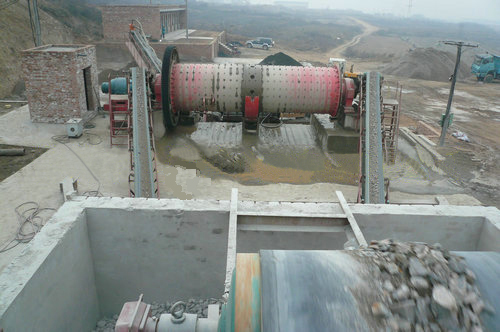
The Formula for Calculating Ball Mill Load
The most practical formula for calculating the mass of the grinding media load is:
G = (π / 4) * D² * L * φ * ρ
Where:
- G = Mass of the grinding media load (in tons or kilograms)
- D = Internal diameter of the mill (in meters)
- L = Effective internal length of the mill (in meters)
- φ = Filling ratio of the grinding media (expressed as a decimal, e.g., 0.4 for 40%)
- ρ = Bulk density of the grinding media (in tons per cubic meter, t/m³)
Note: The bulk density (ρ) of steel balls is typically between 4.5 and 4.8 t/m³.
Step-by-Step Calculation Guide
- Measure Mill Dimensions: Accurately determine the internal diameter (D) and length (L) of your ball mill. Ensure you are using the effective grinding dimensions, excluding any liners.
- Determine the Filling Ratio (φ): Decide on your target filling ratio. For most coarse grinding applications, a ratio of 40-45% is standard. For finer grinding, this may be adjusted slightly lower.
- Identify Media Density (ρ): Use the bulk density provided by your grinding media supplier. For standard forged steel balls, a value of 4.6 t/m³ is a safe estimate if the exact density is unknown.
- Perform the Calculation: Plug the values into the formula to calculate the total mass (G) of balls required.
Example Calculation
Consider a ball mill with an internal diameter (D) of 2.4 meters and an effective length (L) of 5.5 meters. The target filling ratio (φ) is 45%, and the bulk density of the balls (ρ) is 4.6 t/m³.
G = (3.1416 / 4) * (2.4)² * 5.5 * 0.45 * 4.6
G = (0.7854) * 5.76 * 5.5 * 0.45 * 4.6
G ≈ 51.5 tons
Therefore, this mill requires approximately 51.5 tons of grinding balls to operate at a 45% load.
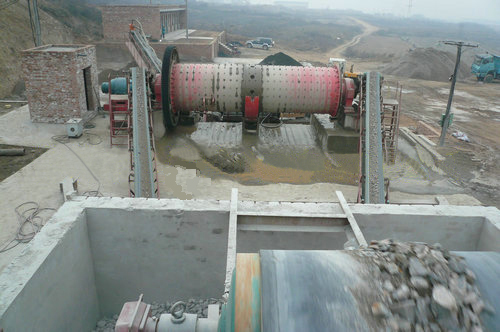
Beyond Traditional Ball Milling: The Modern Alternative
While ball mills are a cornerstone of comminution, modern mineral processing often demands greater efficiency, especially for ultra-fine powder production. For operations requiring fineness between 325 and 2500 meshes, our MW Ultrafine Grinding Mill presents a superior alternative. It achieves a production capacity up to 40% higher than jet mills and double that of a ball mill with similar power input, while reducing system energy consumption by up to 70%. Its intelligent design, featuring an external lubrication system and no internal screws or rolling bearings in the grinding chamber, ensures worry-free, continuous 24/7 operation.
Verifying Load with Audible and Visual Checks
A calculation provides the theoretical load, but practical verification is crucial. A properly loaded mill produces a consistent, rumbling sound. An overloaded mill will sound dull and muted, while an underloaded mill will create a loud, metallic clattering noise. Additionally, monitoring the motor current draw is an excellent indicator; the amperage should be stable and within the manufacturer’s recommended range for the calculated load.
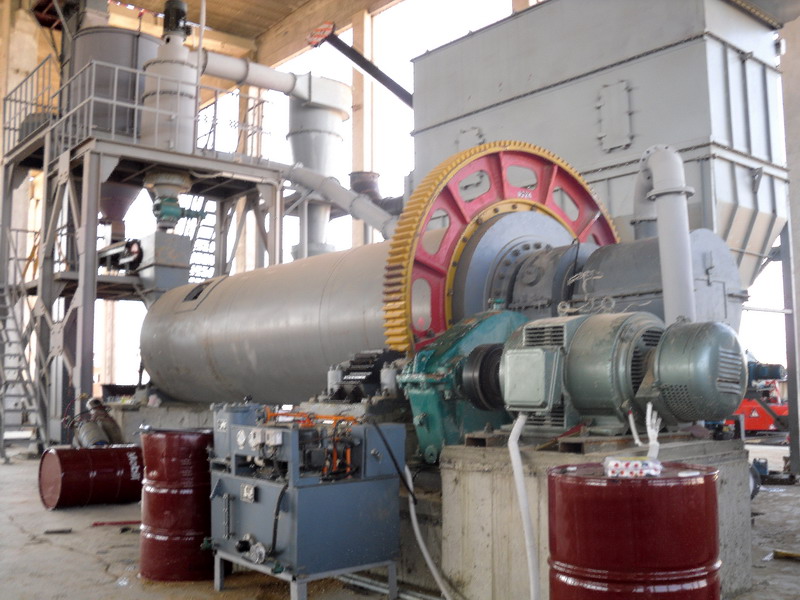
For operations seeking even higher efficiency in a vertical configuration, the LUM Ultrafine Vertical Grinding Mill integrates grinding, classifying, and transporting with exceptional precision. Its unique roller shell and lining plate grinding curve generate a stable material layer for high-yield, single-pass milling, significantly improving product whiteness and cleanliness while reducing energy consumption by 30-50%.
Frequently Asked Questions (FAQ)
What is the consequence of an overloaded ball mill?
An overloaded mill will experience reduced grinding efficiency, excessive energy consumption, and increased wear on liners and bearings. The cascading action of the balls is impeded, leading to more sliding and less impact.
How often should I check the ball mill load?
The load should be checked regularly, especially after adding new grinding media or if there is a noticeable change in mill performance or sound. A weekly check is a good practice for most continuous operations.
Can I use this formula for different types of grinding media?
Yes, but you must adjust the bulk density (ρ) accordingly. For example, ceramic balls have a lower density than steel balls, so the mass required to achieve the same volume load will be less.
What is a simple way to estimate the load if I cannot stop the mill?
You can use the “crash stop” method. Suddenly stop the mill and measure the vertical distance from the charge level to the mill roof (H). The filling ratio φ can be estimated as (113 – 126H/D)%, though this is less accurate than a full calculation.