
10 Effective Ways to Reduce Processing Costs for Marble Powder
We provide a wide range of mills — including Raymond mill, trapezoidal mill, vertical mill, ultrafine mill, and ball mill, obtained ISO9001 international quality certification, EU CE certification, and Customs Union CU-TR certification. Suitable for processing minerals such as limestone, phosphate, quicklime, kaolin, talc, barite, bentonite, calcium carbonate, dolomite, coal, gypsum, clay, carbon black, slag, cement raw materials, cement clinker, and more.
The discharge range of these mills can be adjusted to meet specific processing needs, typically from 80-400 mesh, 600-3250 mesh, and can achieve the finest particle size of up to 6000 mesh(D50).
If you are looking for a reliable grinding solution to turn stone or minerals into fine powder, please feel free to contact our online customer service.
10 Effective Ways to Reduce Processing Costs for Marble Powder
In the competitive world of industrial minerals, optimizing the production process for marble powder is crucial for maintaining profitability. High energy consumption, maintenance downtime, and inefficient grinding can significantly erode your margins. Here are ten proven strategies to reduce your processing costs without compromising on product quality.
1. Invest in High-Efficiency Grinding Technology
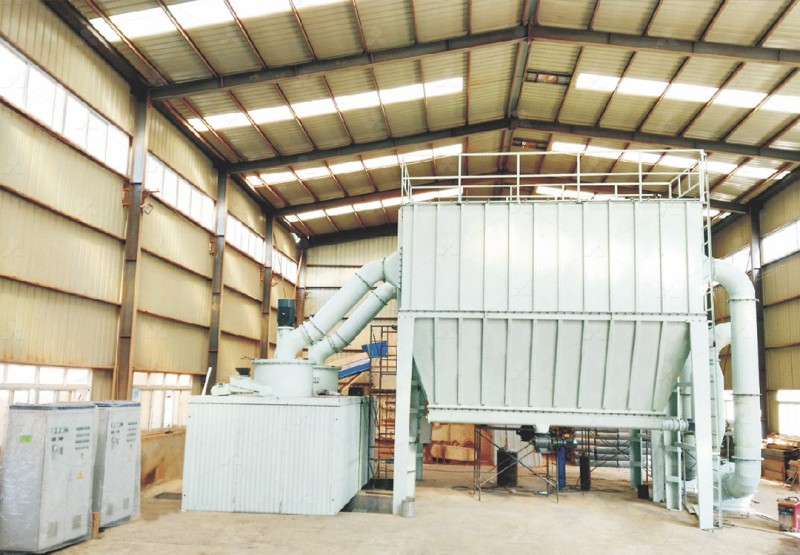
The heart of any marble powder production line is the grinding mill. Older technologies like ball mills or Raymond mills are often energy-intensive and offer limited control over particle size distribution. Upgrading to modern, high-efficiency mills can lead to substantial savings. For instance, our MW Ultrafine Grinding Mill is engineered specifically for ultra-fine powder production. It boasts a grinding efficiency that is 40% higher than jet mills and consumes 30% less energy, directly slashing your operational expenses.
2. Optimize Feed Size
Ensuring a consistent and optimal feed size (0-20mm for the MW Mill) is critical. Oversized material forces the mill to work harder, increasing wear and energy use. Implementing a pre-crushing stage with a jaw crusher can create a more uniform feed, allowing the grinding mill to operate at peak efficiency.
3. Leverage Advanced Classifier Technology
Precise classification ensures you only grind material to the required fineness, avoiding wasteful over-grinding. Mills equipped with advanced, multi-head cage-type powder selectors, like the one in our MW Mill, allow for precise adjustment between 325-2500 meshes. This ensures a high yield of on-spec product in a single pass, maximizing throughput.
4. Implement Predictive Maintenance Schedules
Unplanned downtime is a major cost driver. Choose equipment designed for reliability and easy maintenance. The MW Ultrafine Grinding Mill, for example, features a design with no rolling bearings or screws in the grinding chamber, eliminating common failure points. Furthermore, its external lubrication system allows for maintenance without shutdowns, enabling continuous 24/7 production.
5. Utilize Integrated Dust Collection Systems
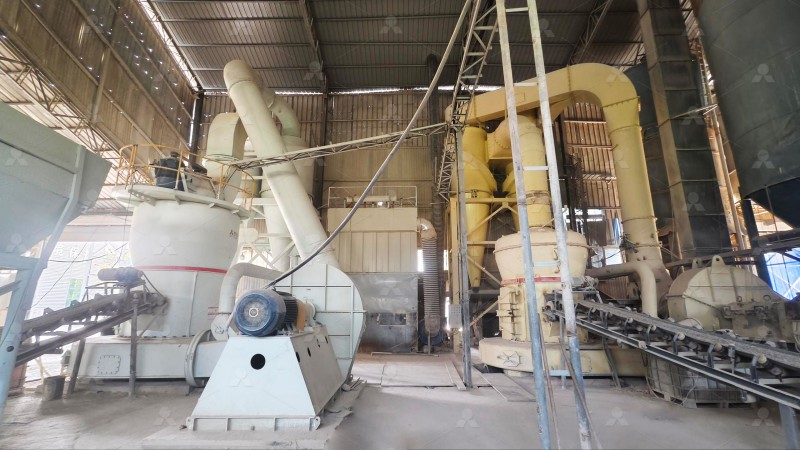
Dust isn’t just an environmental and health hazard; it’s lost product. Modern mills come with integrated, high-efficiency pulse dust collectors that capture over 99% of particulate matter. This recovers valuable product, improves plant cleanliness, and ensures compliance with environmental regulations, avoiding potential fines.
6. Embrace Automation and Digital Controls
Automation brings consistency and optimization. PLC control systems can continuously monitor and adjust parameters like grinding pressure, feed rate, and classifier speed to maintain optimal performance. This digitalized processing minimizes human error, stabilizes quality, and reduces energy consumption during off-peak production periods.
7. Consider a Vertical Mill Configuration
For operations requiring high capacity and integrated drying, a vertical grinding mill is an excellent choice. Our LUM Ultrafine Vertical Grinding Mill integrates grinding, classifying, and transporting in a single unit. Its unique roller and lining plate design generates a stable material layer for efficient grinding, reducing energy consumption by 30-50% compared to traditional systems. Its reversible structure also allows for quick and easy maintenance of grinding rollers.
8. Source Quality Wear Parts and Plan Inventory
The cost and frequency of replacing wear parts like rollers and rings directly impact operating costs. Partner with a manufacturer that provides high-quality, long-lasting wear parts made from advanced alloys. LIMING’s mills feature wear parts with a service life 1.7-2.5 times longer than traditional materials, and we ensure a sufficient supply of original spare parts for worry-free operation.
9. Optimize Overall Plant Layout
A compact, well-designed plant layout reduces the need for extensive conveying systems, lowering both initial investment and long-term energy costs for material transport. Vertical mills and advanced trapezium mills have a significantly smaller footprint than traditional ball mill systems.
10. Conduct Regular Energy Audits
Continuously measure and analyze your energy consumption per ton of output. Regular audits can identify inefficiencies, such as leaks in air systems or suboptimal motor performance. Addressing these issues can lead to continuous, incremental savings over time.
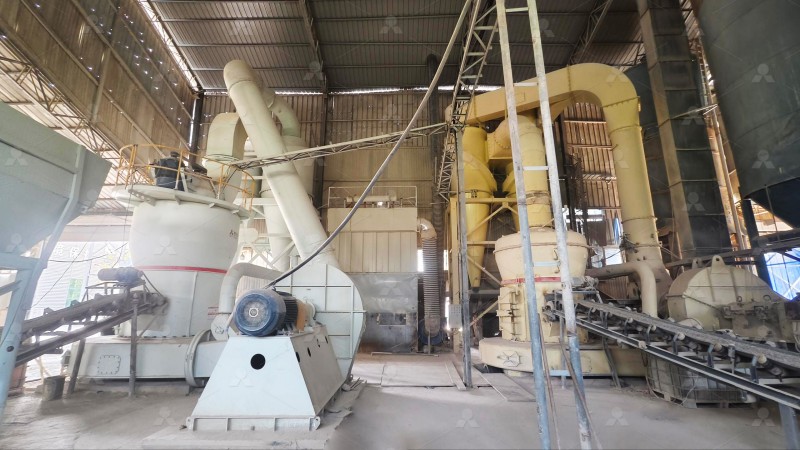
By implementing these strategies, particularly by investing in the right technology from the start, you can build a more efficient, profitable, and sustainable marble powder processing operation.
Frequently Asked Questions (FAQ)
Q: What is the most significant factor in reducing grinding costs?
A: Energy consumption is typically the largest operational cost. Investing in a high-efficiency mill like the MW Ultrafine Grinding Mill, which can reduce energy use by 30% or more, offers the most direct path to major cost savings.
Q: How can I reduce maintenance costs and downtime?
A: Select equipment with robust, simple designs that minimize failure points. Features like external lubrication (MW Mill) and reversible roller structures for easy access (LUM Mill) are specifically designed to reduce maintenance time and costs.
Q: My product requires a very specific fineness. How can I ensure consistency?
A: Advanced classifier technology is key. Look for mills with precision powder selectors that allow you to accurately control the fineness, such as the cage-type selector in the MW Mill, which ensures a high screening rate of d97≤5μm.
Q: Are these modern mills suitable for existing production lines?
A: Absolutely. While they form the core of the grinding process, our technical team can assist with integrating mills like the MW or LUM into your existing crushing and collection systems to optimize overall performance.