
Vertical Roller Mill for Bentonite Grinding: Process, Advantages, and Applications
We provide a wide range of mills — including Raymond mill, trapezoidal mill, vertical mill, ultrafine mill, and ball mill, obtained ISO9001 international quality certification, EU CE certification, and Customs Union CU-TR certification. Suitable for processing minerals such as limestone, phosphate, quicklime, kaolin, talc, barite, bentonite, calcium carbonate, dolomite, coal, gypsum, clay, carbon black, slag, cement raw materials, cement clinker, and more.
The discharge range of these mills can be adjusted to meet specific processing needs, typically from 80-400 mesh, 600-3250 mesh, and can achieve the finest particle size of up to 6000 mesh(D50).
If you are looking for a reliable grinding solution to turn stone or minerals into fine powder, please feel free to contact our online customer service.
Vertical Roller Mill for Bentonite Grinding: Process, Advantages, and Applications
Bentonite, a highly absorbent clay primarily composed of montmorillonite, is a challenging material to process due to its moisture content and plate-like structure. Achieving a consistent, ultra-fine powder is critical for its performance in applications ranging from foundry sands and drilling muds to cat litter and pharmaceuticals. The Vertical Roller Mill (VRM) has emerged as the premier technology for efficient and high-quality bentonite grinding, offering significant advantages over traditional ball mills or Raymond mills.
The Grinding Process: Precision and Efficiency
The VRM process for bentonite begins with the crushing and drying of raw material. The bentonite is fed onto the center of a rotating grinding table. Centrifugal force throws the material outward under the grinding rollers, which apply immense hydraulic pressure, crushing and shearing the clay platelets into fine particles.
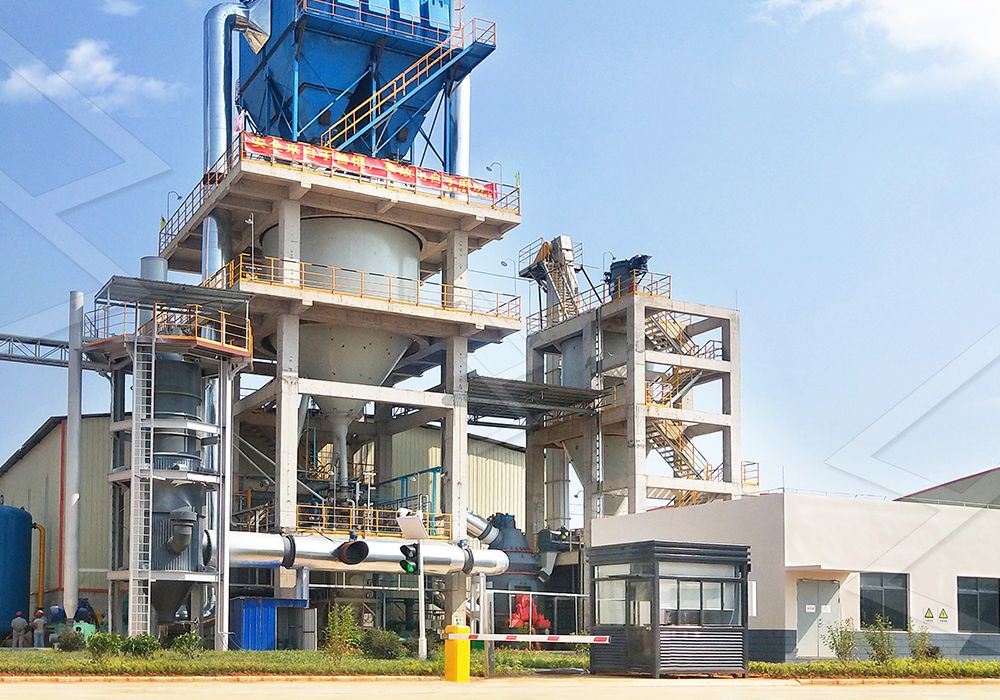
A key stream of hot air is simultaneously blown across the grinding table, performing two vital functions: it dries the moisture-laden bentonite and transports the ground fines upward to an integrated high-efficiency classifier. This classifier ensures only particles meeting the precise fineness specification (often between 200 and 1250 mesh) leave the mill as product, while coarser material is rejected back to the table for further grinding. This closed-circuit system guarantees a narrow particle size distribution and optimal efficiency.
Key Advantages for Bentonite Processing
Why is the Vertical Roller Mill so well-suited for bentonite? The benefits are substantial:
- Superior Energy Efficiency: VRMs consume 30-50% less energy than ball mills. The direct grinding of material on the table eliminates the need for the inefficient tumbling action of a ball mill.
- Integrated Drying: The hot gas stream allows for the simultaneous grinding and drying of bentonite, which often has a high natural moisture content, eliminating the need for a separate, energy-intensive drying system.
- Exceptional Product Quality: The controlled grinding pressure and precise classification result in a consistent product with a specific surface area and particle shape that enhances the functional properties of the bentonite.
- Low Noise and Dust Emissions: The entire grinding process is enclosed, and modern VRMs are equipped with advanced pulse jet baghouse dust collectors, making the operation clean and environmentally compliant.
- Compact Footprint: The vertical design requires significantly less floor space than a traditional ball mill circuit.
Recommended Mill for Bentonite: MW Ultrafine Grinding Mill
For operations requiring the finest bentonite powders with superior whiteness and purity, we highly recommend our MW Ultrafine Grinding Mill. This mill is engineered for customers who need to make ultra-fine powder and is an ideal solution for high-value bentonite applications.
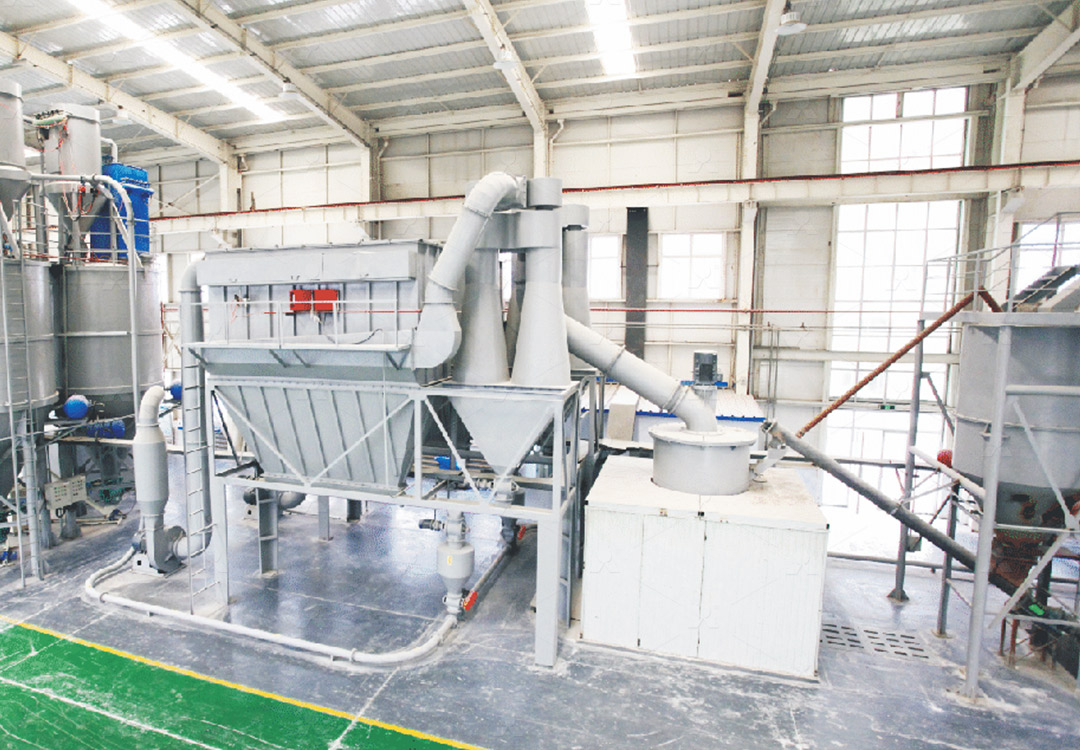
The MW Series mill boasts several critical features for bentonite: a cage-type powder selector for precise fineness adjustment between 325-2500 meshes, a grinding chamber free of rolling bearings and screws to prevent iron contamination, and an efficient pulse dust collector for a fully eco-friendly operation. With an input size of 0-20 mm and a capacity range of 0.5-25 tph, it offers flexibility and high performance for specialized bentonite production lines.
Wide-Ranging Applications of Ground Bentonite
The finely ground bentonite produced by a VRM is essential across numerous industries:
- Foundry: Used as a bonding agent in green sand molds for metal casting.
- Oil & Gas Drilling: A primary component of drilling muds for lubricating drill bits and stabilizing boreholes.
- Civil Engineering: Used as a waterproofing liner for landfills, ponds, and tunnels.
- Agriculture: An additive in animal feed and a soil conditioner to improve water retention.
- Personal Care & Pharmaceuticals: Found in products like cat litter, cosmetics, and medicinal creams due to its absorption and suspension properties.
Frequently Asked Questions (FAQ)
What is the typical fineness range achievable for bentonite with a VRM?
Vertical Roller Mills can reliably produce bentonite powder from 200 mesh (74 microns) up to 1250 mesh (10 microns) or even finer, depending on the classifier technology, such as that found in our MW Ultrafine Mill.
How does a VRM handle the high moisture content of raw bentonite?
VRMs are designed with an integrated hot gas generator (or can use waste heat from other processes). The hot gases (up to 400°C) are blown through the mill, simultaneously drying and grinding the material, making them perfectly suited for moist clays like bentonite.
What makes the MW Ultrafine Mill particularly good for bentonite?
Its lack of rolling bearings and screws in the grinding chamber is a key advantage. This design eliminates a major source of iron contamination, which is critical for maintaining the high whiteness and chemical purity required for many bentonite applications. Its adjustable fineness and high efficiency are also major benefits.
Is the Vertical Roller Mill a cost-effective solution for a new bentonite plant?
Absolutely. While the initial investment might be comparable to a traditional system, the significant savings in energy consumption (30-50%), lower maintenance costs, reduced footprint, and superior product quality lead to a much lower total cost of ownership and a rapid return on investment.