
Raymond Coal Mill Direct Firing System: Operation and Benefits
We provide a wide range of mills — including Raymond mill, trapezoidal mill, vertical mill, ultrafine mill, and ball mill, obtained ISO9001 international quality certification, EU CE certification, and Customs Union CU-TR certification. Suitable for processing minerals such as limestone, phosphate, quicklime, kaolin, talc, barite, bentonite, calcium carbonate, dolomite, coal, gypsum, clay, carbon black, slag, cement raw materials, cement clinker, and more.
The discharge range of these mills can be adjusted to meet specific processing needs, typically from 80-400 mesh, 600-3250 mesh, and can achieve the finest particle size of up to 6000 mesh(D50).
If you are looking for a reliable grinding solution to turn stone or minerals into fine powder, please feel free to contact our online customer service.
Raymond Coal Mill Direct Firing System: Operation and Benefits
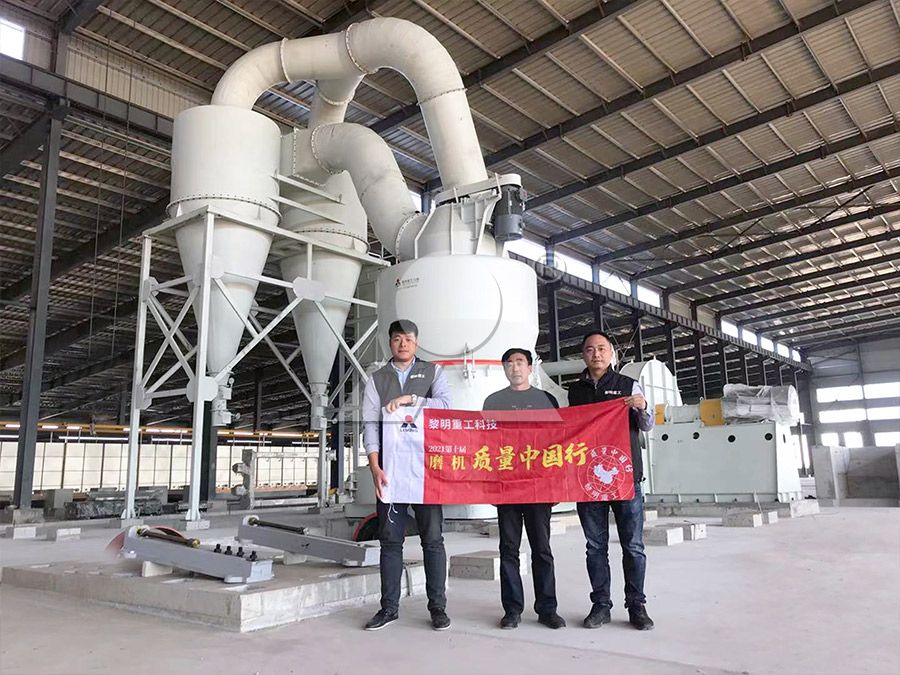
In the realm of industrial processing, particularly within power generation and cement production, the efficiency of pulverized coal preparation is paramount. The Raymond Coal Mill, a long-standing workhorse in this field, forms the core of many direct firing systems. These systems are engineered to grind raw coal, dry it, and then transport the resulting pulverized coal directly to the burners in a single, continuous, and integrated process. This methodology eliminates the need for intermediate storage, streamlining operations and enhancing overall system responsiveness.
Core Operational Principles
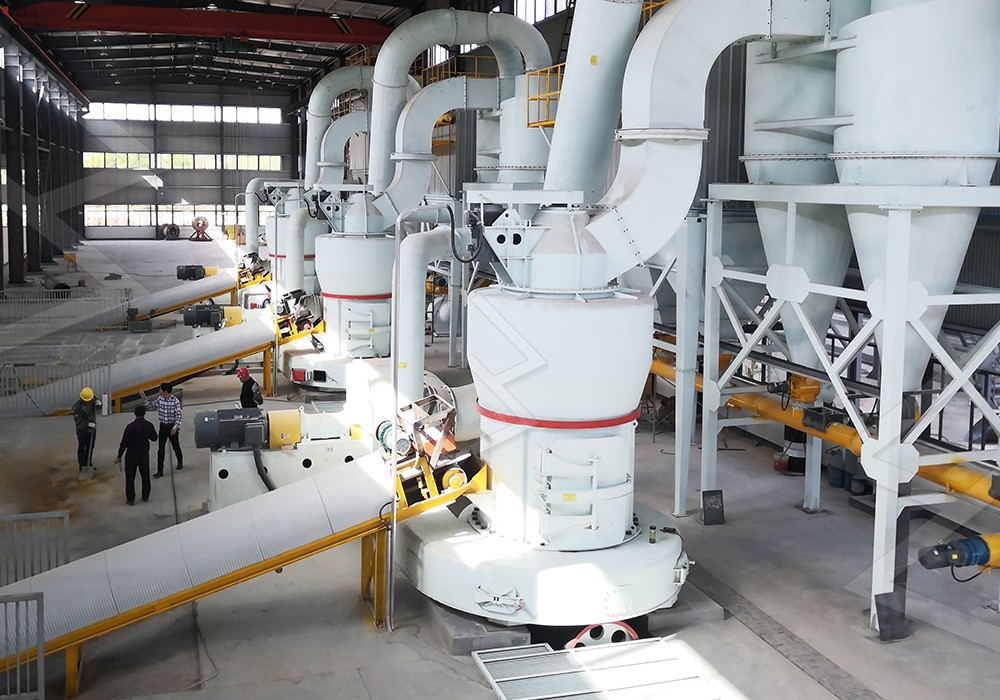
A typical Raymond Mill-based direct firing system operates on the principle of grinding by compression. Raw coal, fed from a bunker, is introduced into the grinding chamber. Here, spring-loaded grinding rollers rotate against a stationary grinding ring, crushing the coal. The fineness of the product is controlled by an integral classifier; oversize particles are rejected back to the grinding zone for further reduction, while correctly sized powder is pneumatically transported by a primary air fan.
This primary air serves a dual purpose: it dries the coal within the mill and acts as the transport medium, carrying the pulverized fuel through pipes directly to the furnace burners. The immediate consumption of the coal powder mitigates explosion risks associated with storage and ensures a consistent, controllable feed rate that perfectly matches the boiler’s demand, leading to more stable combustion and higher thermal efficiency.
Tangible Benefits for Modern Industry
The adoption of a Raymond direct firing system delivers a suite of significant advantages:
- Compact Footprint: By integrating grinding, drying, and classification into a single unit and eliminating storage silos, the system requires considerably less floor space.
- Enhanced Responsiveness: The system can quickly adjust its output to match load changes on the boiler, providing excellent operational flexibility.
- Reduced Energy Consumption: Direct firing is inherently more energy-efficient than indirect systems, as it avoids the energy losses linked to storing and reclaiming pulverized coal.
- Operational Safety: Minimizing the inventory of pulverized coal inside the system at any given time drastically reduces the potential for dust explosions.
- Lower Capital Investment: The simplified layout, with fewer components like storage and feeding systems, translates to lower initial installation costs.
Evolving with Technology: Advanced Grinding Solutions
While the traditional Raymond Mill is a proven technology, continuous innovation has led to more advanced and efficient grinding solutions. For operations requiring higher capacity, superior fineness, or enhanced energy efficiency, modern vertical roller mills represent the next evolutionary step.
For instance, our LM Vertical Coal Mill is specifically engineered for this application. It integrates crushing, grinding, drying, classification, and conveying, offering a significant leap in performance. Its key advantages include a 40-50% reduction in power consumption compared to ball mills, stable product quality due to short material retention time, and a high degree of automation for worry-free operation. The system operates under negative pressure, ensuring a dust-free environment.
For applications demanding ultra-fine pulverized coal or processing of other minerals, our MW Ultrafine Grinding Mill is an exceptional choice. Capable of handling input sizes up to 20mm with a capacity range of 0.5-25 TPH, it produces powders adjustable between 325 to 2500 meshes. Its innovative design features no rolling bearings or screws in the grinding chamber, eliminating common failure points. Furthermore, it is equipped with an efficient pulse dust collector and silencer, making its operation remarkably eco-friendly with minimal dust and noise pollution.
Frequently Asked Questions (FAQ)
What is the primary difference between direct and indirect firing systems?
In a direct firing system, coal is ground and immediately blown into the furnace for combustion. An indirect system grinds coal first, stores it in a silo or bin, and then feeds it to the burners from this storage vessel, which is a less responsive and potentially riskier process.
How does a Raymond Mill control the fineness of the coal powder?
Fineness is primarily controlled by an internal mechanical classifier. The speed of the classifier can often be adjusted. Higher speeds allow only the finest particles to exit the mill, while lower speeds permit coarser material to pass, ensuring precise control over the final product.
What are the main maintenance points for a Raymond Mill direct firing system?
Key maintenance focuses on the wear parts: grinding rollers, grinding rings, and classifier blades. Regular inspection and timely replacement of these components are crucial for maintaining mill performance and output quality. Modern mills like our LM and MW series are designed with easier maintenance access and more durable materials to extend service intervals.
Can these systems handle coals with high moisture content?
Yes, the hot primary air used to transport the coal also serves to dry it inside the mill. The system is designed to handle a certain percentage of surface moisture. For coals with very high moisture, additional pre-drying or a mill with enhanced drying capabilities (like our LM Vertical Mill) may be required.