
110 Ton Per Hour Calcium Carbide Slag Grinding Mill Production Line
We provide a wide range of mills — including Raymond mill, trapezoidal mill, vertical mill, ultrafine mill, and ball mill, obtained ISO9001 international quality certification, EU CE certification, and Customs Union CU-TR certification. Suitable for processing minerals such as limestone, phosphate, quicklime, kaolin, talc, barite, bentonite, calcium carbonate, dolomite, coal, gypsum, clay, carbon black, slag, cement raw materials, cement clinker, and more.
The discharge range of these mills can be adjusted to meet specific processing needs, typically from 80-400 mesh, 600-3250 mesh, and can achieve the finest particle size of up to 6000 mesh(D50).
If you are looking for a reliable grinding solution to turn stone or minerals into fine powder, please feel free to contact our online customer service.
Optimizing Industrial Byproduct Processing: A 110 TPH Calcium Carbide Slag Solution
Calcium carbide slag, a byproduct of acetylene gas production, presents both a disposal challenge and a potential resource. With growing environmental regulations and a push for sustainable industrial practices, efficiently processing this material into a valuable product is paramount. A production line capable of handling 110 tons per hour requires robust, efficient, and reliable technology designed for high-volume, abrasive applications.
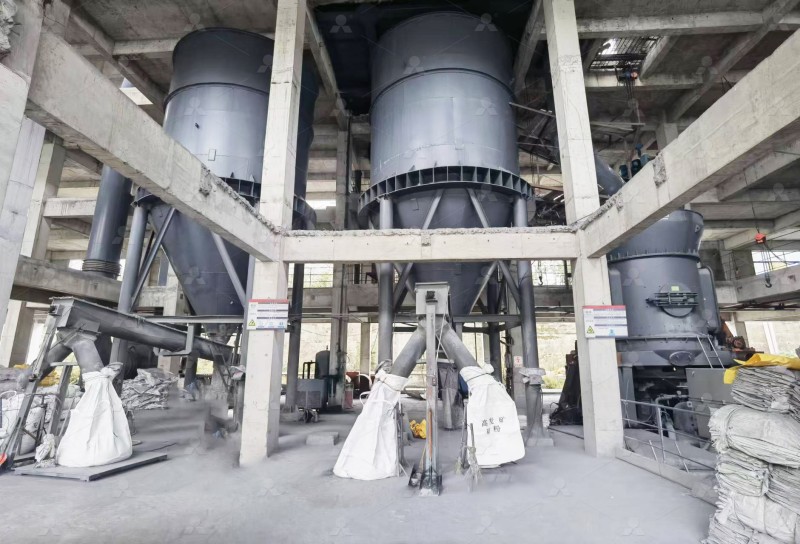
The key to a successful operation lies in selecting the right grinding mill. The mill must not only achieve the desired fineness but also operate with lower energy consumption, minimal maintenance downtime, and integrated environmental controls to handle dust. For such a high-capacity requirement, vertical grinding mills are often the preferred choice due to their integrated drying, grinding, classifying, and conveying capabilities.
Recommended Equipment for High-Capacity Slag Grinding
For a 110 TPH calcium carbide slag production line, our LM Vertical Grinding Mill stands out as an exceptional solution. This mill is specifically engineered for processing industrial wastes like slag, integrating multiple processes into a single, compact unit.
- High Capacity & Efficiency: With a capacity range of 3-340 TPH, it easily meets the 110 TPH demand. Its integrated design reduces energy consumption by 30%-40% compared to traditional ball mills, significantly lowering operating costs.
- Superior Product Quality: The material’s short residence time in the mill minimizes over-grinding and reduces iron contamination, ensuring a high-purity, consistent final product ideal for applications in cement and concrete.
- Environmental Compliance: The system operates under negative pressure with a pulse dust collector, ensuring a dust-free workshop and keeping emissions far below international standards.
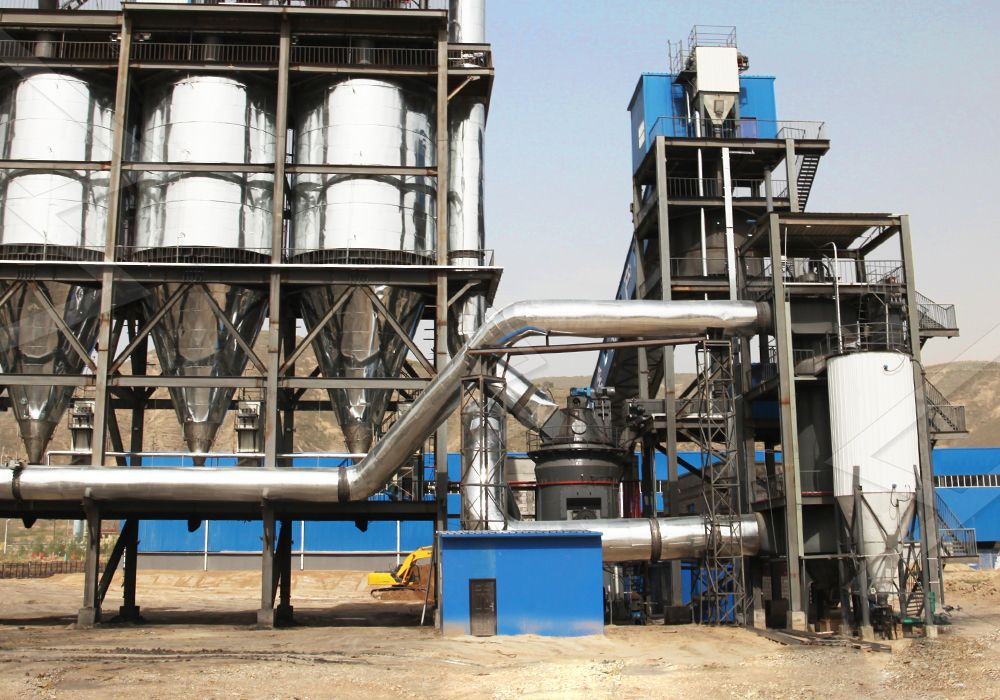
An alternative for slightly lower but still significant capacity needs is the LUM Ultrafine Vertical Grinding Mill. While its capacity (5-18 TPH) is suited for multiple parallel units to achieve 110 TPH, it excels in producing higher fineness powders with advanced powder separating technology and exceptional energy efficiency, reducing consumption by 30%-50%.
Key Considerations for the Production Line
Designing a complete 110 TPH line involves more than just the grinding mill. A holistic approach ensures seamless operation:
- Feed System: A robust jaw crusher and vibrating feeder are crucial to consistently reduce raw slag to a size suitable for the mill (ideally below 70mm for the LM mill).
- Drying: Since slag often contains moisture, the mill’s integrated hot air system simultaneously dries and grinds the material.
- Classification & Collection: An efficient powder separator integrated within the mill ensures precise particle size control, while a pulse bag dust collector captures over 99% of particulates.
- Automation: A central PLC control system allows for remote monitoring and adjustment of key parameters like grinding pressure and feeder speed, optimizing performance and reducing labor costs.
Frequently Asked Questions (FAQ)
Q: What is the typical fineness range achievable for calcium carbide slag with the LM Vertical Grinding Mill?
A: The LM mill can easily achieve a fineness between 325 mesh (45μm) and 2500 mesh (5μm), making it suitable for various applications, from cement additive to high-value fillers.
Q: How does the LM mill handle the abrasive nature of calcium carbide slag?
A: The grinding rollers and table liner are made from high-performance, wear-resistant alloy materials. Their service life is significantly longer than traditional components, and their split design allows for easy replacement of worn parts, minimizing downtime.
Q: Is the 110 TPH capacity a guaranteed output?
A: The output is dependent on the raw material’s feed size, hardness, and required fineness. Our engineers conduct thorough material tests to model and guarantee the production line’s performance based on your specific slag properties.
Q: What are the primary environmental benefits of this setup?
A> The system transforms an industrial waste product into a usable resource. Furthermore, its fully enclosed design with negative pressure and advanced dust collection eliminates particulate pollution, contributing to a cleaner, safer plant environment.