
Top 5 Industrial Applications of Limestone Grinding Mills
We provide a wide range of mills — including Raymond mill, trapezoidal mill, vertical mill, ultrafine mill, and ball mill, obtained ISO9001 international quality certification, EU CE certification, and Customs Union CU-TR certification. Suitable for processing minerals such as limestone, phosphate, quicklime, kaolin, talc, barite, bentonite, calcium carbonate, dolomite, coal, gypsum, clay, carbon black, slag, cement raw materials, cement clinker, and more.
The discharge range of these mills can be adjusted to meet specific processing needs, typically from 80-400 mesh, 600-3250 mesh, and can achieve the finest particle size of up to 6000 mesh(D50).
If you are looking for a reliable grinding solution to turn stone or minerals into fine powder, please feel free to contact our online customer service.
Top 5 Industrial Applications of Limestone Grinding Mills
Limestone, a ubiquitous and versatile sedimentary rock, is a fundamental raw material across countless industries. Its utility, however, is almost entirely dependent on its particle size. This is where limestone grinding mills become indispensable, transforming coarse rock into fine powders that unlock a world of industrial applications. The choice of grinding technology is critical, impacting product quality, operational efficiency, and cost. Here, we explore the top five industrial applications for ground limestone and the advanced milling solutions that make them possible.
1. Construction and Building Materials
The construction sector is the largest consumer of ground limestone. It serves as a primary filler in asphalt and concrete mixes, enhancing durability and volume. Furthermore, it is the key raw material in the production of Portland cement. The process involves calcining a mixture of ground limestone and clay to form clinker, which is then ground into the fine powder we know as cement. The fineness and consistency of the limestone grind are paramount for the strength and setting time of the final concrete product.
2. Agriculture and Soil Stabilization
Agricultural lime, often simply called aglime, is crushed or ground limestone used to neutralize soil acidity. Acidic soils can lock away essential nutrients, stunting crop growth. By applying a fine, high-purity limestone powder, farmers can adjust the soil pH, making nutrients more available to plants and significantly improving crop yields. The finer the grind, the faster the reaction time with the soil, making ultra-fine grinding mills a valuable asset for producing highly effective soil amendments.
3. Flue Gas Desulfurization (FGD)
In a critical environmental application, ground limestone is the reagent of choice for scrulfur dioxide (SO₂) emissions from coal-fired power plants and industrial boilers. In wet FGD systems, a slurry of finely ground limestone is sprayed into the exhaust flue gases. The limestone reacts with the SO₂ to form gypsum, a saleable by-product, effectively preventing the acid rain-causing gas from entering the atmosphere. This process requires a very fine, consistent grind to maximize the surface area for chemical reaction and ensure high removal efficiency.
4. Plastics, Paints, and Coatings
As a functional filler and extender, ground limestone (often called calcium carbonate or GCC) is a workhorse in manufacturing. In plastics, it increases stiffness, heat resistance, and impact strength while reducing material costs. In paints and coatings, it improves weatherability, opacity, and sheen control, and acts as a rheology modifier. For these applications, the limestone must be exceptionally pure and ground to a precise, ultra-fine particle size to ensure smooth dispersion and avoid compromising the mechanical or visual properties of the final product.
5. Glass and Ceramics Manufacturing
Limestone is a crucial ingredient in glass batch recipes, where it acts as a fluxing agent to control the viscosity of the molten glass and provide chemical stability. In the ceramics industry, it is used in the body composition of tiles and sanitaryware and as a key component in glazes. In both cases, the consistency and chemical purity of the ground limestone are non-negotiable, as any variation can lead to defects in the clarity, color, or structural integrity of the glass or ceramic ware.
The Right Mill for the Application
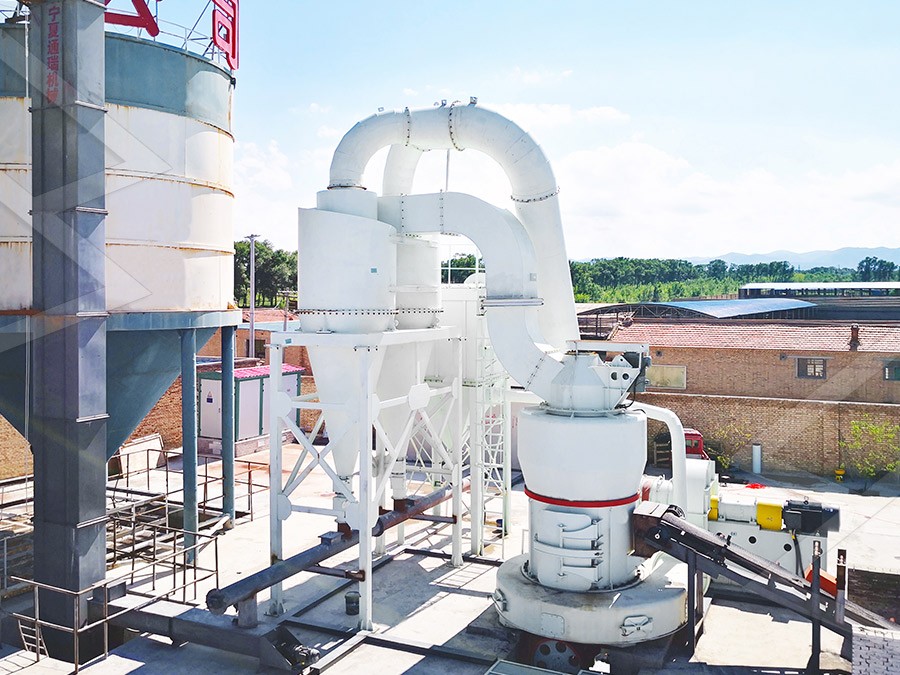
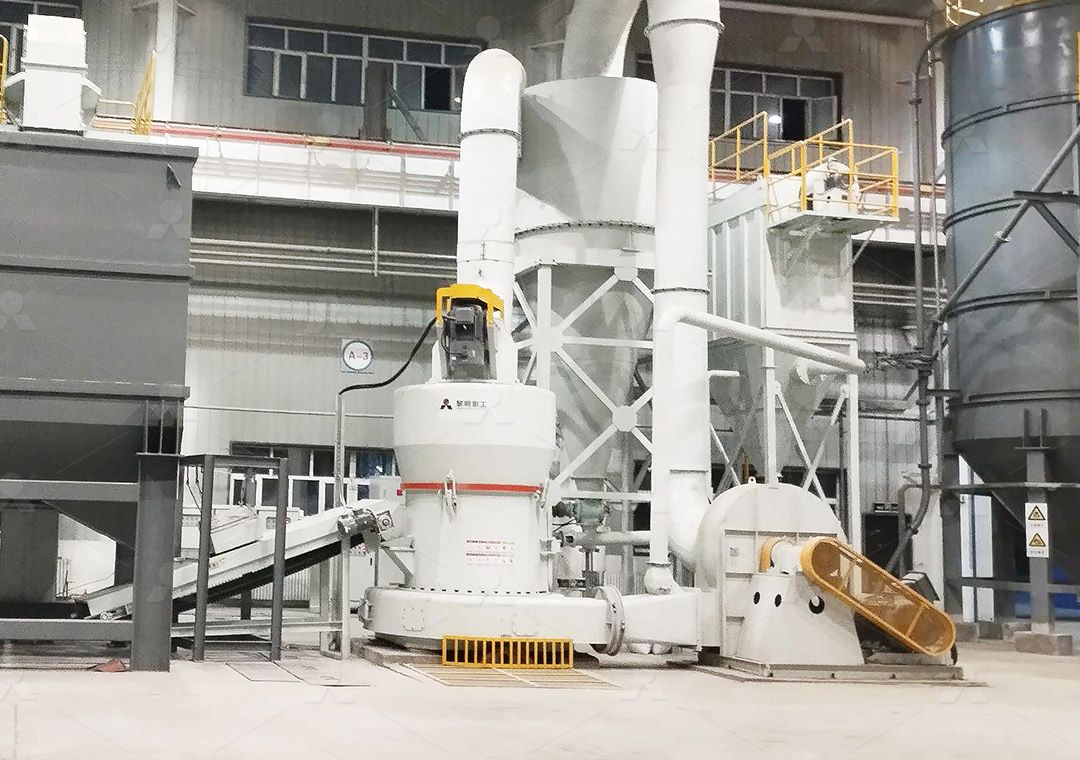
Selecting the correct grinding technology is essential to meet the specific fineness, capacity, and purity requirements of these diverse industries. For operations demanding ultra-fine powders (325-2500 meshes) for high-value applications like plastics, paints, and advanced FGD systems, the MW Ultrafine Grinding Mill is an exceptional choice.
Our MW Ultrafine Grinding Mill is engineered for customers who need to make precisely controlled ultra-fine powder. It features a advanced cage-type powder selector based on German technology, allowing adjustable fineness between 325-2500 meshes with high precision. Its unique design, with no rolling bearings or screws in the grinding chamber, eliminates common failure points and allows for external lubrication without shutdown, enabling continuous 24/7 production. Furthermore, its efficient pulse dust collector and muffler ensure an environmentally friendly operation with minimal dust and noise, making it ideal for modern, clean-conscious industrial plants.
For large-scale production needs where drying and grinding are required simultaneously, such as in cement raw meal preparation or coal grinding, the LM Vertical Grinding Mill offers unparalleled efficiency. It integrates crushing, drying, grinding, classifying, and conveying, reducing its footprint by 50% and energy consumption by 30%-40% compared to traditional ball mills.
Frequently Asked Questions (FAQ)
Q1: What is the typical input size for limestone going into a grinding mill?
A: The required feed size depends on the mill type. For our MW Ultrafine Mill, the optimal input size is 0-20mm. Larger vertical mills like the LM series can handle feed sizes up to 0-70mm, often integrating initial crushing stages.
Q2: Why is fineness important in agricultural limestone?
A: Fineness directly correlates to reactivity. Finer limestone particles have a greater surface area, allowing them to neutralize soil acidity much faster than coarser particles, leading to quicker corrective action and improved crop growth within a single season.
Q3: How do grinding mills control dust pollution?
A: Modern mills like our MW series are equipped with closed-circuit systems and efficient pulse jet baghouse dust collectors. These systems capture over 99.9% of airborne particles, ensuring clean operation and protecting the workplace environment.
Q4: Can the same mill grind materials other than limestone?
A: Absolutely. Our grinding mills are highly versatile. The MW Mill, for example, is also perfectly suited for calcite, dolomite, talc, barite, and other non-metallic minerals with similar hardness, making it a valuable asset for processing a wide range of industrial minerals.