
Top 5 Industrial Applications of Limestone Grinding Mills
We provide a wide range of mills — including Raymond mill, trapezoidal mill, vertical mill, ultrafine mill, and ball mill, obtained ISO9001 international quality certification, EU CE certification, and Customs Union CU-TR certification. Suitable for processing minerals such as limestone, phosphate, quicklime, kaolin, talc, barite, bentonite, calcium carbonate, dolomite, coal, gypsum, clay, carbon black, slag, cement raw materials, cement clinker, and more.
The discharge range of these mills can be adjusted to meet specific processing needs, typically from 80-400 mesh, 600-3250 mesh, and can achieve the finest particle size of up to 6000 mesh(D50).
If you are looking for a reliable grinding solution to turn stone or minerals into fine powder, please feel free to contact our online customer service.
Top 5 Industrial Applications of Limestone Grinding Mills
Limestone, a versatile and abundant sedimentary rock, is a fundamental raw material across numerous industries. Its value, however, is unlocked through the process of grinding, which transforms raw limestone into powders of various fineness. The choice of grinding mill technology is paramount, directly impacting product quality, operational efficiency, and environmental footprint. Here, we explore the top five industrial applications for finely ground limestone and the advanced milling solutions that make them possible.
1. Construction and Building Materials
The construction sector is the largest consumer of ground limestone. It serves as a primary component in cement production, where it is calcined and mixed with other materials. Finely ground limestone is also a key ingredient in asphalt and concrete mixes, acting as a filler to improve volume stability, durability, and workability. The consistent particle size achieved by modern grinding mills ensures uniform mixing and enhances the final product’s structural integrity.
2. Environmental Flue Gas Desulfurization (FGD)
In the power generation and heavy industries, controlling sulfur dioxide (SO₂) emissions is critical. Flue Gas Desulfurization systems utilize a slurry of finely ground limestone to absorb and neutralize SO₂ from exhaust gases. The efficiency of this chemical reaction is highly dependent on the limestone’s surface area; a finer, more reactive powder ensures maximum SO₂ removal, helping plants meet stringent environmental regulations.
3. Agriculture and Soil Stabilization
Agricultural lime, or aglime, is crushed or ground limestone used to neutralize soil acidity. By adjusting the soil pH, aglime makes essential nutrients more available to crops, promoting healthier growth and higher yields. The fineness of the grind is crucial—finer particles dissolve and react with the soil much more quickly than coarse particles, providing a faster corrective action.
4. Plastics, Paints, and Coatings
As a functional filler and extender, ground limestone (often called calcium carbonate) is indispensable in manufacturing. In plastics, it improves stiffness, heat resistance, and dimensional stability. In paints and coatings, it enhances opacity, durability, and sheen control while reducing the need for more expensive raw materials like titanium dioxide. The ultra-fine, consistent quality of the powder is non-negotiable for these high-value applications.
5. Glass and Ceramics Manufacturing
Limestone is a crucial fluxing agent in glass production, reducing the melting temperature of silica and controlling the viscosity of the glass melt. In ceramics, it is used in glazes and the body composition. In both industries, the chemical purity and precise particle size distribution of the ground limestone are vital for ensuring product clarity, color, strength, and overall quality.
The Right Mill for the Application
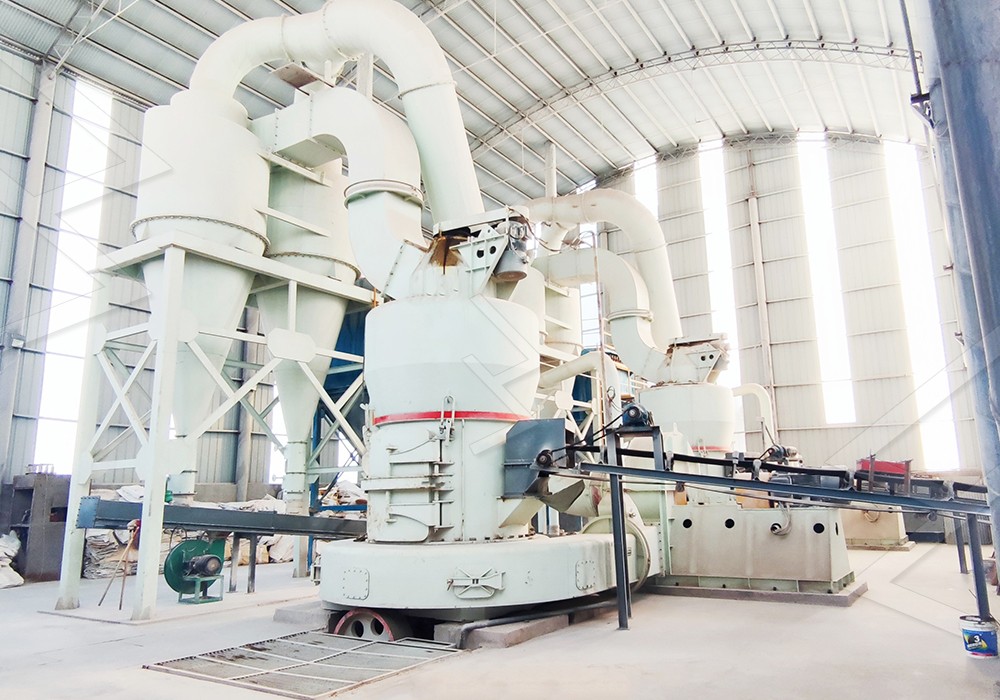
Selecting the appropriate grinding technology is essential to meet the specific fineness, capacity, and operational requirements of these diverse applications. For producers seeking to create high-value, ultra-fine powders for sectors like plastics, paints, and advanced chemicals, the MW Ultrafine Grinding Mill is an exceptional choice.
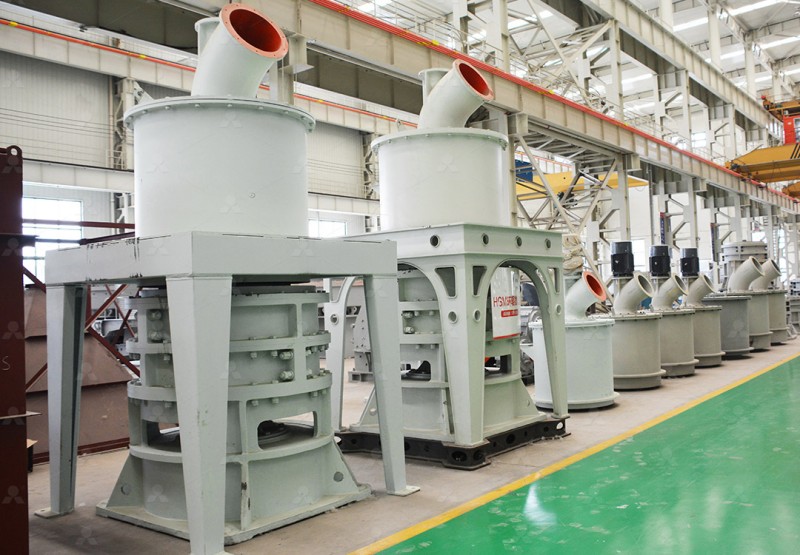
Engineered for precision, the MW Series mill can produce powders with a fineness adjustable between 325 to 2500 meshes. Its innovative design features higher yielding and lower energy consumption—achieving 40% higher capacity than jet mills while using only 30% of the energy. Its unique construction, with no rolling bearings or screws in the grinding chamber, eliminates common failure points and allows for continuous 24/7 operation. Furthermore, its integrated pulse dust collector and muffler ensure a clean, quiet, and environmentally compliant production process, making it ideal for modern, responsible manufacturing facilities.
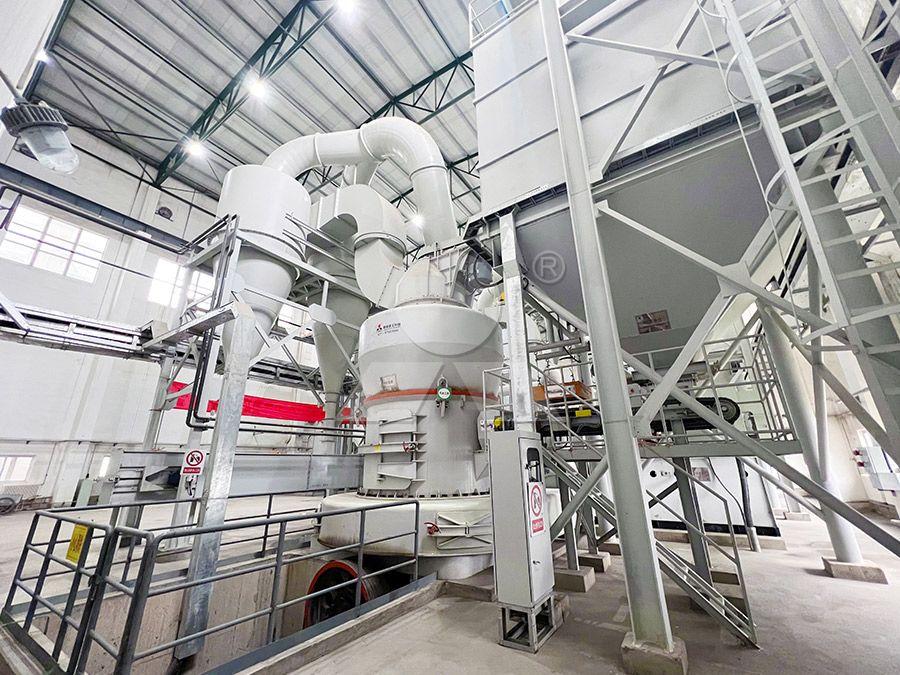
For large-scale production of fine powders in applications like FGD or construction materials, the LUM Ultrafine Vertical Grinding Mill offers unparalleled efficiency and stability. Integrating grinding, grading, and transporting, the LUM mill features advanced roller technology and multi-head powder separating technology for superior energy savings (30%-50% less than common mills) and easier maintenance with its reversible roller structure.
Frequently Asked Questions (FAQ)
Q1: Why is fineness so important in ground limestone applications?
A: Fineness directly correlates to the material’s chemical reactivity and surface area. Finer particles dissolve, react, and blend more completely and rapidly, which is critical for processes like FGD, soil amendment, and achieving desired properties in plastics and paints.
Q2: What are the key factors when choosing a limestone grinding mill?
A: Key factors include the desired product fineness (mesh size), required production capacity (tph), energy consumption targets, the hardness and moisture content of the raw limestone, and the necessary level of automation and environmental controls (e.g., dust collection).
Q3: How does the MW Ultrafine Grinding Mill achieve such high fineness?
A: The MW Mill utilizes a cage-type powder selector based on German technology, which provides extremely precise particle separation. The multi-head selector can be configured to specific yield and fineness requirements, reliably achieving a fine powder with a screening rate of d97≤5μm in a single pass.
Q4: Can these mills handle materials other than limestone?
A: Absolutely. Mills like the MW and LUM series are highly versatile and can process a wide range of non-metallic minerals with similar hardness, including calcite, dolomite, barite, marble, talc, and gypsum.