
Large Limestone Grinding Equipment: Mills, Systems & Selection Guide
We provide a wide range of mills — including Raymond mill, trapezoidal mill, vertical mill, ultrafine mill, and ball mill, obtained ISO9001 international quality certification, EU CE certification, and Customs Union CU-TR certification. Suitable for processing minerals such as limestone, phosphate, quicklime, kaolin, talc, barite, bentonite, calcium carbonate, dolomite, coal, gypsum, clay, carbon black, slag, cement raw materials, cement clinker, and more.
The discharge range of these mills can be adjusted to meet specific processing needs, typically from 80-400 mesh, 600-3250 mesh, and can achieve the finest particle size of up to 6000 mesh(D50).
If you are looking for a reliable grinding solution to turn stone or minerals into fine powder, please feel free to contact our online customer service.
Large Limestone Grinding Equipment: Mills, Systems & Selection Guide
Selecting the optimal grinding equipment for large-scale limestone processing is a critical decision that impacts productivity, operational costs, and final product quality. The choice hinges on understanding the specific requirements of your application, including desired fineness, capacity, and the unique properties of your limestone feed.
Modern grinding systems have evolved far beyond traditional ball mills, offering enhanced efficiency, superior particle size control, and integrated drying capabilities. Key considerations include the initial feed size, required production throughput (tph), and the target powder fineness (often measured in meshes or microns).
Core Technologies in Limestone Grinding
The industry standard has shifted towards vertical roller mills and advanced trapezium mills for their energy efficiency and compact design. These mills integrate multiple processes—crushing, grinding, classifying, and drying—into a single, streamlined system, significantly reducing the plant’s footprint and energy consumption.
A critical advancement is the move towards ultra-fine grinding solutions, which unlock higher-value applications for limestone powder in sectors like plastics, paints, and advanced composites. Achieving a consistent, ultra-fine product (d97 ≤ 5μm) requires precise control over grinding mechanics and air classification.
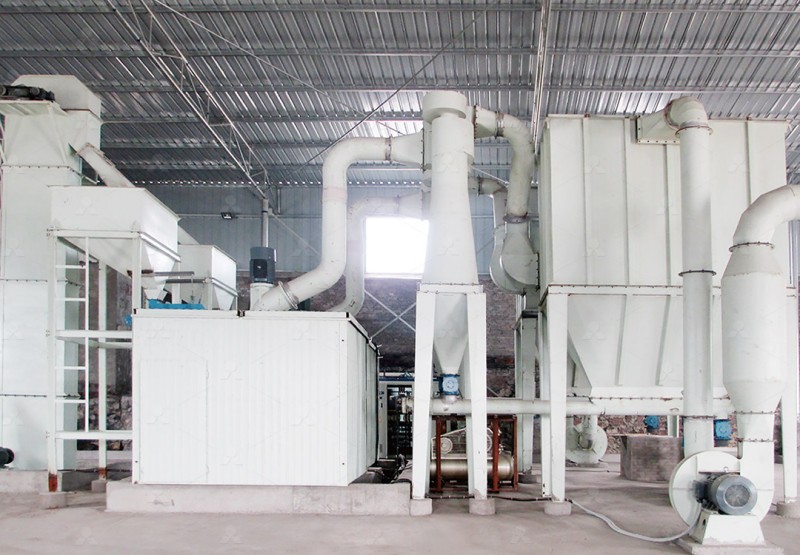
Featured Solution: MW Ultrafine Grinding Mill
For operations demanding ultra-fine limestone powder, the MW Ultrafine Grinding Mill represents a technological leap forward. Engineered for customers who need to produce high-purity powder between 325-2500 meshes, this mill is designed for higher yield and lower energy consumption.
Its standout feature is a German-designed, multi-head cage-type powder selector that ensures precise particle separation and a high screening rate. Unlike conventional designs, the grinding chamber contains no rolling bearings or screws, eliminating common failure points and concerns about loose components causing catastrophic damage. This design allows for external lubrication without shutdown, supporting continuous 24/7 production.
With an input size of 0-20 mm and a capacity range of 0.5-25 tph, the MW series is exceptionally versatile. It is equipped with an efficient pulse dust collector and muffler, ensuring the entire production process meets stringent national environmental protection standards by minimizing dust and noise pollution.
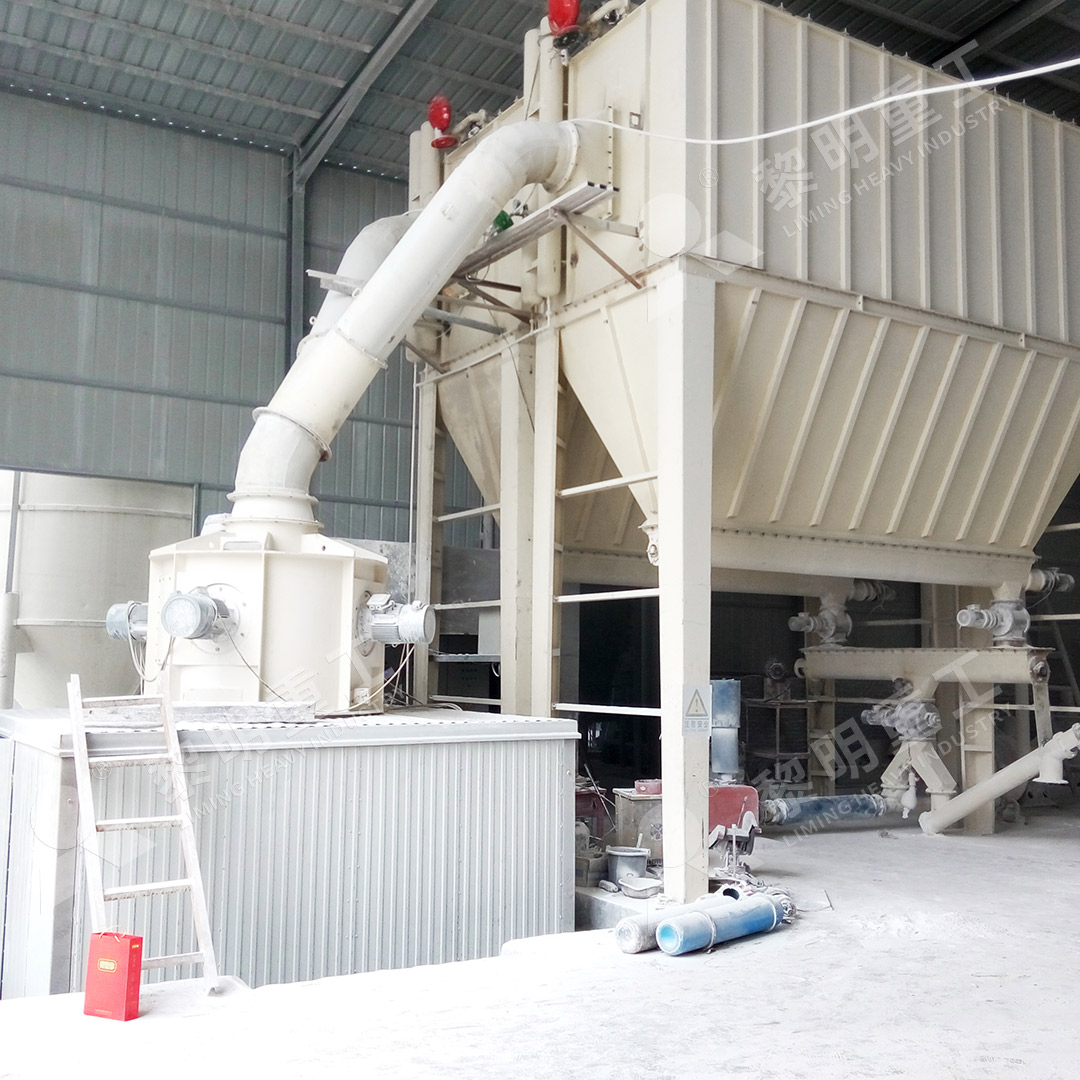
Alternative for Integrated Grinding: LUM Ultrafine Vertical Mill
Another premier option for high-value limestone processing is the LUM Ultrafine Vertical Grinding Mill. This mill combines latest-generation Taiwanese grinding roller technology with German powder separating technology. It is an integrated system that excels at grinding, grading, and transporting material with exceptional efficiency.
A key advantage is its unique roller shell and lining plate grinding curve, which promotes stable material layer formation and enables a high rate of finished product from a single pass. Its PLC control system and multi-head powder separating technology allow for precise control over grinding parameters, reducing energy consumption by 30%-50% compared to common grinding mills. Designed with maintenance in mind, its reversible structure and hydraulic system allow operators to easily move the grinding roller out of the body for inspection and part replacement, minimizing downtime.
Making the Right Selection
Choosing between these advanced systems depends on your specific project goals. Prioritize ultra-fine powder with minimal energy use? The MW Series is a formidable choice. Need an integrated, automated vertical solution for large volumes with easy maintenance? The LUM Series offers compelling advantages.
Always consult with application engineers to review your raw material analysis and product specifications. Pilot testing is often recommended to confirm machine selection and predict operational performance accurately.
Frequently Asked Questions (FAQ)
What is the main advantage of a vertical roller mill over a traditional ball mill for limestone?
Vertical roller mills offer a significantly smaller footprint, up to 50% less energy consumption, and integrated drying and classifying functions, which ball mills lack. They provide a more efficient, compact, and modern grinding solution.
How fine can limestone typically be ground with the MW Ultrafine Mill?
The MW Ultrafine Grinding Mill can produce limestone powder with a fineness adjustable between 325 to 2500 meshes, achieving a precise cut point of d97 ≤ 5μm.
Are these grinding systems environmentally friendly?
Yes. Modern mills like the MW and LUM series are designed with environmental protection as a core principle. They are equipped with high-efficiency pulse dust collectors to eliminate dust pollution and silencers to reduce operational noise, ensuring full compliance with environmental standards.
What support is available for maintenance and spare parts?
Manufacturers like LIMING provide comprehensive technical support and guarantee the supply of original spare parts. Features like the external lubrication system on the MW mill and the reversible roller structure on the LUM mill are specifically designed to simplify maintenance and ensure worry-free long-term operation.