
Best Mill for Wet Grinding of Calcium Carbonate: A Comprehensive Guide
We provide a wide range of mills — including Raymond mill, trapezoidal mill, vertical mill, ultrafine mill, and ball mill, obtained ISO9001 international quality certification, EU CE certification, and Customs Union CU-TR certification. Suitable for processing minerals such as limestone, phosphate, quicklime, kaolin, talc, barite, bentonite, calcium carbonate, dolomite, coal, gypsum, clay, carbon black, slag, cement raw materials, cement clinker, and more.
The discharge range of these mills can be adjusted to meet specific processing needs, typically from 80-400 mesh, 600-3250 mesh, and can achieve the finest particle size of up to 6000 mesh(D50).
If you are looking for a reliable grinding solution to turn stone or minerals into fine powder, please feel free to contact our online customer service.
Best Mill for Wet Grinding of Calcium Carbonate: A Comprehensive Guide
Calcium carbonate (CaCO3) is one of the most versatile and widely used industrial minerals. Its applications span from plastics and paints to pharmaceuticals and food. A critical factor in these applications is the particle size distribution and fineness of the powder, which is directly determined by the grinding process. While dry grinding is common, wet grinding offers distinct advantages for calcium carbonate, including higher efficiency, a narrower particle size distribution, and the elimination of dust. Selecting the right mill is paramount for achieving optimal product quality and operational economics.
Why Wet Grinding for Calcium Carbonate?
Wet grinding with a stirred media mill is often the preferred method for achieving ultra-fine (< 2μm) and nano-grade calcium carbonate. The liquid medium, typically water, acts as a coolant, preventing heat-sensitive modifications of the carbonate and allowing for higher energy input. It also helps transport the material and prevents the re-agglomeration of fine particles, a common issue in dry milling. The result is a slurry with excellent fineness, brightness, and stability, which is ideal for coatings and high-end filler applications.
Key Considerations in Mill Selection
Choosing the best mill involves balancing several factors:
- Target Fineness: The required D97 or top cut particle size.
- Production Capacity: Desired throughput in tons per hour.
- Energy Efficiency: Power consumption per ton of product.
- Contamination: Minimizing iron or other material wear from the mill itself.
- Operational Stability & Maintenance: Ease of operation and cost of upkeep.
Top Mill Recommendations for Wet Grinding CaCO3
Based on extensive industry experience and technical performance, two mills stand out for the wet grinding of calcium carbonate.
1. MW Ultrafine Grinding Mill
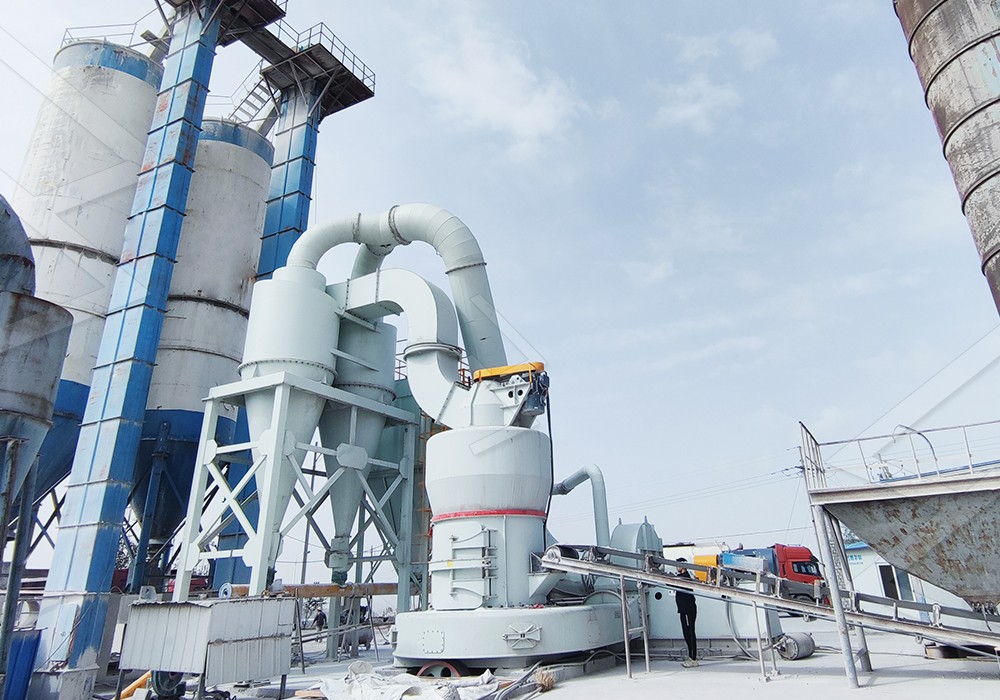
For operations demanding the highest levels of fineness, our MW Ultrafine Grinding Mill is an exceptional choice. Engineered for customers who need to make ultra-fine powder, this mill excels in wet grinding applications. Its design incorporates a multi-head cage-type powder selector based on German technology, allowing precise adjustment of product fineness between 325-2500 meshes. A significant advantage for wet grinding is its unique chamber design: there are no rolling bearings or screws inside the grinding chamber. This eliminates a primary source of contamination from wear and seal failures, ensuring the purity and whiteness of your calcium carbonate slurry are maintained. Furthermore, its higher yielding and lower energy consumption—up to 40% higher capacity than jet mills—make it a cost-effective solution for high-value products.
2. LUM Ultrafine Vertical Grinding Mill
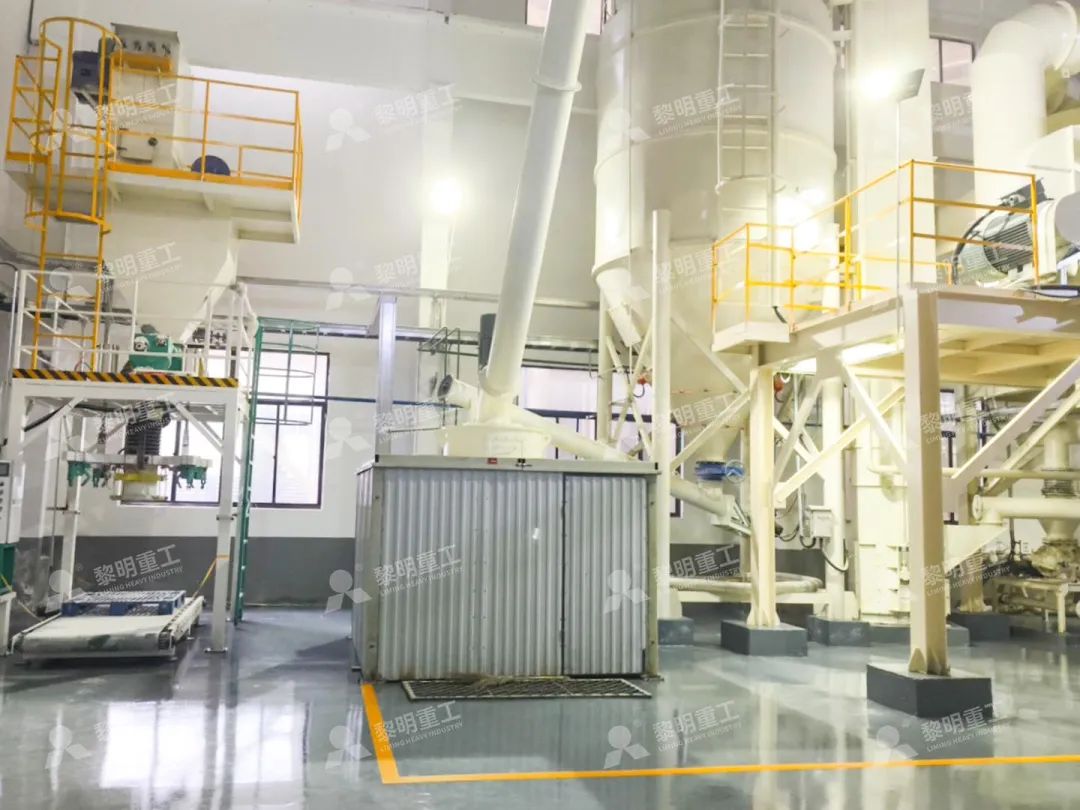
Another premier option is the LUM Ultrafine Vertical Grinding Mill. This mill integrates ultrafine powder grinding, grading, and transporting into a single, compact unit. Its standout feature for consistent quality is the specially designed roller shell and lining plate grinding curve, which is easier to generate a stable material layer. This promotes a high rate of finished product in a single pass, greatly enhancing efficiency and improving the whiteness and cleanliness of the final slurry. The mill’s use of PLC control system and multi-head powder separating technology allows for exact control over grinding parameters, ensuring a uniform and narrow particle size distribution batch after batch. Its reversible structure also simplifies maintenance, reducing downtime—a critical factor in continuous production environments.
Conclusion
The journey to the perfect calcium carbonate slurry begins with selecting the right grinding technology. For ultra-fine wet grinding, mills designed with precision separation, minimal contamination risk, and high energy efficiency are non-negotiable. The MW and LUM series represent the pinnacle of this technology, offering reliability, purity, and performance that can give your product a competitive edge in the market.
Frequently Asked Questions (FAQ)
Q: What is the main advantage of wet grinding over dry grinding for calcium carbonate?
A: Wet grinding is more efficient for achieving ultra-fine and nano particle sizes, provides better control over particle size distribution, eliminates dust, and helps prevent the re-agglomeration of fine particles.
Q: How does the MW Mill prevent contamination of the calcium carbonate product?
A: The MW Ultrafine Grinding Mill has no rolling bearings or screws inside its grinding chamber. This design eliminates a major source of iron contamination from mechanical wear and failed seals, crucial for maintaining product brightness and purity.
Q: Can the fineness of the final product be adjusted with these mills?
A: Yes, absolutely. Both the MW and LUM mills feature advanced, multi-head powder selection technology. The MW Mill, for example, allows operators to accurately adjust the product fineness between 325 and 2500 meshes to meet specific customer requirements.
Q: Are these mills energy-efficient?
A: Yes. These mills are designed for higher yielding at lower energy consumption. The LUM Mill, for instance, reduces energy consumption by 30%-50% compared to traditional grinding mills, offering significant operational cost savings.