
How to Grind Gangue to 200 Mesh with a High-Pressure Suspension Roller Mill
We provide a wide range of mills — including Raymond mill, trapezoidal mill, vertical mill, ultrafine mill, and ball mill, obtained ISO9001 international quality certification, EU CE certification, and Customs Union CU-TR certification. Suitable for processing minerals such as limestone, phosphate, quicklime, kaolin, talc, barite, bentonite, calcium carbonate, dolomite, coal, gypsum, clay, carbon black, slag, cement raw materials, cement clinker, and more.
The discharge range of these mills can be adjusted to meet specific processing needs, typically from 80-400 mesh, 600-3250 mesh, and can achieve the finest particle size of up to 6000 mesh(D50).
If you are looking for a reliable grinding solution to turn stone or minerals into fine powder, please feel free to contact our online customer service.
Introduction
Gangue, the waste rock associated with mineral deposits, presents both a disposal challenge and a potential resource. Grinding it to a fine powder, such as 200 mesh (74 microns), unlocks its value for applications in construction, agriculture, and as a raw material in various industries. Achieving this specific fineness efficiently requires robust and precise milling technology. High-pressure suspension roller mills are engineered to deliver the necessary grinding force and classification control for such demanding tasks.
The Challenge of Grinding Gangue
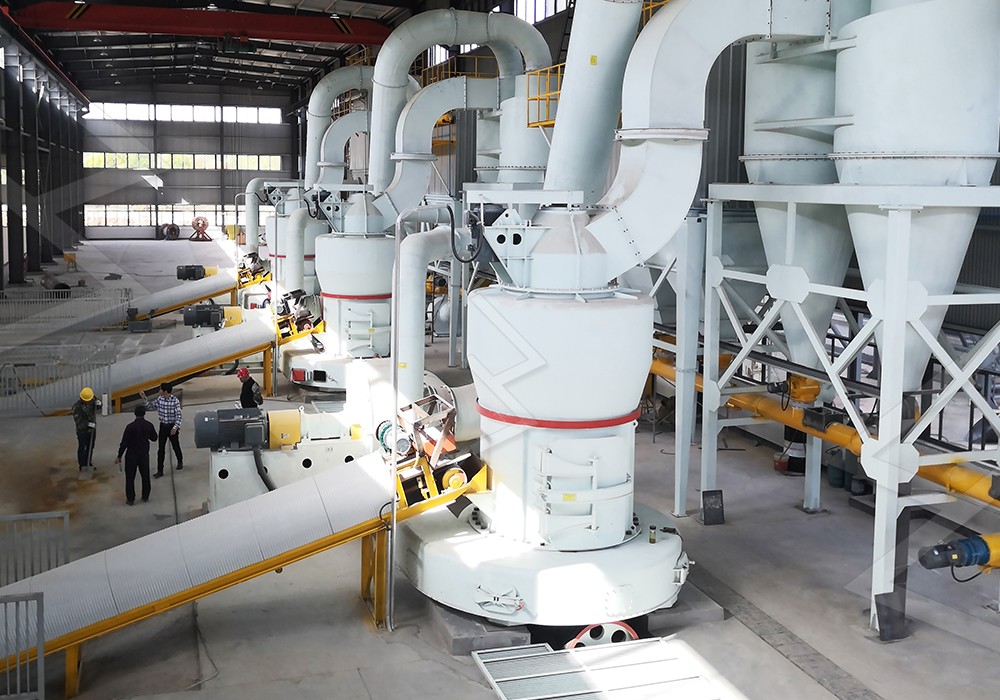
Gangue’s composition is highly variable, often containing a mix of hard, abrasive minerals. This variability demands a mill that is not only powerful but also resilient. The goal of reaching 200 mesh requires a system capable of applying immense compressive force to fracture the particles, followed by precise air classification to ensure no oversized particles contaminate the final product. Traditional ball mills can be inefficient for this application, often leading to high energy consumption and excessive wear.
Why a High-Pressure Suspension Roller Mill?
This type of mill operates on the principle of material bed comminution. Rock material is fed onto a rotating grinding table and is crushed by rollers applying substantial hydraulic pressure. The finely ground material is then carried by an air stream to an integrated classifier. The key advantages for gangue processing include:
- High Grinding Efficiency: Concentrated pressure on the material bed leads to more effective size reduction with less energy compared to impact-based systems.
- Precise Particle Size Control: Built-in dynamic classifiers allow for real-time adjustment of the fineness, ensuring a consistent 200-mesh product.
- Durability: Designed to handle hard and abrasive materials with wear-resistant grinding components.
- Environmental Control: Closed-system grinding with integrated dust collectors minimizes particulate emissions.
Recommended Mill for Gangue Application
For optimal results in grinding gangue to 200 mesh, we highly recommend our MW Ultrafine Grinding Mill. This machine is specifically designed for customers who need to make ultra-fine powder from medium-hard to hard materials. Its robust construction and advanced features make it an ideal choice for the variable and often abrasive nature of gangue.
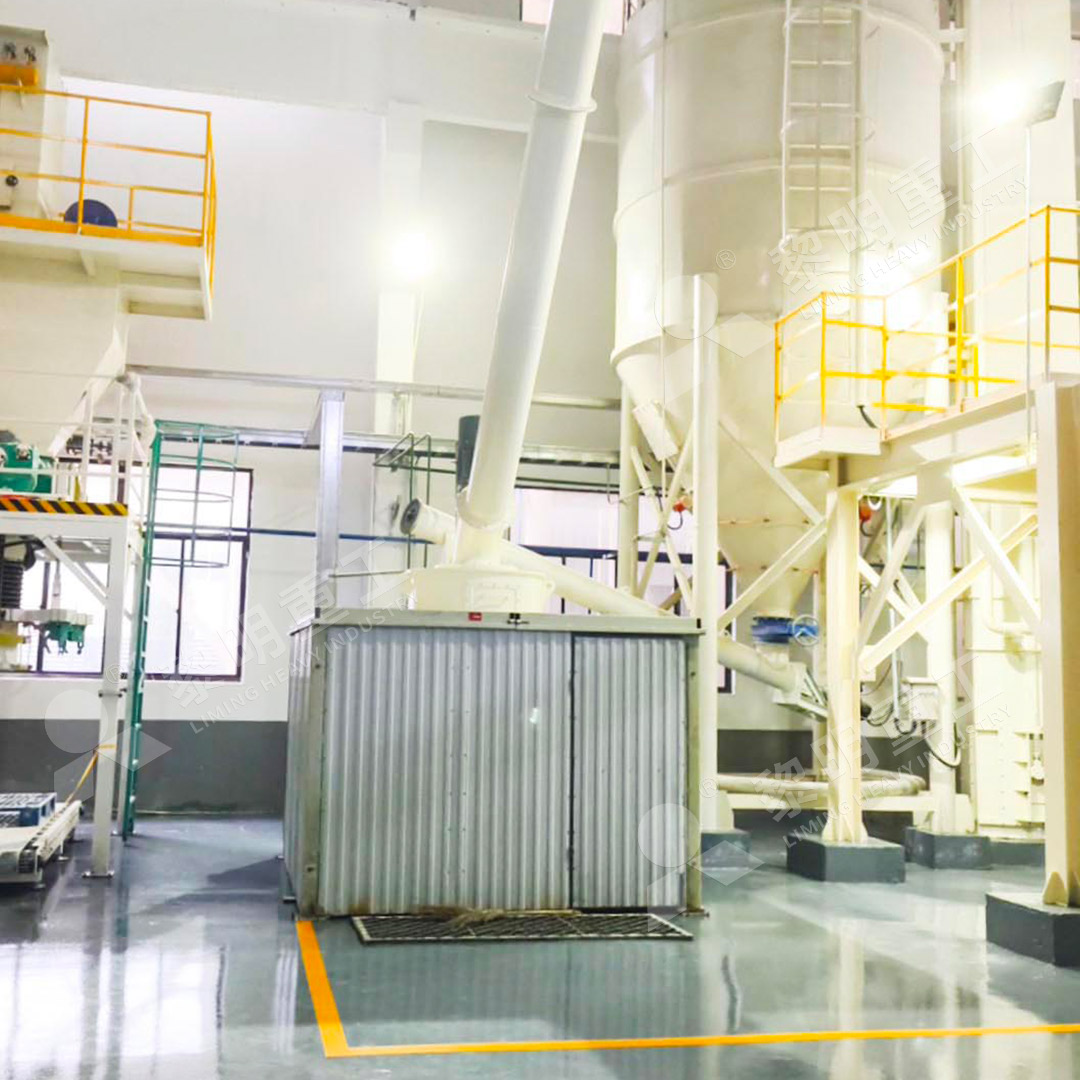
The MW Mill boasts several critical features for this application:
- Higher Yielding, Lower Energy Consumption: Its newly designed grinding curves enhance efficiency, offering production capacity 40% higher than jet mills while reducing system energy consumption by 30%.
- Adjustable Fineness (325-2500 mesh): Its advanced cage-type powder selector, utilizing German technology, guarantees the precision needed to achieve and maintain the 200-mesh target.
- Reliable Design: With no rolling bearings or screws in the grinding chamber, the risk of mechanical failure due to abrasion or loose parts is significantly reduced, ensuring continuous 24/7 operation.
- Eco-Friendly Operation: An efficient pulse dust collector ensures no dust pollution, making the entire milling process clean and compliant with environmental standards.
With an input size of 0-20 mm and a capacity range of 0.5-25 tph, the MW Mill provides the flexibility and power required for most gangue processing operations.
Process Overview
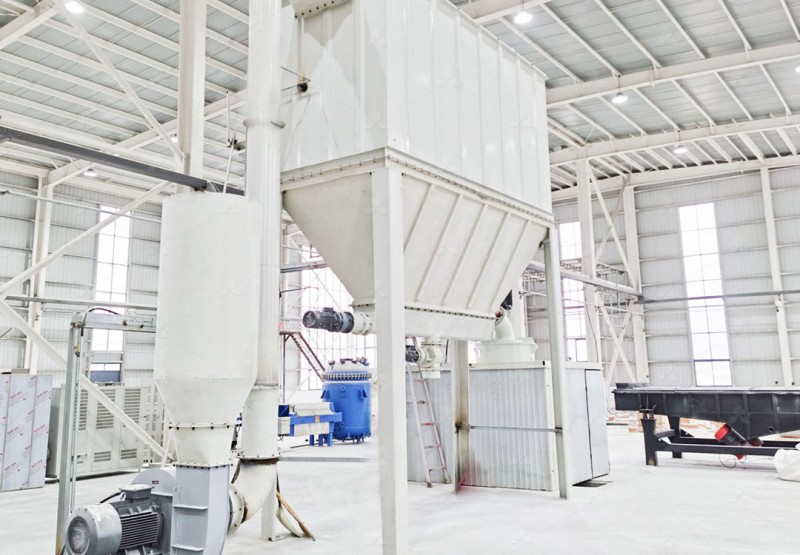
The process begins with crushing raw gangue to below 20mm. The material is then fed via a vibrating feeder into the center of the grinding mill’s turnplate. Centrifugal force rolls the material under the grinding rollers where it is pulverized. The ground powder is conveyed by the airflow to the integrated classifier. Coarse particles are rejected and returned for further grinding, while the fine 200-mesh product is extracted by the cyclone collector.
Frequently Asked Questions (FAQ)
What is the main advantage of using a high-pressure roller mill for gangue?
The primary advantage is energy efficiency. The material bed comminution principle consumes significantly less energy per ton of product compared to traditional ball milling, especially when aiming for finer particle sizes like 200 mesh.
Can the MW Mill handle variations in gangue hardness?
Yes. The MW Ultrafine Grinding Mill is built with wear-resistant materials and features a sturdy design that can accommodate fluctuations in material hardness. The hydraulic system can also adjust grinding pressure to suit the feed material.
How is the final product fineness ensured?
Fineness is precisely controlled by the mill’s advanced multi-head cage-type powder selector. The speed of the classifier rotor can be adjusted to accurately cut the particle size, ensuring a consistent 200-mesh output.
What about maintenance and wear part replacement?
The design prioritizes easy maintenance. The grinding roller and ring can be accessed for inspection and replacement. Furthermore, we provide a sufficient supply of original spare parts and technical support to ensure worry-free operation.