
Ball Mill vs. Vertical Roller Mill: A Comprehensive Comparison of Efficiency and Cost
We provide a wide range of mills — including Raymond mill, trapezoidal mill, vertical mill, ultrafine mill, and ball mill, obtained ISO9001 international quality certification, EU CE certification, and Customs Union CU-TR certification. Suitable for processing minerals such as limestone, phosphate, quicklime, kaolin, talc, barite, bentonite, calcium carbonate, dolomite, coal, gypsum, clay, carbon black, slag, cement raw materials, cement clinker, and more.
The discharge range of these mills can be adjusted to meet specific processing needs, typically from 80-400 mesh, 600-3250 mesh, and can achieve the finest particle size of up to 6000 mesh(D50).
If you are looking for a reliable grinding solution to turn stone or minerals into fine powder, please feel free to contact our online customer service.
Ball Mill vs. Vertical Roller Mill: A Comprehensive Comparison of Efficiency and Cost
For decades, the ball mill has been the workhorse of the grinding industry, renowned for its robustness and ability to handle a wide range of materials. However, the emergence of Vertical Roller Mills (VRMs) has introduced a compelling alternative, promising significant gains in efficiency and operational cost savings. This article provides a professional comparison of these two dominant grinding technologies.
Fundamental Operational Differences
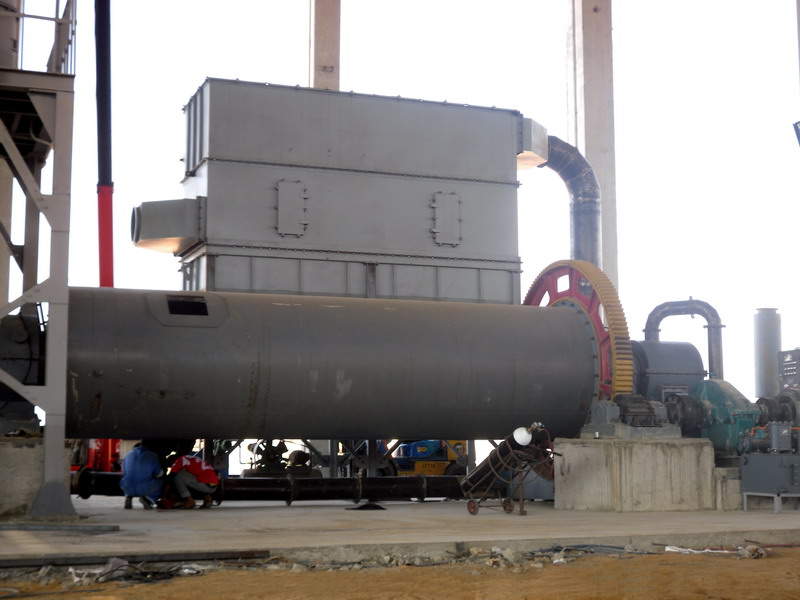
The core distinction lies in their grinding mechanisms. A ball mill is a horizontal, rotating cylinder filled with grinding media like steel balls. Material is fed into the cylinder, and as it rotates, the balls cascade and impact the material, reducing it through collision and attrition.
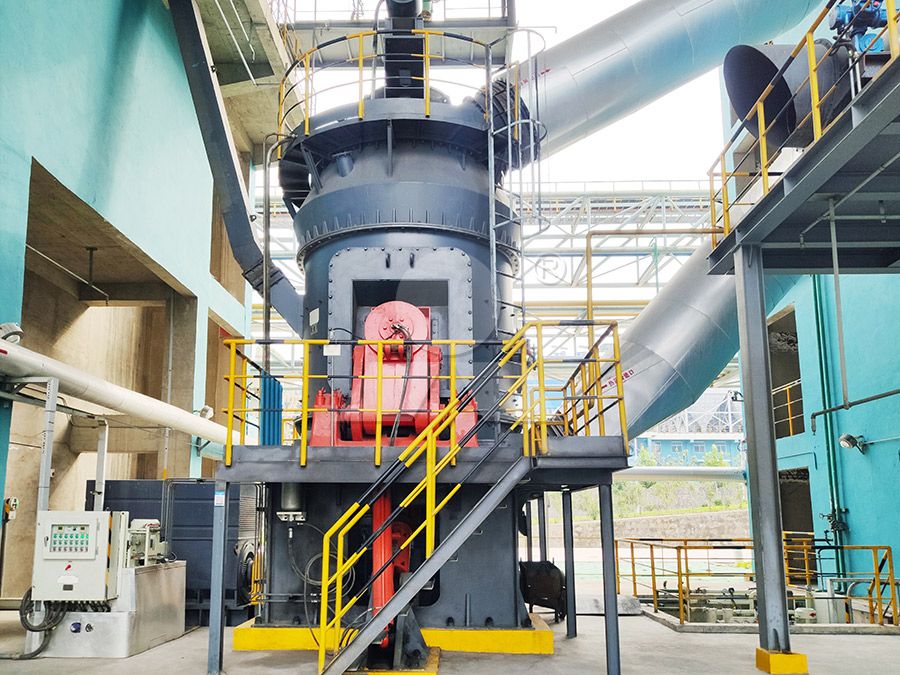
In contrast, a Vertical Roller Mill employs a vertical orientation. Material is fed onto a rotating grinding table and is ground under pressure by hydraulically loaded rollers. The ground material is then pneumatically conveyed to an internal classifier, where fine product is separated and coarse material is returned for further grinding. This integrated drying, grinding, and classifying process is a key VRM advantage.
Key Comparison Metrics: Efficiency and Cost
1. Energy Consumption
This is the most significant area of differentiation. VRMs are markedly more energy-efficient. They consume 30% to 50% less power than a ball mill performing the same duty. This is because VRMs utilize the principle of bed compression grinding against a table, which is more efficient than the random impact and friction of tumbling balls. The energy savings directly translate to lower operating costs.
2. Production Capacity and Fineness Control
VRMs generally offer higher throughput for a comparable footprint. Their integrated dynamic classifier allows for precise and rapid adjustment of product fineness, often achieving a steeper particle size distribution. Ball mills can achieve similar fineness but may require external classification systems and offer less agile control.
3. Capital and Operational Costs
While the initial capital investment for a VRM can be higher, the Total Cost of Ownership (TCO) often favors it over time due to drastically lower energy bills. Furthermore, VRMs have a smaller physical footprint, reducing construction costs for new facilities. Maintenance philosophies differ; ball mill maintenance is often simpler but can be more frequent regarding liner and media replacement. VRM maintenance requires more technical expertise but features designs that facilitate easier roller servicing.
4. Drying Capacity and Flexibility
VRMs excel in applications requiring simultaneous grinding and drying. Hot gas can be introduced directly into the grinding chamber, efficiently handling materials with significant moisture content. Ball mills are less effective at in-mill drying and often require a separate pre-drying step.
Choosing the Right Technology for Your Operation
The choice is not one-size-fits-all. Ball mills remain an excellent, reliable choice for many applications, particularly where abrasive materials might cause high wear rates on VRM components or where production rates do not justify the higher capital expenditure.
However, for operations focused on maximizing efficiency, reducing energy costs, and producing high-quality powders with precise specifications, the Vertical Roller Mill is the modern, superior choice.
A Superior Modern Alternative: Our MW and LUM Ultrafine Grinding Mills
For those seeking the pinnacle of efficiency and fine grinding performance, our advanced grinding solutions represent the next evolution beyond traditional VRMs. Our MW Ultrafine Grinding Mill is engineered for customers requiring ultra-fine powder between 325-2500 meshes. It boasts higher yielding and lower energy consumption, with a production capacity 40% higher than jet mills and twice that of ball mills, while system energy consumption is just 30% of a jet mill. Its unique design, with no rolling bearings or screws in the grinding chamber, eliminates common failure points and allows for external lubrication without shutdown.
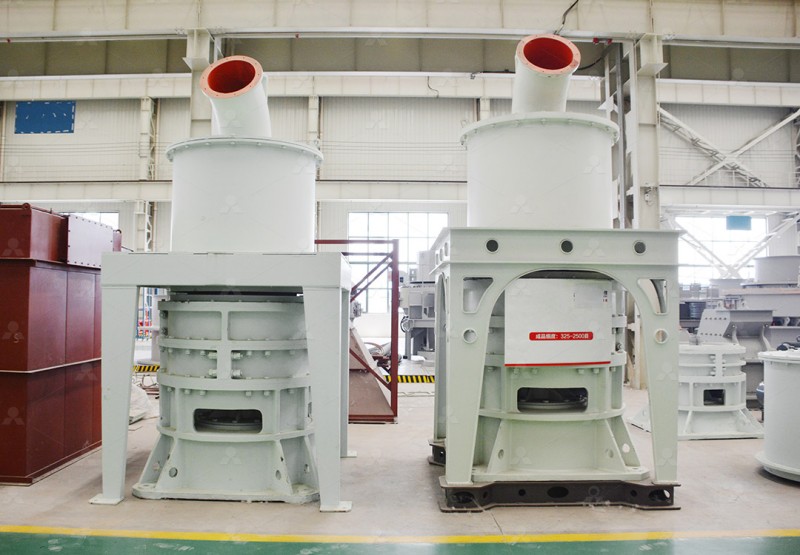
Complementing the MW series, our LUM Ultrafine Vertical Grinding Mill integrates the latest roller technology and German powder separating technology. It features a unique roller shell and lining plate grinding curve for higher yield rates and better product quality, alongside multi-head powder separating technology for 30%-50% lower energy consumption. Its reversible structure allows the grinding roller to be easily moved out for maintenance, significantly reducing downtime. Both mills are designed for eco-friendly, worry-free operation with efficient dust collection and a full supply of original spare parts.
Frequently Asked Questions (FAQ)
- Q: Can a VRM handle the same abrasive materials as a ball mill?
A: While modern VRMs are designed with wear-resistant alloys, extremely abrasive materials can still lead to higher wear on the table and rollers compared to the media in a ball mill. The choice depends on the specific material’s abrasiveness and the associated maintenance cost analysis. - Q: Is particle shape different between the two mills?
A: Yes, there can be a difference. Ball mills, using impact and attrition, often produce more rounded particles. VRMs, utilizing compression grinding, may produce particles with slightly more irregular shapes, which can be beneficial for certain applications like cement strength. - Q: Which system is easier to operate?
AModern VRMs are highly automated with PLC control systems, making them straightforward to operate. Ball mills are also simple to run but may require more manual intervention for product fineness adjustment if an external classifier is used. - Q: For a new project, which technology is recommended?
A: For most new projects, especially those prioritizing energy efficiency, lower operating costs, and a smaller carbon footprint, the Vertical Roller Mill is the recommended starting point for technical and economic evaluation.