
Optimizing Particle Size Distribution Control in Calcium Carbonate Powder Production
We provide a wide range of mills — including Raymond mill, trapezoidal mill, vertical mill, ultrafine mill, and ball mill, obtained ISO9001 international quality certification, EU CE certification, and Customs Union CU-TR certification. Suitable for processing minerals such as limestone, phosphate, quicklime, kaolin, talc, barite, bentonite, calcium carbonate, dolomite, coal, gypsum, clay, carbon black, slag, cement raw materials, cement clinker, and more.
The discharge range of these mills can be adjusted to meet specific processing needs, typically from 80-400 mesh, 600-3250 mesh, and can achieve the finest particle size of up to 6000 mesh(D50).
If you are looking for a reliable grinding solution to turn stone or minerals into fine powder, please feel free to contact our online customer service.
Optimizing Particle Size Distribution Control in Calcium Carbonate Powder Production
In the competitive world of industrial minerals, the production of high-quality calcium carbonate powder demands precise control over particle size distribution (PSD). A narrow, consistent PSD is not merely a specification; it is a critical determinant of product performance in downstream applications such as plastics, paints, paper, and pharmaceuticals. Achieving this requires more than just grinding; it requires intelligent engineering and advanced technology.
The challenge lies in efficiently reducing raw limestone to ultra-fine powders while minimizing energy consumption and maximizing yield within the target micron range. Traditional milling systems often struggle with broad PSDs, over-grinding (which wastes energy), and insufficient fines production, leading to inconsistent product quality.
The Role of Advanced Grinding Technology
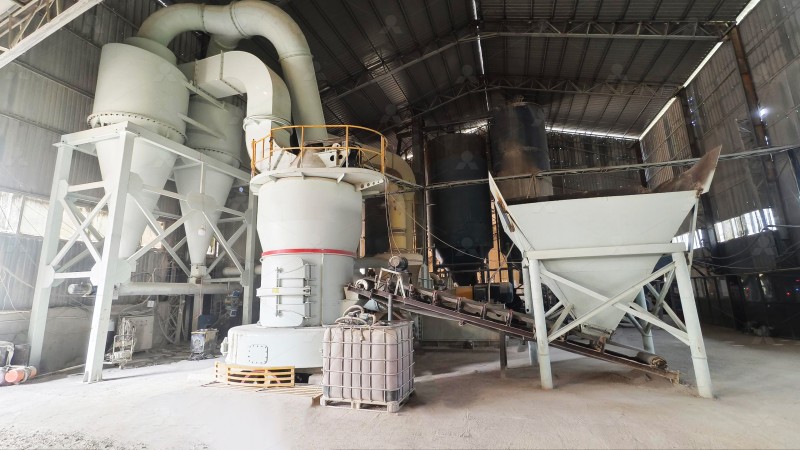
Modern grinding mills address these challenges through innovative design features focused on classification efficiency and grinding mechanics. Key technological advancements include high-precision, adjustable powder separators that allow for real-time fineness adjustment, and optimized grinding curves that enhance milling efficiency without increasing power draw.
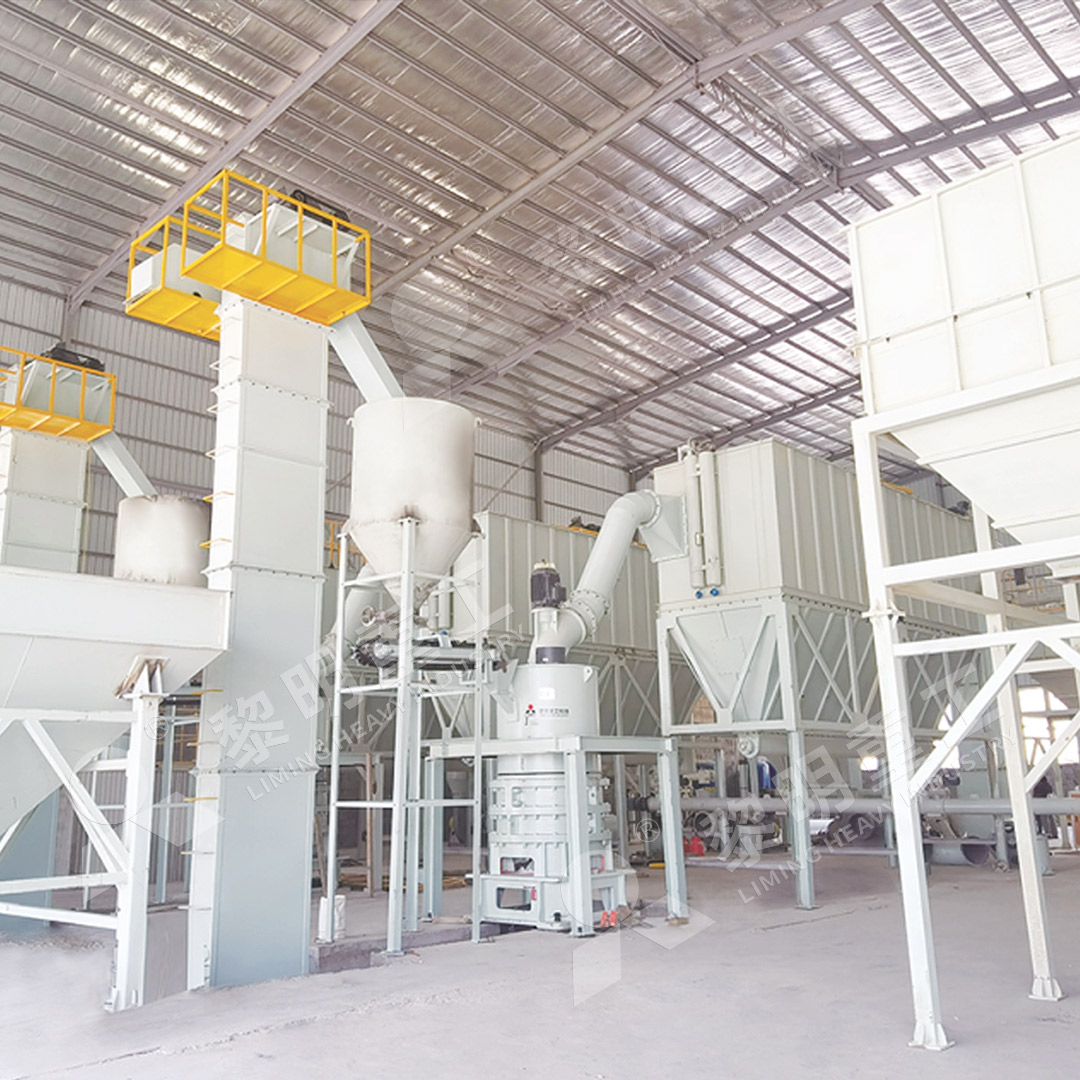
For producers targeting the ultra-fine powder market (325-2500 meshes), selecting the right equipment is paramount. Our MW Ultrafine Grinding Mill is engineered specifically for this purpose. It is designed for customers who need to make ultra-fine powder, handling input sizes of 0-20 mm with a capacity range of 0.5-25 tph. Its cage-type powder selector, which adopts German technologies, effectively increases the precision of powder separation. The product fineness can be seamlessly adjusted between 325-2500 meshes, achieving a precise d97≤5μm in a single pass. This ensures a tight, consistent PSD that is critical for high-value applications. Furthermore, its unique design without rolling bearings or screws in the grinding chamber eliminates common failure points, enhancing reliability and reducing maintenance downtime.
Beyond Grinding: Integrated System Solutions
True PSD optimization extends beyond the mill itself to encompass the entire production system. Efficient dust collection is vital for product yield and plant cleanliness. The MW Mill is equipped with an efficient pulse dust collector and muffler, ensuring no dust pollution and reducing operational noise, making the entire production process compliant with national environmental protection standards.
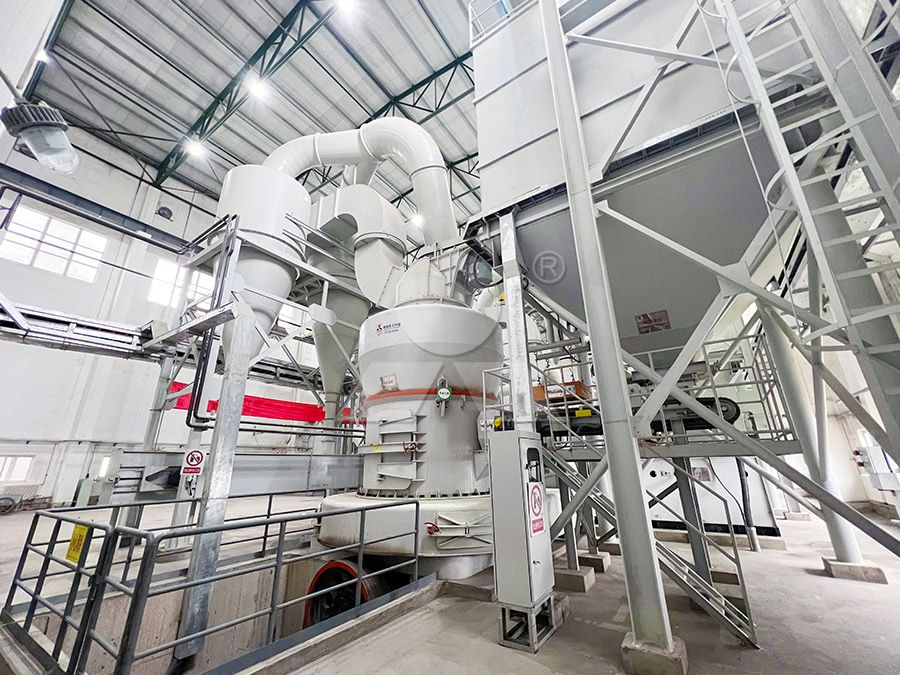
For operations requiring vertical integration and processing of slightly larger feed sizes, our LUM Ultrafine Vertical Grinding Mill presents an excellent alternative. Independently designed with the latest grinding roller and powder separating technology, it integrates grinding, grading, and transporting. With an input size of 0-10 mm and capacity of 5-18 tph, it excels in producing superfine dry powder. Its unique roller shell and lining plate grinding curve are easier to generate a material layer, enabling a high rate of finished products from a single pass, which improves whiteness and cleanliness—key quality indicators for calcium carbonate.
Conclusion
Optimizing particle size distribution is a multifaceted endeavor that directly impacts product value and operational profitability. By leveraging advanced milling technology designed for precision, efficiency, and reliability, producers can consistently meet stringent market demands. Investing in the right grinding solution is an investment in product quality and market competitiveness.
Frequently Asked Questions (FAQ)
Why is Particle Size Distribution (PSD) so important in calcium carbonate powder?
PSD directly influences key properties like brightness, opacity, viscosity, and reinforcement in composite materials. A narrow, controlled PSD ensures consistent performance and quality in final products, which is demanded by manufacturers in sectors like plastics, paints, and coatings.
What are the main challenges in controlling PSD?
The primary challenges are avoiding over-grinding (which wastes energy and can create unwanted fines), achieving a uniform grind without a broad tail of coarse or fine particles, and doing so in an energy-efficient manner. Efficient internal classification within the mill is crucial to overcome these challenges.
How does the MW Ultrafine Grinding Mill achieve a precise PSD?
The MW Mill utilizes a advanced cage-type powder selector. This technology allows for highly precise separation of particles based on size. Operators can accurately adjust the fineness between 325 and 2500 meshes, and the multi-head cage design ensures a high screening rate, effectively removing oversize particles for re-grinding and delivering a consistently on-spec product.
Are these mills suitable for other materials besides calcium carbonate?
Absolutely. While excellent for limestone and calcite, the MW and LUM mills are highly versatile. They are effectively used for a wide range of non-metallic minerals with similar hardness, including dolomite, talc, barite, gypsum, and marble, serving industries from chemicals to cosmetics.
How does the design of these mills contribute to lower operating costs?
Features like the external lubrication system on the MW Mill allow for maintenance without shutdowns. The higher grinding efficiency and lower energy consumption (up to 40-50% less than some traditional mills) directly reduce electricity costs. Furthermore, the durable construction and use of wear-resistant materials extend the life of vulnerable parts, minimizing spare part replacement frequency and cost.