
Grinding Media Charge Calculation for Bead Mills: Formula and Practical Guide
We provide a wide range of mills — including Raymond mill, trapezoidal mill, vertical mill, ultrafine mill, and ball mill, obtained ISO9001 international quality certification, EU CE certification, and Customs Union CU-TR certification. Suitable for processing minerals such as limestone, phosphate, quicklime, kaolin, talc, barite, bentonite, calcium carbonate, dolomite, coal, gypsum, clay, carbon black, slag, cement raw materials, cement clinker, and more.
The discharge range of these mills can be adjusted to meet specific processing needs, typically from 80-400 mesh, 600-3250 mesh, and can achieve the finest particle size of up to 6000 mesh(D50).
If you are looking for a reliable grinding solution to turn stone or minerals into fine powder, please feel free to contact our online customer service.
Grinding Media Charge Calculation for Bead Mills: Formula and Practical Guide
Proper calculation of the grinding media charge is a fundamental aspect of optimizing bead mill performance. An incorrect charge can lead to inefficient grinding, excessive wear, increased energy consumption, and subpar product quality. This guide provides a practical approach to calculating the optimal grinding media load for your specific application.
The Core Formula and Its Components
The most common formula used for calculating the grinding media charge volume in a bead mill is:
Volume of Media (L) = Mill Chamber Volume (L) × Filling Percentage (%)
Where the optimal Filling Percentage typically ranges from 70% to 85% of the mill chamber’s net volume. This percentage is not arbitrary; it’s influenced by several critical factors:
- Bead Density: Higher density beads (e.g., zirconia) may require a slightly lower filling percentage than lower density beads (e.g., glass).
- Product Viscosity: Highly viscous products often benefit from a charge at the higher end of the range to ensure adequate energy transfer.
- Desired Fineness: Achieving ultra-fine finishes sometimes requires a higher media charge to increase the number of contact points.
- Mill Design: Always consult your mill manufacturer’s guidelines, as the optimal range can vary based on agitator design and chamber geometry.
A Practical Calculation Example
Let’s assume you have a bead mill with a grinding chamber net volume of 50 liters. You are grinding a medium-viscosity product and using zirconia beads.
- Determine Filling Percentage: For this scenario, we select a 75% fill rate.
- Calculate Media Volume: Media Volume = 50 L × 0.75 = 37.5 Liters.
- Calculate Media Mass: To find the mass (weight) of beads needed, you need the bulk density of your media. For zirconia, this is approximately 3.6 kg/L.
Media Mass = 37.5 L × 3.6 kg/L = 135 kg of zirconia beads.
This 135 kg is your target grinding media charge for optimal operation.
Beyond Volume: Selecting the Right Grinding Media
Calculating the correct amount is only half the battle. Choosing the right type of media is equally crucial. The size and material of the beads directly impact grinding efficiency and final product contamination.
- Bead Size: Smaller beads (0.1-0.3mm) are used for ultra-fine grinding, as they provide more contact points. Larger beads (0.5-2.0mm) are better for pre-grinding or breaking down agglomerates.
- Bead Material: Glass and steel are economical but can introduce contamination. Ceramic and zirconia beads offer high density and low wear, ideal for high-quality, contamination-sensitive products.
Practical Tips for Operation and Maintenance
- Monitor Power Draw: A significant drop in power draw can indicate media wear or chamber blockage.
- Check for Wear: Regularly sample and inspect your grinding media. Worn, misshapen, or fractured beads should be replaced to maintain efficiency.
- Start-Up Procedure: Always begin with the product in the chamber before adding media or starting the agitator to prevent damage.
- Keep Records: Log the initial charge weight and track additions over time. This helps predict maintenance schedules and operating costs.
Choosing the Right Mill for Ultra-Fine Applications
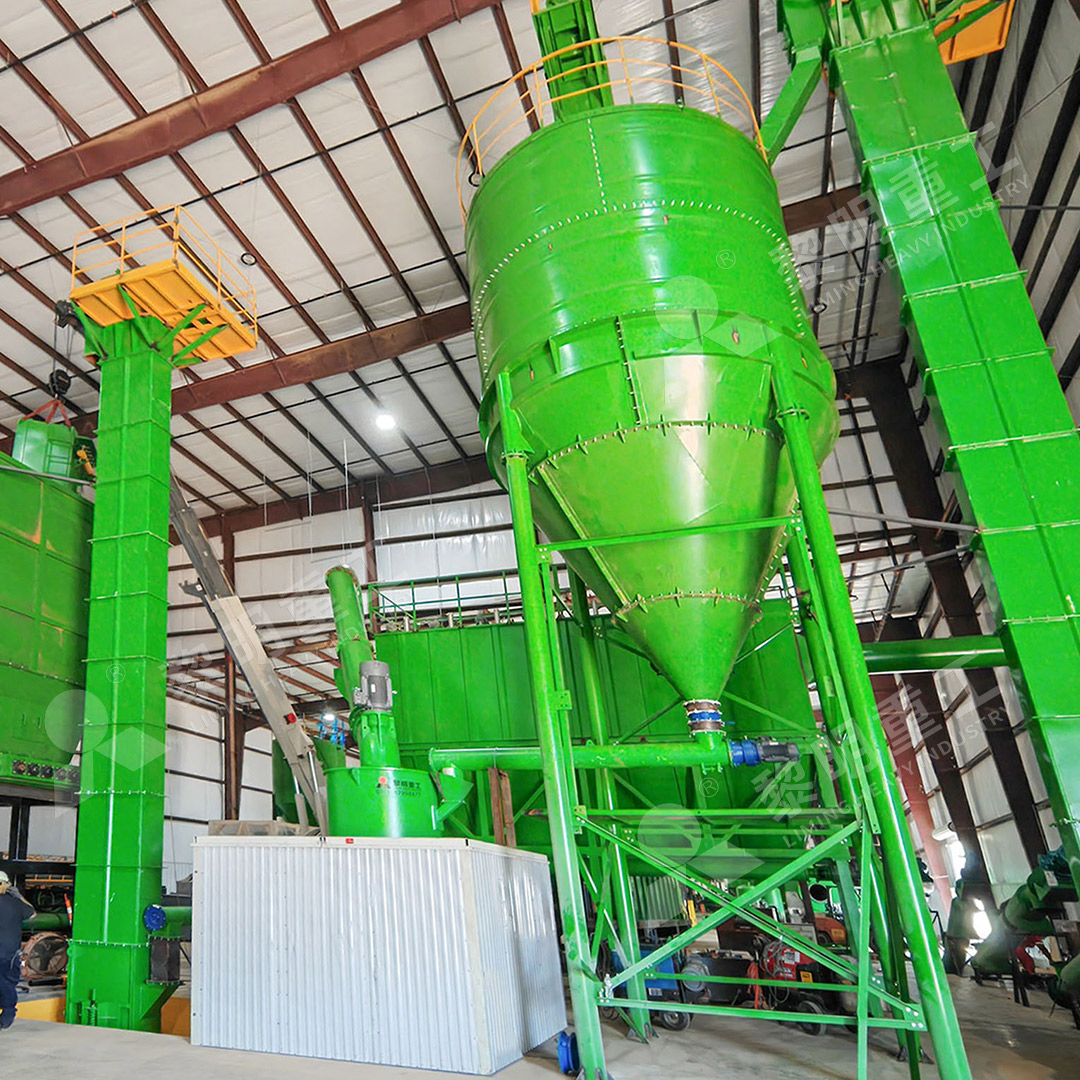
For operations that demand exceptional control over ultra-fine powders, selecting a mill designed for this purpose is paramount. A highly efficient solution is our MW Ultrafine Grinding Mill. This machine is engineered for customers who need to make precisely controlled ultra-fine powder, with a fineness easily adjustable between 325-2500 meshes.
Its innovative design, featuring a German-technology cage-type powder selector, ensures high precision in powder separation. A key advantage for maintenance and reliability is the absence of rolling bearings and screws inside the grinding chamber, virtually eliminating concerns about bearing failure or loose screws causing damage. Furthermore, its efficient pulse dust collector and muffler make the entire production process cleaner and quieter, meeting strict environmental standards. With an input size of 0-20 mm and a capacity ranging from 0.5 to 25 tph, it offers both versatility and high performance for a wide range of materials, from limestone and calcite to cosmetics and food additives.
Conclusion
Mastering the calculation and management of your grinding media charge is a surefire way to enhance bead mill efficiency, reduce operating costs, and ensure consistent product quality. By applying the formula V = V_chamber × F%, selecting the appropriate media type and size, and adhering to best practices, you can optimize your grinding process from the ground up. For the most demanding ultra-fine grinding tasks, leveraging advanced equipment like the MW Ultrafine Grinding Mill provides the technological edge needed for superior results.