
Application and Improvement of Talc Powder Production in the Papermaking Industry
We provide a wide range of mills — including Raymond mill, trapezoidal mill, vertical mill, ultrafine mill, and ball mill, obtained ISO9001 international quality certification, EU CE certification, and Customs Union CU-TR certification. Suitable for processing minerals such as limestone, phosphate, quicklime, kaolin, talc, barite, bentonite, calcium carbonate, dolomite, coal, gypsum, clay, carbon black, slag, cement raw materials, cement clinker, and more.
The discharge range of these mills can be adjusted to meet specific processing needs, typically from 80-400 mesh, 600-3250 mesh, and can achieve the finest particle size of up to 6000 mesh(D50).
If you are looking for a reliable grinding solution to turn stone or minerals into fine powder, please feel free to contact our online customer service.
Application and Improvement of Talc Powder Production in the Papermaking Industry
The papermaking industry relies heavily on functional fillers and coatings to achieve desired paper properties such as smoothness, opacity, brightness, and printability. Among these materials, talc powder holds a unique and valuable position. Its inherent hydrophobicity, platy structure, and chemical inertness make it an exceptional material for pitch control, improved paper machine runnability, and enhanced product quality. However, the efficacy of talc is directly tied to its particle size distribution, purity, and surface characteristics, all of which are determined by the grinding technology employed.
The Critical Role of Talc in Paper Manufacturing
Talc serves multiple functions within a paper mill. Primarily, it is the most effective organic deposit control agent used to absorb and disperse sticky wood resin particles (pitch) that can otherwise agglomerate, causing web breaks, spots, and significant downtime. Furthermore, as a filler, its lamellar particles fill voids between cellulose fibers, creating a smoother, more uniform surface for printing and writing. The quest for higher quality paper at a lower cost has intensified the demand for ultra-fine, high-purity talc powders. Traditional grinding methods, such as ball mills, often fall short, producing excessive heat, broad particle size distributions, and potential contamination, which can compromise the talc’s performance and the paper’s whiteness.
Technological Advancements in Talc Comminution
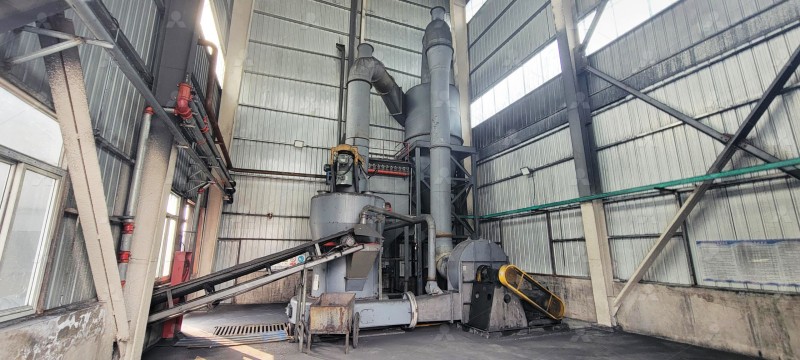
The transition from conventional milling to advanced ultrafine grinding technologies represents a significant leap forward. The ideal mill for talc processing must deliver a controlled top-size cut, a narrow particle distribution, low iron contamination, and high energy efficiency, all while operating in an environmentally sound manner. This is where innovative grinding solutions, like our MW Ultrafine Grinding Mill, become indispensable.
Our MW series mill is specifically engineered for customers requiring precise ultra-fine powder. With an input size of 0-20 mm and a capacity range of 0.5-25 tph, it is perfectly suited for talc processing circuits. A key advantage for paper-grade talc is its Adjustable Fineness Between 325-2500 meshes. The German-technology cage-type powder selector ensures precise classification, achieving a fine and consistent product with a screening rate of d97≤5μm in a single pass. This uniformity is critical for effective pitch adsorption and a flawless paper surface.
Operational and Environmental Benefits
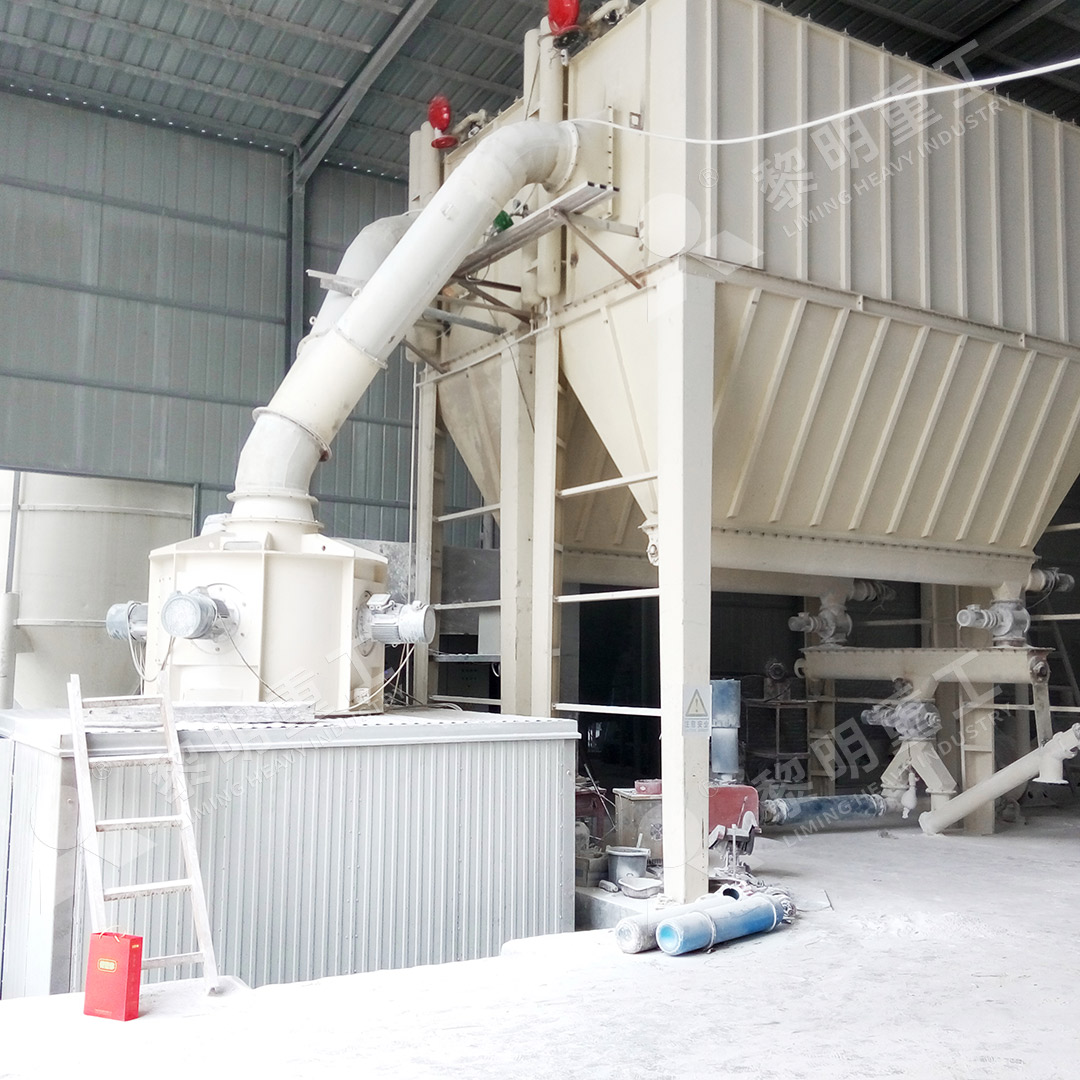
Beyond product quality, operational reliability and environmental compliance are paramount. The MW mill addresses these concerns comprehensively. Its design Higher Yielding, Lower Energy Consumption, offering 40% higher capacity than jet mills and reducing system energy consumption by 30%. The absence of rolling bearings and screws in the grinding chamber eliminates common failure points and prevents machine damage from loose parts, ensuring continuous 24/7 operation that paper mills depend on.
Moreover, the integrated pulse dust collector and muffler system guarantees that the entire production process is free from dust pollution and operates at low noise levels. This full compliance with national environmental protection standards makes it an responsible choice for modern manufacturing facilities aiming to reduce their ecological footprint.
Conclusion
The integration of advanced grinding technology like the MW Ultrafine Grinding Mill into talc production lines is a game-changer for the paper industry. It enables the consistent production of high-value, ultra-fine talc powders that directly contribute to increased paper machine efficiency, reduced chemical usage, and superior end-product quality. By focusing on precision, efficiency, and sustainability, this technology not only improves the application of talc but also drives the papermaking industry toward a more profitable and environmentally conscious future.