
How Does a Lime Vertical Mill Work and What Are Its Advantages?
We provide a wide range of mills — including Raymond mill, trapezoidal mill, vertical mill, ultrafine mill, and ball mill, obtained ISO9001 international quality certification, EU CE certification, and Customs Union CU-TR certification. Suitable for processing minerals such as limestone, phosphate, quicklime, kaolin, talc, barite, bentonite, calcium carbonate, dolomite, coal, gypsum, clay, carbon black, slag, cement raw materials, cement clinker, and more.
The discharge range of these mills can be adjusted to meet specific processing needs, typically from 80-400 mesh, 600-3250 mesh, and can achieve the finest particle size of up to 6000 mesh(D50).
If you are looking for a reliable grinding solution to turn stone or minerals into fine powder, please feel free to contact our online customer service.
How Does a Lime Vertical Mill Work and What Are Its Advantages?
Hey folks, let’s dive into the world of industrial grinding, specifically focusing on lime processing. If you’re in the biz, you know that grinding lime (and other similar materials like limestone, calcite, dolomite) into a fine, consistent powder is crucial for a ton of applications—from construction materials to chemicals and even food additives. So, how does a vertical mill actually handle this stuff, and why might you wanna choose one over other types of grinders? Buckle up, ’cause we’re gonna break it down in a way that’s (hopefully) not too boring.
The Basic Working Principle: No Magic, Just Smart Engineering
At its heart, a vertical mill for lime is all about efficiency and precision. Here’s the lowdown on how it operates:
First off, raw lime material (with an input size usually between 0-20mm, depending on the mill) is fed into the top of the mill via a conveyor or elevator. Inside, there’s a grinding table that rotates. Sitting on top of this table are grinding rollers—these guys do the heavy lifting. As the table spins, centrifugal force pushes the material outward under the rollers, where it gets crushed and ground into powder.
Now, here’s where it gets clever: air flow is key. A blower injects air from the bottom, which fluidizes the ground powder and carries it upwards to a classifier at the top. The classifier acts like a bouncer—it lets only the finely ground particles pass through to the collection system (like a cyclone or baghouse), while the coarser bits get tossed back down for another round of grinding. This closed-loop system means consistent fineness and minimal waste.
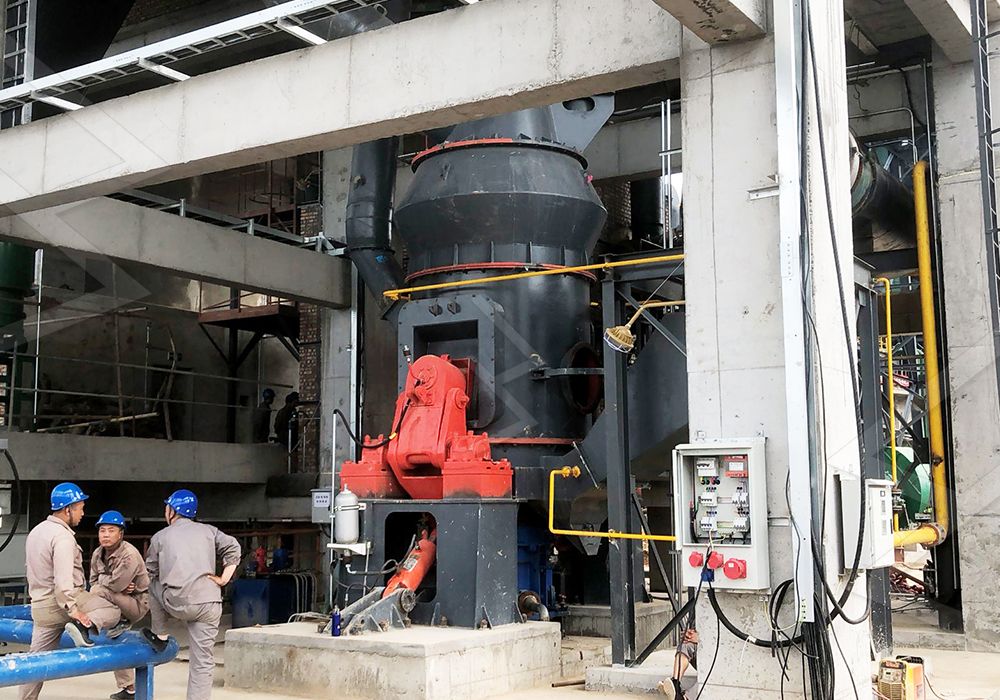
For lime specifically, which can be a bit abrasive and moisture-sensitive, this setup is golden. The vertical orientation allows for simultaneous drying and grinding if needed, thanks to hot air injection. So, even if your lime has some moisture, it won’t gum up the works.
Advantages: Why Go Vertical?
Alright, so why pick a vertical mill over, say, a ball mill or Raymond mill? Here are the big wins:
- Energy Efficiency: Vertical mills consume way less power—up to 30-50% less than traditional ball mills. That’s because they use rollers and air flow to grind, not a bunch of tumbling steel balls. Lower energy bills? Yes, please.
- Compact Footprint: These things are space-savers. They’re designed vertically, so they take up less floor space compared to horizontal mills. Perfect if your plant is tight on real estate.
- Precision Grinding: With advanced classifiers, you can tweak the fineness easily—think ranges from 325 to 2500 meshes. That’s super fine powder, ideal for high-value applications where consistency is king.
- Low Maintenance: Many modern vertical mills, like our MW Ultrafine Grinding Mill, are built with no rolling bearings or screws in the grinding chamber. That means fewer parts to wear out and less downtime for repairs. Plus, features like external lubrication let you keep things running 24/7 without stopping.
- Eco-Friendly Operation: Integrated dust collectors and silencers keep noise and dust pollution to a minimum. So, you stay compliant with environmental regs without extra hassle.
Spotlight on Our Gear: The MW Ultrafine Grinding Mill
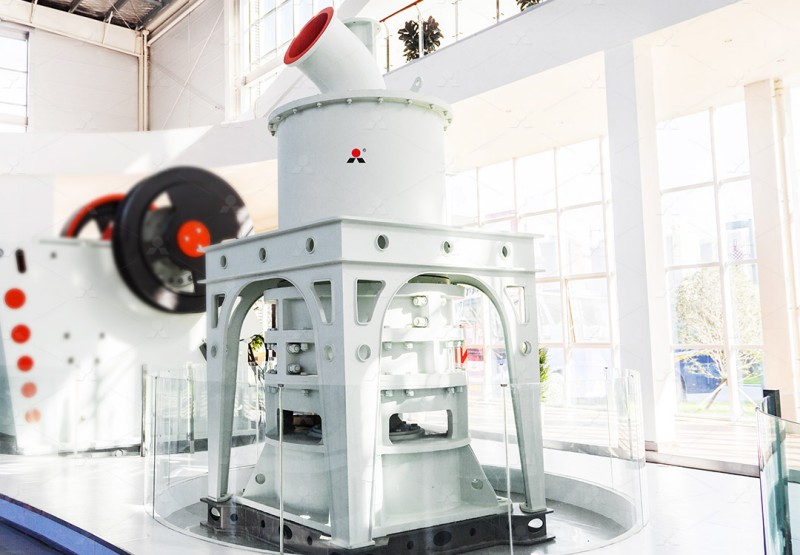
Now, if you’re looking for a rock-solid option, let me shamelessly plug our MW Ultrafine Grinding Mill. This beast is engineered for customers who need ultra-fine powder without the headaches. It handles input sizes up to 20mm and capacities from 0.5 to 25 tph, making it versatile for various lime grades.
What makes it stand out? For starters, it boasts higher yielding and lower energy consumption—40% more capacity than jet mills and twice that of ball mills, but with only 30% of the energy use. The cage-type powder selector (thanks to German tech) ensures precise separation, so you get exactly the fineness you want, between 325-2500 meshes. And yeah, no worries about bearing failures or loose screws messing things up mid-production.
It’s also green-minded: the pulse dust collector keeps things clean, and the muffler cuts down noise. Perfect for lime processing where purity and environmental standards are tight. Whether you’re in chemicals, paints, or food additives, this mill delivers quality powder with minimal fuss.
Wrapping Up
So, there you have it—vertical mills are a smart choice for lime grinding thanks to their efficiency, precision, and reliability. They work by combining mechanical grinding with air classification, resulting in a smooth, continuous process that saves energy and space.
If you’re considering an upgrade or a new setup, take a hard look at vertical mills. And hey, if you want a recommendation, our MW Ultrafine Grinding Mill is a top contender. It’s built to handle lime and similar materials with ease, offering killer performance and worry-free operation. Feel free to reach out if you wanna chat specifics—we’re here to help you grind smarter, not harder!
Cheers, and happy grinding!