
Detailed Explanation of Limestone Pulverizing Process and Flow
We provide a wide range of mills — including Raymond mill, trapezoidal mill, vertical mill, ultrafine mill, and ball mill, obtained ISO9001 international quality certification, EU CE certification, and Customs Union CU-TR certification. Suitable for processing minerals such as limestone, phosphate, quicklime, kaolin, talc, barite, bentonite, calcium carbonate, dolomite, coal, gypsum, clay, carbon black, slag, cement raw materials, cement clinker, and more.
The discharge range of these mills can be adjusted to meet specific processing needs, typically from 80-400 mesh, 600-3250 mesh, and can achieve the finest particle size of up to 6000 mesh(D50).
If you are looking for a reliable grinding solution to turn stone or minerals into fine powder, please feel free to contact our online customer service.
Introduction to Limestone Pulverizing
Limestone pulverizing is a critical process in numerous industries, from construction materials like cement and concrete to agricultural applications as soil conditioner and in the manufacturing of paints, plastics, and ceramics. The goal is to reduce raw limestone, a sedimentary rock composed primarily of calcium carbonate (CaCO3), into a fine powder with a specific particle size distribution. The efficiency, yield, and quality of this process are paramount, dictating the choice of grinding equipment. The entire operation typically follows a sequence: primary crushing, secondary crushing (if needed), grinding, classification, and collection.
The Step-by-Step Pulverizing Process
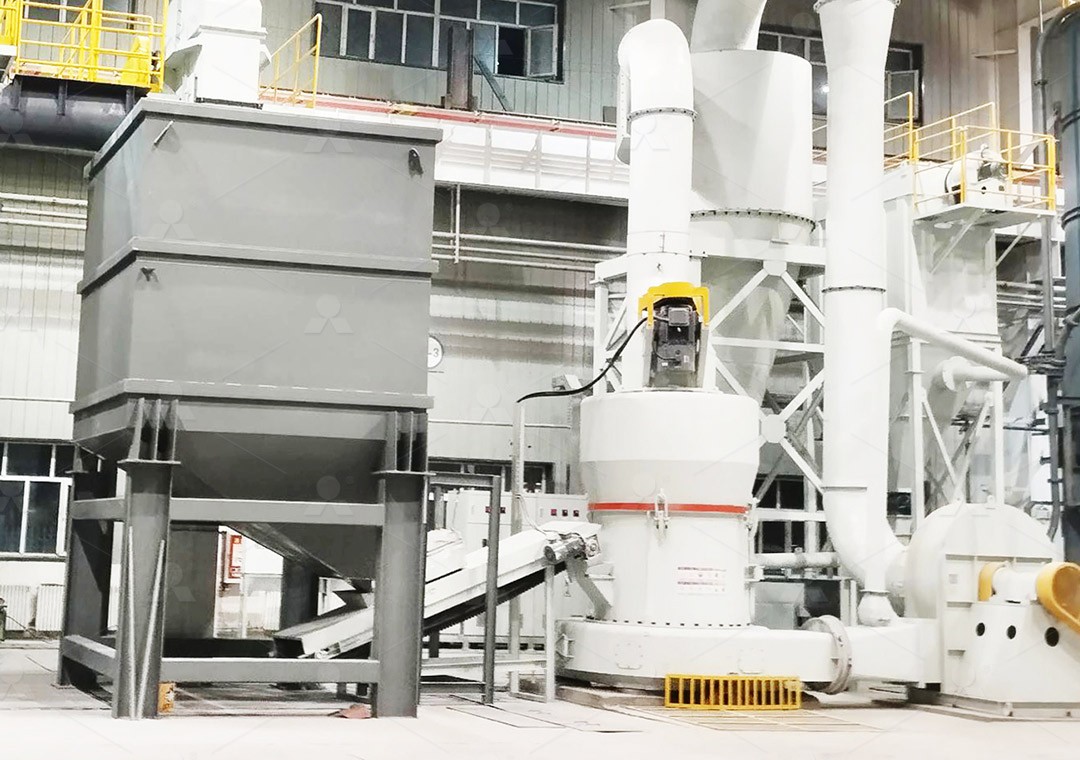
The journey from quarry rock to fine powder is a systematic one. It begins with large chunks of raw limestone being fed into a primary crusher, like a jaw crusher, which reduces the rock to a manageable size, typically below 50mm. This material is then conveyed to a storage hopper. From the hopper, a vibrating feeder ensures a consistent and controlled flow of material into the grinding mill.
The heart of the operation is the grinding mill. Here, the pre-crushed limestone is ground between grinding elements. The specific mechanism varies significantly between mill types. For ultra-fine applications, where a product fineness between 325 and 2500 meshes is required, an ultrafine grinding mill is the ideal choice. Our MW Ultrafine Grinding Mill is expertly designed for this precise task. With an input size of 0-20 mm and a capacity range of 0.5-25 tph, it’s perfectly suited for high-precision limestone powder production. Its innovative design, featuring newly engineered grinding curves for the roller and ring, enhances efficiency, offering yields up to 40% higher than jet mills while consuming 30% less energy. A key advantage is the absence of rolling bearings and screws in the grinding chamber, eliminating common failure points and allowing for external lubrication without shutdown.
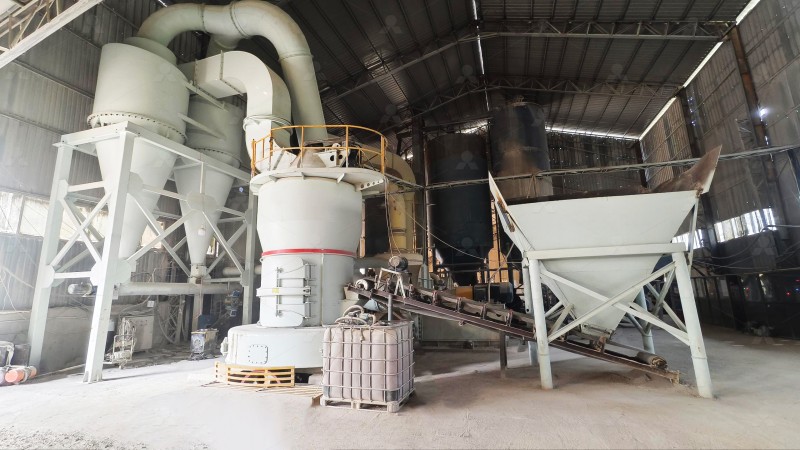
Following grinding, the powdered limestone is carried by an air stream generated by a large blower into a classifier or powder separator. This crucial component ensures product quality by allowing only particles that meet the desired fineness to pass through. Coarser particles are rejected and returned to the grinding chamber for further size reduction. For operations demanding exceptional control over fineness and high sieving rates, the MW Mill’s German-technology, cage-type powder selector is invaluable, achieving a precise d97≤5μm in a single pass.
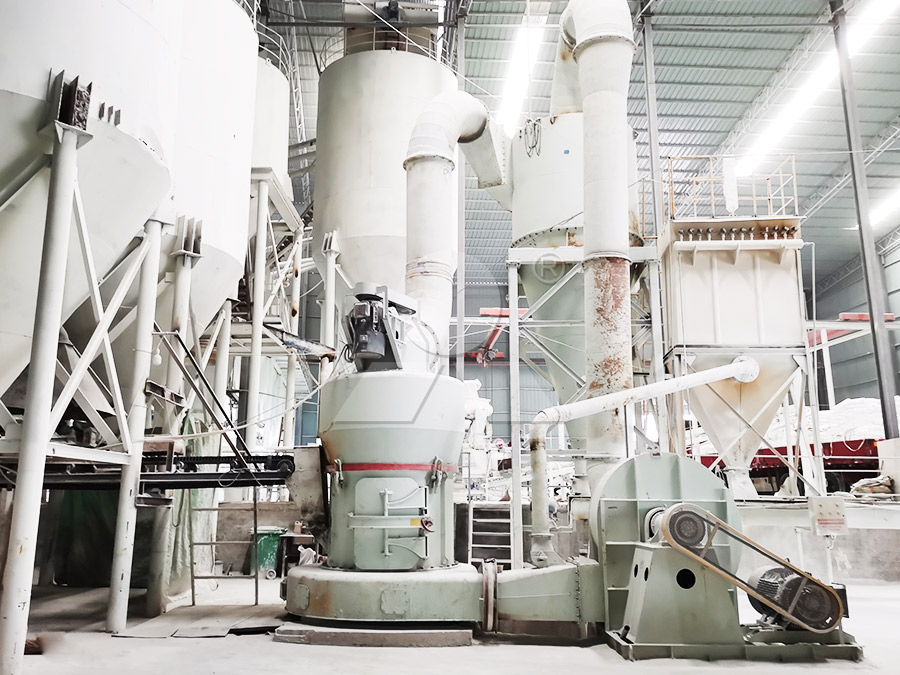
The final stage involves collection. The fine powder, now suspended in air, enters a cyclone collector or a more advanced pulse-jet baghouse dust collector. Here, the powder is separated from the air stream and discharged through a rotary valve for packaging or further processing. The cleaned air is often recirculated back into the system or vented, with modern mills like the MW series featuring efficient pulse dust collectors and mufflers to ensure the process is eco-friendly and complies with stringent environmental standards.
Choosing the Right Equipment
Selecting the appropriate mill is not a one-size-fits-all decision. It depends on the desired capacity, final product fineness, and energy consumption goals. For larger feed sizes and massive production scales up to 340 tph, an LM Vertical Grinding Mill is an excellent workhorse, integrating crushing, drying, grinding, and classifying in a single unit. However, for the most demanding ultra-fine powder specifications, the specialized MW Ultrafine Grinding Mill stands out for its precision, energy efficiency, and reliable, worry-free operation backed by our comprehensive technical support and genuine spare parts supply.
Conclusion
Mastering the limestone pulverizing process is key to unlocking the value of this versatile mineral. A well-designed flow, from primary crushing to precise air classification, ensures high-quality powder production. Investing in advanced, efficient grinding technology is not just about output; it’s about optimizing energy use, minimizing maintenance downtime, and operating within environmental guidelines. Understanding this process empowers operators to choose the best equipment, like our MW Ultrafine Grinding Mill, for their specific application and production goals.