
Critical Speed Calculation for Ball Mills: Formula, Derivation, and Application
We provide a wide range of mills — including Raymond mill, trapezoidal mill, vertical mill, ultrafine mill, and ball mill, obtained ISO9001 international quality certification, EU CE certification, and Customs Union CU-TR certification. Suitable for processing minerals such as limestone, phosphate, quicklime, kaolin, talc, barite, bentonite, calcium carbonate, dolomite, coal, gypsum, clay, carbon black, slag, cement raw materials, cement clinker, and more.
The discharge range of these mills can be adjusted to meet specific processing needs, typically from 80-400 mesh, 600-3250 mesh, and can achieve the finest particle size of up to 6000 mesh(D50).
If you are looking for a reliable grinding solution to turn stone or minerals into fine powder, please feel free to contact our online customer service.
Critical Speed Calculation for Ball Mills: Formula, Derivation, and Application
In the world of mineral processing and size reduction, the ball mill stands as a foundational piece of equipment. Understanding its operational parameters is crucial for optimizing efficiency, throughput, and product quality. Among these parameters, the critical speed is perhaps the most fundamental concept for any process engineer or mill operator to grasp.
What is Critical Speed?
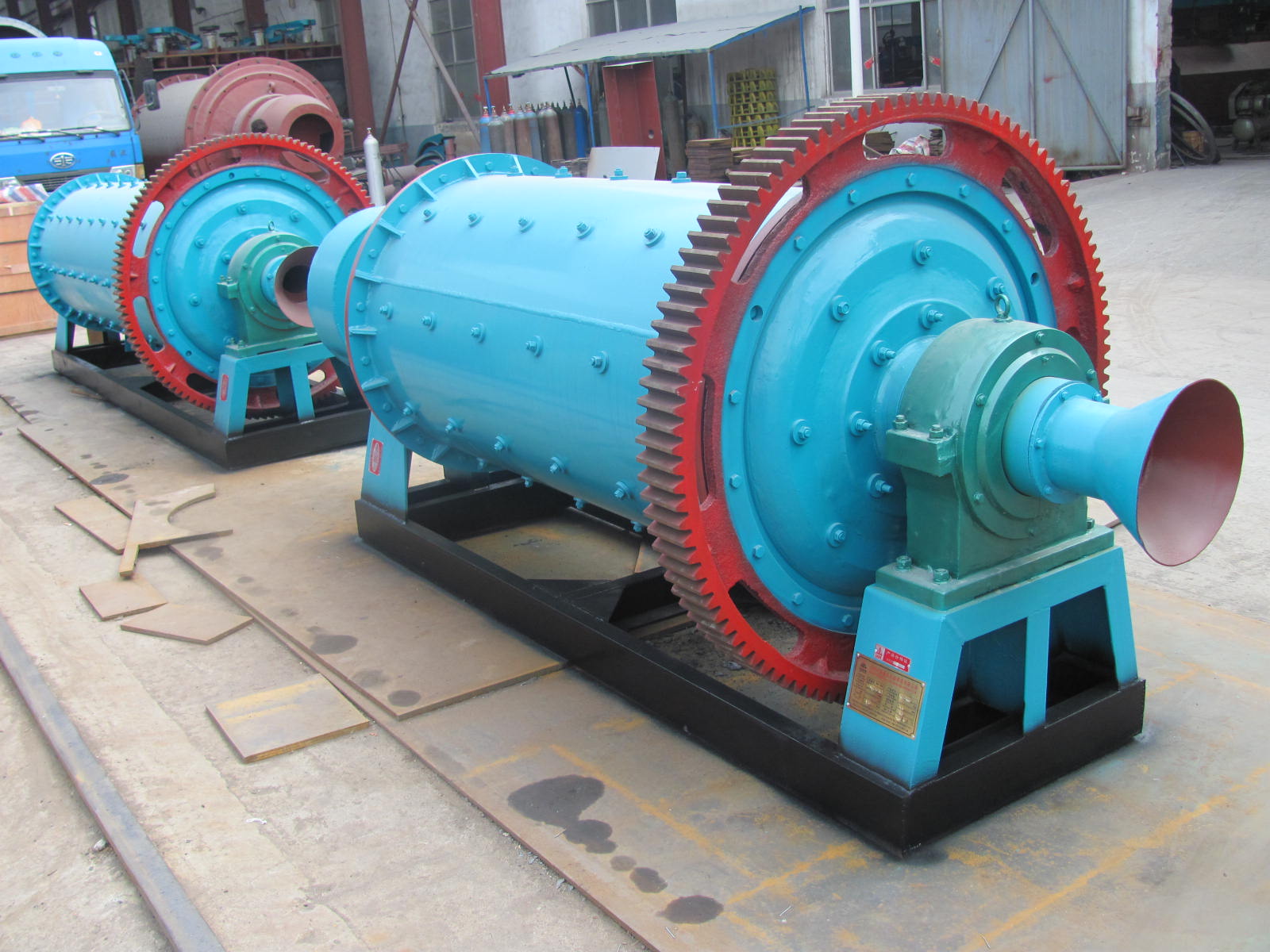
The critical speed of a ball mill is the rotational velocity at which the contents of the mill (the grinding media and the material) begin to centrifuge. At this speed, the centrifugal force acting on the grinding balls is equal to the gravitational force, causing them to be pinned against the inner wall of the mill shell. They cease to cascade or cataract, which are the motions responsible for the impact and shear forces that achieve size reduction. Simply put, grinding effectively stops at the critical speed.
The Formula and Its Derivation
The formula for calculating the critical speed (Nc) in revolutions per minute (RPM) is derived from the equilibrium of forces:
Nc = 42.3 / √(D – d)
Where:
Nc = Critical Speed (RPM)
D = Internal diameter of the mill shell (meters)
d = Diameter of the grinding balls (meters)
The derivation starts with the basic physics of centrifugal motion. The centrifugal force (Fc) on a ball at the mill shell’s inner surface is given by Fc = (m * v²) / r, where m is mass, v is tangential velocity, and r is the radius (D/2). The gravitational force (Fg) is m * g. At the critical point, Fc = Fg. Substituting and solving for the rotational speed (which is related to tangential velocity) yields the constant 42.3, which accounts for gravitational acceleration and unit conversions.
Practical Application and Operational Speed
Operating a ball mill at its critical speed is counterproductive. In practice, ball mills are run at 65% to 80% of the critical speed. This range allows the balls to be carried nearly to the top of the shell before falling in a cascading motion, creating the impact necessary for coarse grinding, or rolling down in a cataracting motion for finer grinding. The optimal percentage depends on factors like the mill’s internal design, the type of liner, the charge volume, and the characteristics of the material being ground.
Beyond Traditional Ball Milling: The Modern Alternative
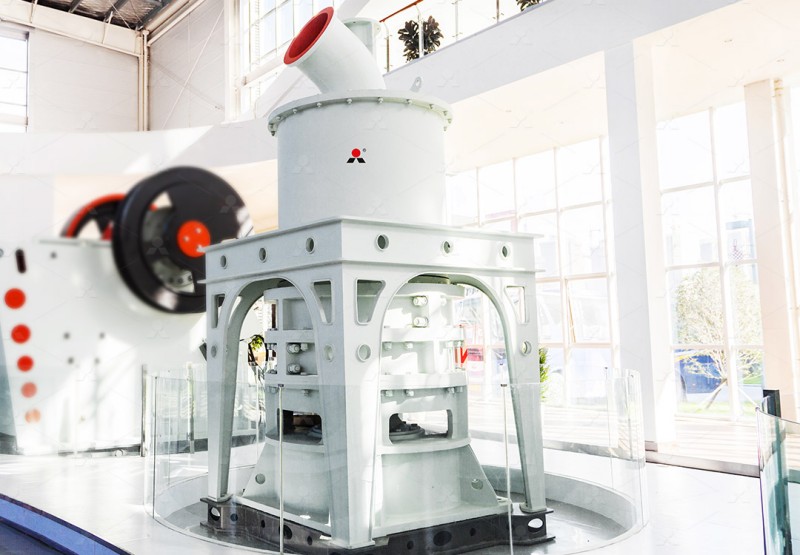
While the ball mill is a workhorse, modern industry demands higher efficiency, finer products, and lower energy consumption. This is where advanced grinding technologies like our MW Ultrafine Grinding Mill truly shine. This machine is engineered for customers who need to make ultra-fine powder without the inherent limitations of ball mill critical speed calculations.
The MW Mill operates on a completely different principle. It features a cage-type powder selector that adopts German technologies, effectively increasing the precision of powder separation. The product fineness can be seamlessly adjusted between 325-2500 meshes, achieving a screening rate of d97≤5μm in a single pass. Unlike a ball mill, whose efficiency is tied to a specific rotational speed, the MW Mill offers consistent, high-yield production with a system energy consumption that is only 30% of a jet mill.
For operations requiring even greater precision and stability in vertical grinding applications, our LUM Ultrafine Vertical Grinding Mill is another excellent solution. It integrates ultrafine powder grinding, grading, and transporting with higher yielding rates and better quality finished products, all while consuming 30%-50% less energy than common grinding mills.
Conclusion
Understanding critical speed is essential for the effective operation of traditional ball mills. However, for operations targeting ultra-fine powders with higher efficiency and lower operational costs, modern milling solutions like the MW and LUM series represent a significant technological leap. They eliminate the constraints of critical speed, offering precise control, eco-friendly operation, and superior economics for the most demanding grinding applications.