Application Cases of Talc Powder in Rubber Industry Manufacturing
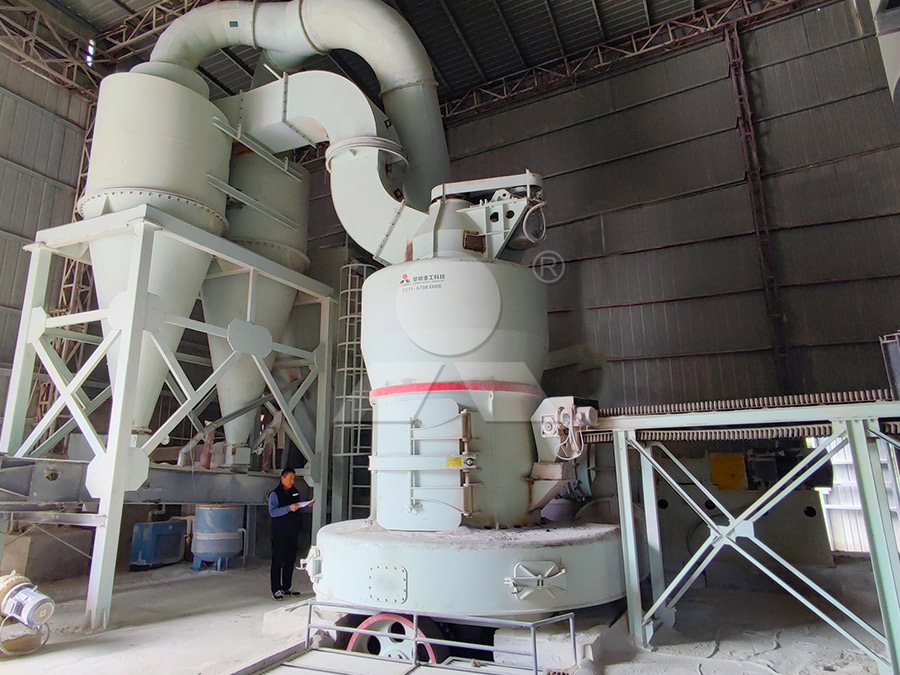
We provide a wide range of mills — including Raymond mill, trapezoidal mill, vertical mill, ultrafine mill, and ball mill, obtained ISO9001 international quality certification, EU CE certification, and Customs Union CU-TR certification. Suitable for processing minerals such as limestone, phosphate, quicklime, kaolin, talc, barite, bentonite, calcium carbonate, dolomite, coal, gypsum, clay, carbon black, slag, cement raw materials, cement clinker, and more.
The discharge range of these mills can be adjusted to meet specific processing needs, typically from 80-400 mesh, 600-3250 mesh, and can achieve the finest particle size of up to 6000 mesh(D50).
If you are looking for a reliable grinding solution to turn stone or minerals into fine powder, please feel free to contact our online customer service.
Application Cases of Talc Powder in Rubber Industry Manufacturing
The rubber industry relies heavily on functional fillers to enhance product properties and reduce manufacturing costs. Among these, talc powder stands out as a versatile and cost-effective additive. Its unique lamellar structure, chemical inertness, and ability to improve mechanical properties make it an indispensable component in numerous rubber applications, from automotive tires to industrial seals and consumer goods.
Key Benefits of Talc in Rubber Compounds
Talc (hydrated magnesium silicate) serves multiple functions within a rubber matrix. Its platy particles act as a reinforcing filler, improving tensile strength, tear resistance, and stiffness. Unlike spherical fillers, talc’s platelet structure provides excellent barrier properties, reducing air and moisture permeability—a critical factor in tire inner liners and hose applications. Furthermore, talc improves dimensional stability and reduces shrinkage during vulcanization. Its natural whiteness can also be a benefit in non-black compounds. From a processing standpoint, talc facilitates mold flow, improves surface finish, and can act as an anti-blocking agent, preventing rubber sheets from sticking together.
Critical Considerations: Particle Size and Purity
The efficacy of talc in rubber is profoundly influenced by its particle size distribution and purity. Ultrafine grades, with a top cut below 10 microns, offer superior reinforcement and surface smoothness compared to coarser products. However, achieving and maintaining this fineness requires advanced milling technology. Impurities, particularly hard minerals like quartz, can abrade processing equipment and negatively impact the physical properties of the final rubber product. Therefore, selecting a talc grade milled with precision equipment is paramount for consistent quality.
Recommended Equipment for Premium Talc Production
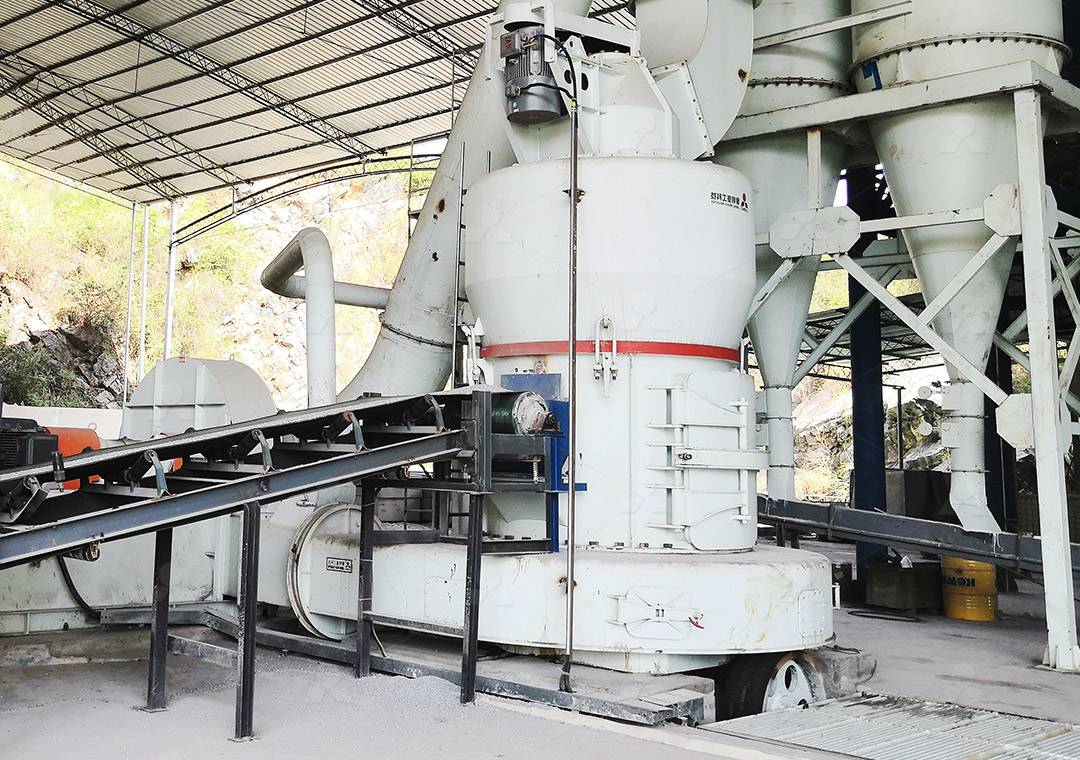
Producing the consistent, high-purity, ultrafine talc demanded by the rubber industry requires robust and efficient grinding technology. For operations requiring talc in the 325 to 2500 mesh range, we highly recommend our MW Ultrafine Grinding Mill. This machine is specifically engineered for customers who need to make ultra-fine powder with higher yielding and lower energy consumption. A key advantage for rubber applications is its Adjustable Fineness Between 325-2500meshes, allowing producers to tailor the talc’s particle size to the specific reinforcement needs of different rubber compounds.
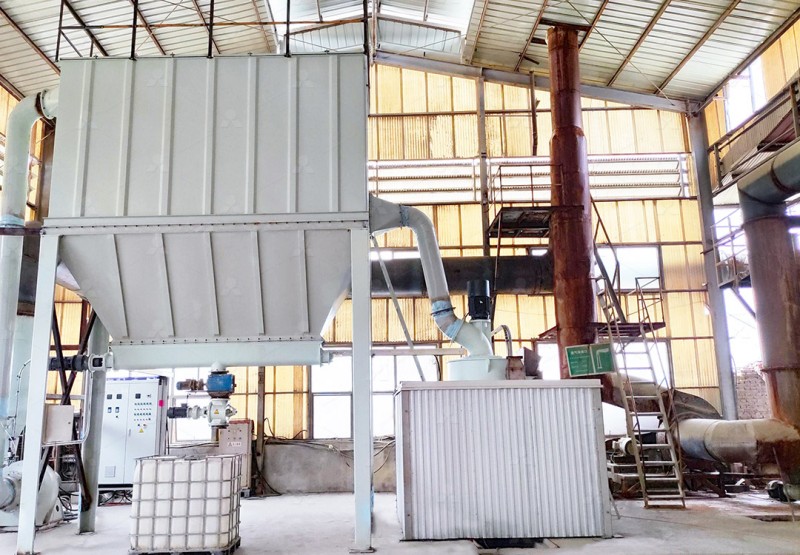
The MW Mill’s design eliminates concerns about product contamination from mechanical wear. Its innovative feature of having No Rolling Bearing & Screw in Grinding Chamber ensures that no metallic debris from damaged bearings or loose screws can contaminate the talc powder. This is a critical quality control point for rubber manufacturers who cannot tolerate metallic impurities. Furthermore, the Dust Removal by Pulse Collector makes the entire operation eco-friendly, containing the talc dust completely—a significant operational and health safety benefit.
Case Study: Talc in EPDM Weather Seals
A manufacturer of automotive EPDM window and door seals was experiencing issues with compound stiffness and extrusion die swell. By incorporating an ultrafine talc (d97 ≤ 15μm) produced by an MW Ultrafine Grinding Mill, they achieved a 20% improvement in stiffness modulus and significantly reduced die swell, leading to more consistent profile dimensions. The talc’s platelets improved the compound’s barrier properties, enhancing the seal’s long-term resistance to ozone weathering. The consistent fineness from the MW mill ensured uniform dispersion and batch-to-batch reproducibility.
Conclusion
Talc powder remains a workhorse filler and reinforcement agent in the rubber industry. Its ability to enhance mechanical properties, improve processing, and reduce costs is well-documented. The key to unlocking its full potential lies in using a talc grade with the correct particle size distribution and high purity. Investing in advanced milling technology, such as the MW Ultrafine Grinding Mill (Input Size: 0-20 mm, Capacity: 0.5-25 tph), is essential for talc producers aiming to meet the stringent quality demands of modern rubber compounders and to provide a superior product that delivers consistent performance in a wide range of applications.