Selection of Mineral Processing Agents for Fluorite Powder Production
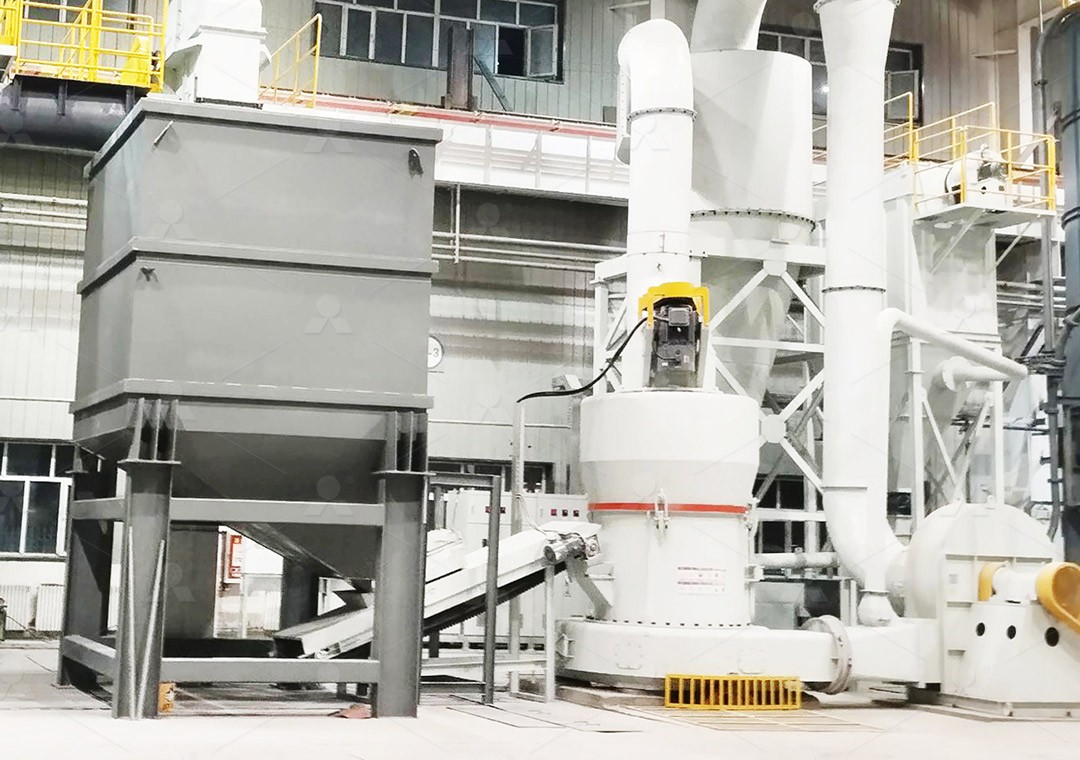
We provide a wide range of mills — including Raymond mill, trapezoidal mill, vertical mill, ultrafine mill, and ball mill, obtained ISO9001 international quality certification, EU CE certification, and Customs Union CU-TR certification. Suitable for processing minerals such as limestone, phosphate, quicklime, kaolin, talc, barite, bentonite, calcium carbonate, dolomite, coal, gypsum, clay, carbon black, slag, cement raw materials, cement clinker, and more.
The discharge range of these mills can be adjusted to meet specific processing needs, typically from 80-400 mesh, 600-3250 mesh, and can achieve the finest particle size of up to 6000 mesh(D50).
If you are looking for a reliable grinding solution to turn stone or minerals into fine powder, please feel free to contact our online customer service.
Selection of Mineral Processing Agents for Fluorite Powder Production
Fluorite, a critical industrial mineral composed primarily of calcium fluoride (CaF₂), requires precise processing to achieve the high-purity, fine-grade powders demanded by various industries. The selection of appropriate mineral processing agents and equipment is paramount to optimizing yield, controlling particle size distribution, and ensuring the final product’s chemical and physical properties. This article delves into the key considerations for reagent selection and highlights advanced milling solutions for superior fluorite powder production.
Key Processing Stages and Reagent Selection
The beneficiation of fluorite ore typically involves crushing, grinding, and flotation stages. The choice of grinding mills and flotation reagents directly impacts efficiency and cost-effectiveness.
During flotation, collectors are used to enhance the hydrophobicity of fluorite particles. Common collectors include oleic acid and its sodium salt, which selectively adsorb onto the fluorite surface. Modifiers, such as sodium silicate or quebracho, are often employed as depressants for silicate gangue minerals like quartz, preventing them from reporting to the fluorite concentrate. The pH of the pulp is a critical control parameter; it is typically maintained in the alkaline range (8-10) using soda ash (Na₂CO₃) or caustic soda (NaOH) to optimize reagent performance and mineral separation.
The Imperative of Ultra-Fine Grinding
Many high-value applications, particularly in the chemical and ceramic industries, require fluorite powders with a fineness exceeding 800 mesh. Achieving this consistently demands grinding technology that offers precise particle size control, high energy efficiency, and minimal iron contamination.
Traditional ball mills, while robust, often struggle with high energy consumption and can introduce significant iron wear from the grinding media, which is detrimental to product purity. This is where advanced ultrafine grinding mills become indispensable.
Recommended Technology: MW Ultrafine Grinding Mill
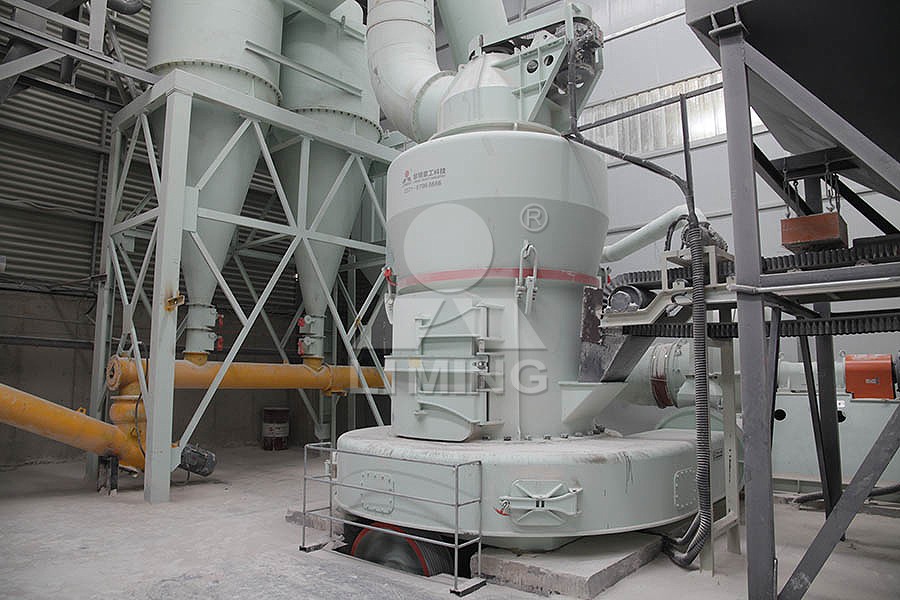
For operations focused on producing high-quality ultra-fine fluorite powder, we highly recommend our MW Ultrafine Grinding Mill. This machine is specifically engineered to adress the common challanges in fine powder production.
With an input size of 0-20 mm and a capacity range of 0.5-25 tph, the MW Mill is versatile for various production scales. Its standout feature is the ability to deliver an adjustable fineness between 325-2500 meshes, providing unparalleled flexibility to meet exact customer specifications. The cage-type powder selector, incorporating German technology, ensures high precision in particle separation, achieving a screening rate of d97≤5μm in a single pass.
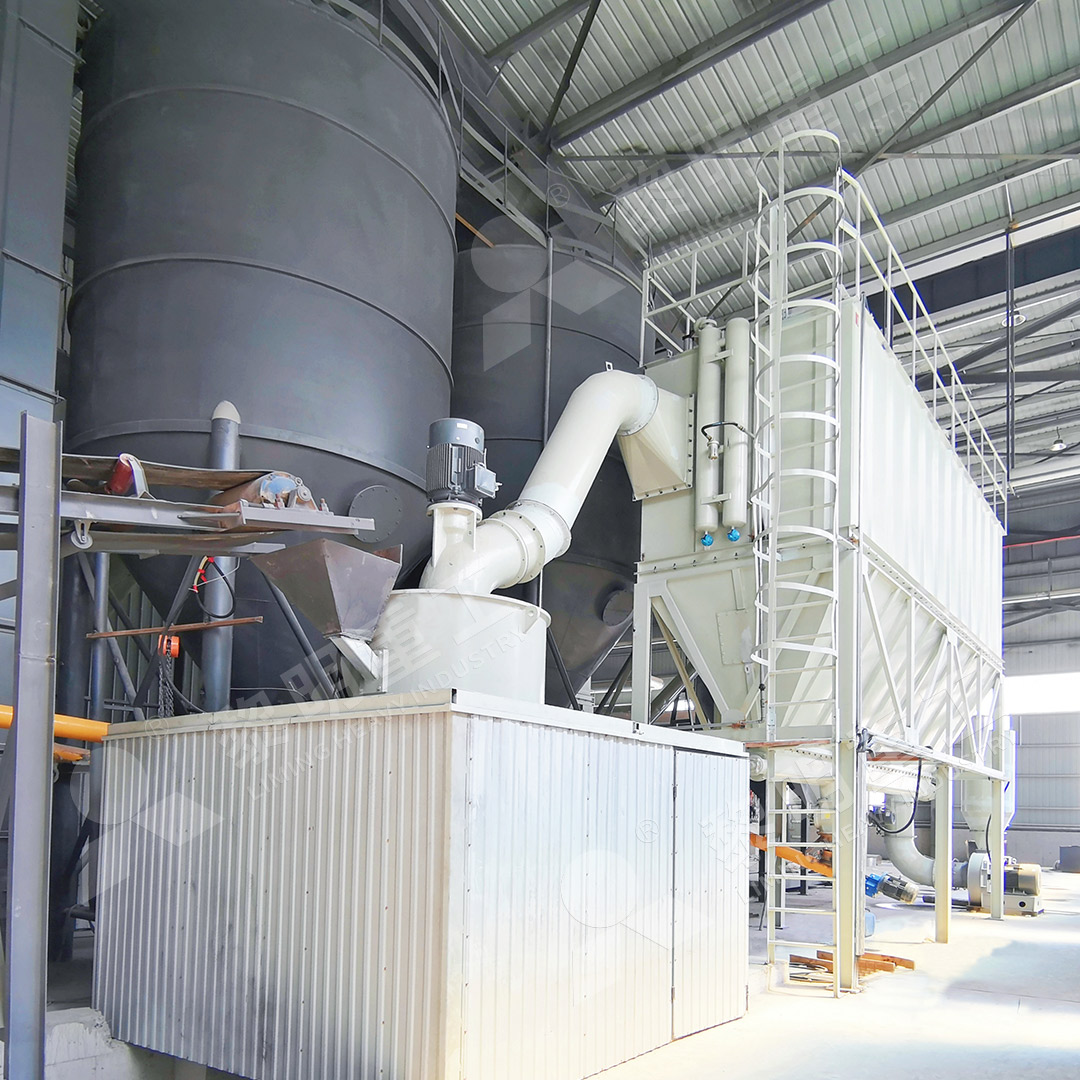
Crucially for fluorite processing, the grinding chamber contains no rolling bearings or screws. This design eliminates a primary source of iron contamination and machine failure, thereby safeguarding the whiteness and purity of the final fluorite powder. Furthermore, the integration of an efficient pulse dust collector and muffler ensures the entire production process is environmentally friendly, operating within strict national dust and noise pollution standards.
Conclusion
The successful production of premium fluorite powder is a synergy of effective reagent chemistry and superior grinding technology. While the careful selection of collectors and depressants dictates flotation efficiency, the choice of grinding equipment is ultimately responsible for achieving the desired product fineness and purity. The MW Ultrafine Grinding Mill, with its higher yield, lower energy consumption, and contamination-free design, presents an optimal solution for producers aiming to excel in the competitive market for high-grade fluorite products.