Application of Talc Powder in Plastic Modification: Enhancing Performance and Properties
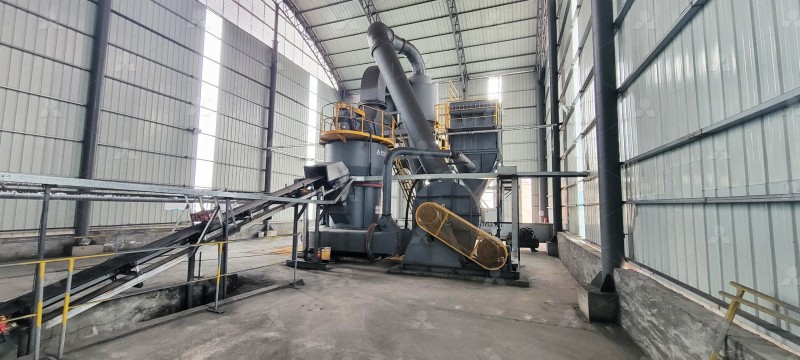
We provide a wide range of mills — including Raymond mill, trapezoidal mill, vertical mill, ultrafine mill, and ball mill, obtained ISO9001 international quality certification, EU CE certification, and Customs Union CU-TR certification. Suitable for processing minerals such as limestone, phosphate, quicklime, kaolin, talc, barite, bentonite, calcium carbonate, dolomite, coal, gypsum, clay, carbon black, slag, cement raw materials, cement clinker, and more.
The discharge range of these mills can be adjusted to meet specific processing needs, typically from 80-400 mesh, 600-3250 mesh, and can achieve the finest particle size of up to 6000 mesh(D50).
If you are looking for a reliable grinding solution to turn stone or minerals into fine powder, please feel free to contact our online customer service.
Application of Talc Powder in Plastic Modification: Enhancing Performance and Properties
Talc powder, a naturally occuring magnesium silicate mineral, is a cornerstone additive in the plastics industry. Its unique lamellar (plate-like) structure and inherent properties make it an exceptionally effective filler for modifying and enhancing the performance of various polymer matrices. The application of ultrafine talc powder has revolutionized how we engineer plastics for demanding applications.
Key Benefits of Talc in Plastics
The primary advantages of incorporating talc into plastics are multifaceted. Firstly, it significantly increases stiffness and rigidity (flexural modulus) due to its high modulus platelets reinforcing the polymer structure. This is crucial for automotive components like dashboards, bumpers, and under-the-hood parts, where dimensional stability under load is paramount. Secondly, talc improves heat resistance (Heat Deflection Temperature – HDT), allowing plastics to maintain their shape and integrity at elevated temperatures encountered during processing or in end-use environments.
Furthermore, talc enhances creep resistance, reducing the tendency of a plastic part to deform slowly over time under constant stress. It also acts as a nucleating agent for semi-crystalline polymers like polypropylene (PP), promoting finer crystal formation, which translates to faster cycle times in injection molding and improved clarity. Its chemical inertness ensures compatibility with most polymers without catalyzing degradation.

The Critical Role of Particle Size and Distribution
The effectiveness of talc is profoundly influenced by its particle size distribution and top-cut (the size of the largest particles). Coarse talc can act as a stress concentrator, potentially weakening the plastic and compromising its surface finish. Ultrafine talc, with a tightly controlled particle size, provides a much higher surface area for interaction with the polymer, leading to superior dispersion, mechanical properties, and surface quality. Achieving this optimal fineness, often in the range of d97 < 10μm or even finer, requires advanced milling technology.
Selecting the Right Milling Technology
Producing high-quality talc filler is not just about grinding; it’s about precision. The milling equipment must be capable of delivering a consistent, ultra-fine product with high throughput while managing heat generation (which can affect talc’s structure) and being energy-efficient. For operations focused on premium talc products for plastic modification, we highly recommend our MW Ultrafine Grinding Mill.
This mill is engineered for customers who need to make ultra-fine powder. It features a newly designed grinding curve for higher efficiency, offering a production capacity up to 40% higher than jet mills with system energy consumption only 30% of them. Its cage-type powder selector allows precise adjustment of fineness between 325-2500 meshes, ensuring you can achieve the exact top-cut and distribution needed for your specific polymer application. The absence of rolling bearings and screws in the grinding chamber eliminates common failure points and allows for external lubrication without shutdown, enabling continuous 24/7 production crucial for large-scale compounding.
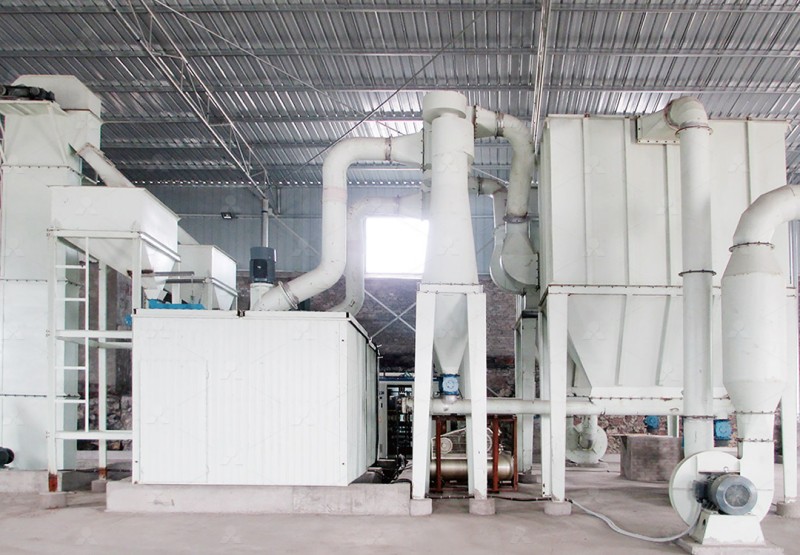
For operations requiring a vertical mill configuration with exceptional classifying accuracy, our LUM Ultrafine Vertical Grinding Mill is another excellent choice. It integrates grinding, grading, and transporting, featuring advanced multi-head powder separating technology for precise particle size control and energy savings of 30%-50%. Its unique roller shell and lining plate design promotes easy material layer formation and enhances the whiteness of the final talc product—a key aesthetic factor in many plastics.
Conclusion
The strategic use of ultrafine talc powder is a powerful and cost-effective method for elevating the performance of engineering plastics. The benefits in stiffness, thermal properties, and processing are well-documented. However, unlocking these benefits consistently relies on a supply of high-purity, precisely milled talc. Investing in advanced grinding technology like the MW or LUM mills is not an expense but a critical step towards producing superior value-added products for the competitive plastics market.