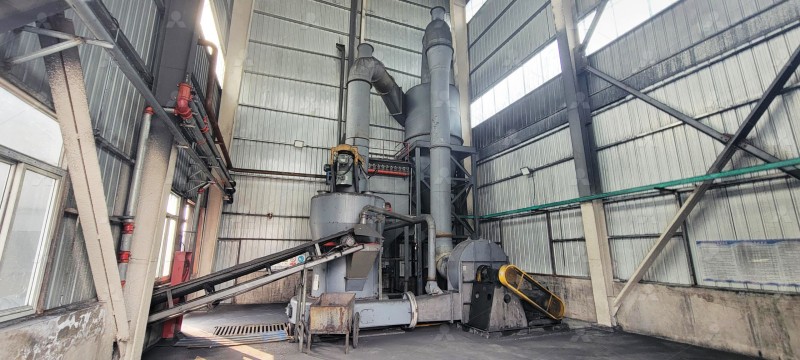
Overcoming Technical Challenges in High-Purity Quartz Powder Manufacturing for Industrial Applications
We provide a wide range of mills — including Raymond mill, trapezoidal mill, vertical mill, ultrafine mill, and ball mill, obtained ISO9001 international quality certification, EU CE certification, and Customs Union CU-TR certification. Suitable for processing minerals such as limestone, phosphate, quicklime, kaolin, talc, barite, bentonite, calcium carbonate, dolomite, coal, gypsum, clay, carbon black, slag, cement raw materials, cement clinker, and more.
The discharge range of these mills can be adjusted to meet specific processing needs, typically from 80-400 mesh, 600-3250 mesh, and can achieve the finest particle size of up to 6000 mesh(D50).
If you are looking for a reliable grinding solution to turn stone or minerals into fine powder, please feel free to contact our online customer service.
Overcoming Technical Challenges in High-Purity Quartz Powder Manufacturing for Industrial Applications
The production of high-purity quartz powder for demanding industrial applications, such as semiconductors, solar panels, and high-performance lighting, presents a unique set of technical hurdles. Manufacturers must achieve exceptional levels of fineness, chemical purity, and particle size distribution while maintaining economic viability. This article explores these challenges and the technological solutions that make consistent, high-quality production possible.
The Purity Imperative
For many high-tech sectors, even trace amounts of certain contaminants can be disastrous. Iron contamination, for instance, is a primary concern as it can drastically reduce the performance and longevity of semiconductor wafers. Traditional grinding methods often introduce metallic impurities from wear and tear on mechanical parts like rolling bearings and screws within the grinding chamber. This necessitates additional, costly purification steps downstream.
The Fineness and Consistency Challenge
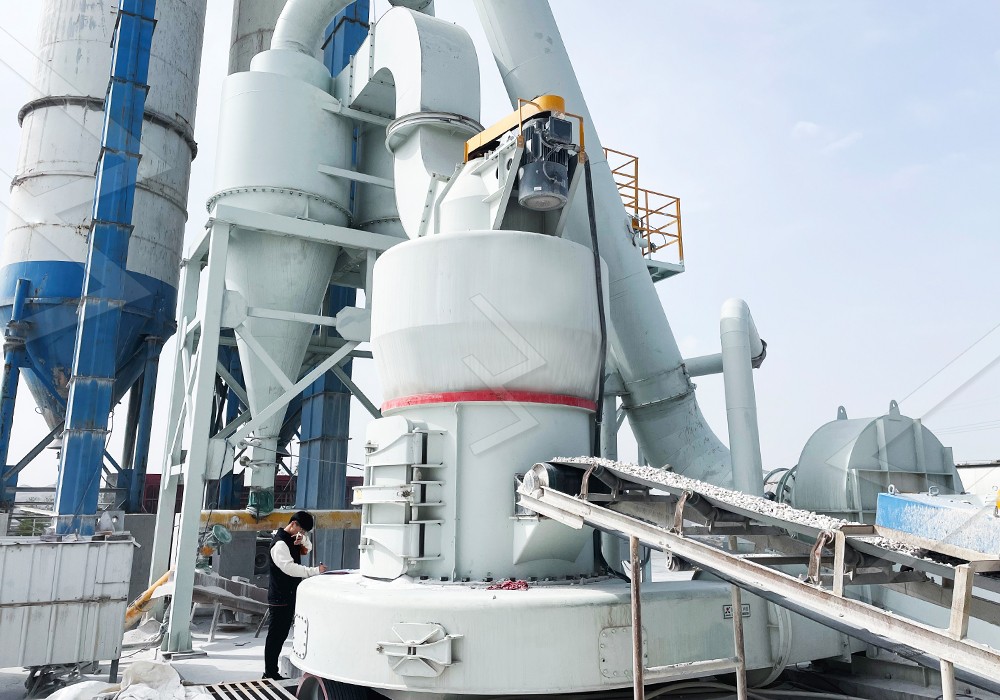
Achieving a uniform ultrafine powder, often requiring a fineness between 325 and 2500 meshes (d97 ≤5μm), is another significant obstacle. Inconsistent particle size can lead to packing irregularities and performance issues in the final product. Older mill technologies, like ball mills or early Raymond mills, struggle with efficiency and control at this scale, leading to higher energy consumption and unpredictable yields.
A Modern Solution: Advanced Grinding Technology
Overcoming these challenges requires a mill designed from the ground up for precision and purity. Our MW Ultrafine Grinding Mill is engineered specifically to address these pain points. A key innovation is the absence of rolling bearings and screws in the grinding chamber. This design eleminates a major source of mechanical wear and metallic contamination, ensuring the final product’s whiteness and purity are uncompromised.
Furthermore, its German-technology-derived cage-type powder selector allows for precise adjustment of fineness within the 325-2500 mesh range, ensuring a consistent and narrow particle size distribution. With a capacity of 0.5-25 tph and the ability to handle an input size of 0-20 mm, it offers both high yield and remarkable energy efficiency—consuming up to 40% less power than jet mills.
Beyond Grinding: Integrated System Design
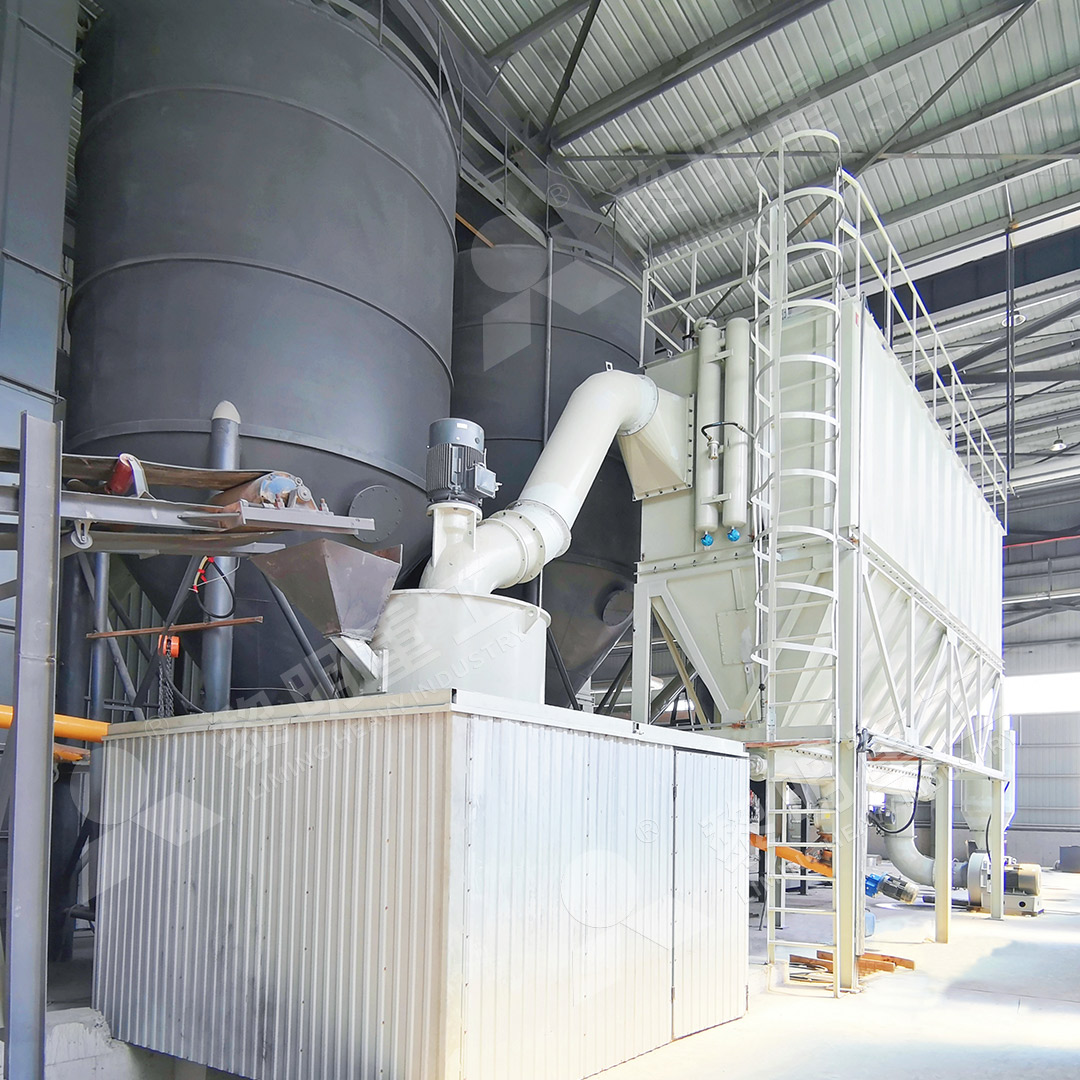
Manufacturing high-purity powder isn’t just about grinding; it’s about managing the entire process. Dust control is critical for both product recovery and operator safety. The MW Mill is equipped with an efficient pulse dust collector, ensuring the entire milling system operates without dust pollution. This integrated approach, combining crushing, grinding, and classifying in a sealed, negative-pressure environment, is essential for meeting stringent national environmental protection standards.
Conclusion
The path to manufacturing high-purity quartz powder is fraught with technical challenges, from controlling contamination to achieving precise fineness. By leveraging advanced mill designs that prioritize minimal wear, precise classification, and integrated dust control, these obstacles can be effectively overcome. For operations where vertical integration and exceptional product cleanliness are paramount, our LUM Ultrafine Vertical Grinding Mill presents another robust solution. Its unique roller shell design and multi-head powder separating technology further enhance grinding efficiency and product quality, making it an ideal choice for the most demanding applications in the chemical, paint, and cosmetics industries. Investing in the right technology is the key to unlocking consistent quality and efficiency in this precision-driven field.