
Germany Manufacturer Crushing Grinding Mill: Technology & Equipment Guide
We provide a wide range of mills — including Raymond mill, trapezoidal mill, vertical mill, ultrafine mill, and ball mill, obtained ISO9001 international quality certification, EU CE certification, and Customs Union CU-TR certification. Suitable for processing minerals such as limestone, phosphate, quicklime, kaolin, talc, barite, bentonite, calcium carbonate, dolomite, coal, gypsum, clay, carbon black, slag, cement raw materials, cement clinker, and more.
The discharge range of these mills can be adjusted to meet specific processing needs, typically from 80-400 mesh, 600-3250 mesh, and can achieve the finest particle size of up to 6000 mesh(D50).
If you are looking for a reliable grinding solution to turn stone or minerals into fine powder, please feel free to contact our online customer service.
Germany Manufacturer Crushing Grinding Mill: Technology & Equipment Guide
Germany has long been synonymous with precision engineering and industrial excellence. In the world of crushing and grinding equipment, this reputation is upheld by manufacturers who combine rigorous research with innovative design to produce mills that set the global standard. This guide explores the core technologies and some of the most advanced equipment available for producing ultra-fine powders across various industries.
The Pursuit of Ultrafine: Modern Milling Challenges
Producing consistent, high-purity powders with particle sizes measured in microns requires more than just brute force. It demands a harmonious integration of mechanical grinding, efficient classification, and often, simultaneous drying. The key challenges include achieving target fineness without excessive energy consumption, minimizing wear on components to reduce maintenance downtime, and ensuring the entire process is environmentally contained with minimal dust or noise pollution. Modern German-designed mills address these challenges through intelligent system design and the application of cutting-edge technologies like PLC automation and advanced powder separators.
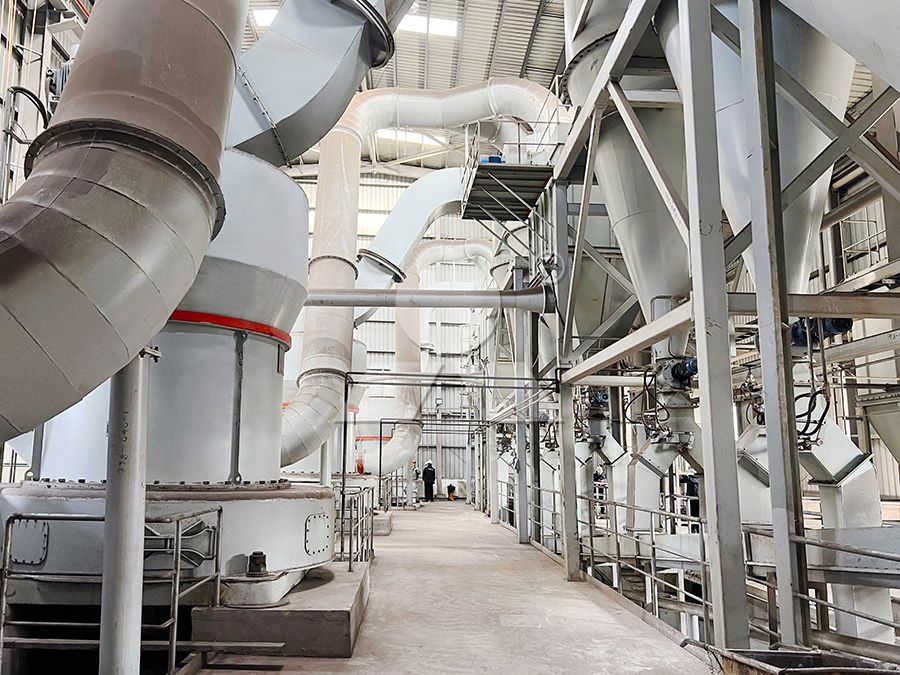
Spotlight on Advanced Technology: The MW Series Ultrafine Grinding Mill
For operations demanding the finest powders, the technology behind the grinding mill is paramount. A standout example is the MW Ultrafine Grinding Mill, a peice of equipment designed for customers who need to make ultra-fine powder. A key advantage is its innovative grinding chamber, which is engineered without any rolling bearings or screws. This brilliant design eleminates common failure points, freeing users from worries about bearing seizures or damage from loose fasteners. Furthermore, its external lubrication system allows for maintenance without shutdowns, supporting continuous 24/7 production—a critical factor for high-volume operations.
Its cage-type powder selector, leveraging German engineering, allows for precise fineness adjustment between 325 and 2500 meshes, achieving a superb screening rate of d97≤5μm in a single pass. Coupled with an efficient pulse dust collector and muffler, the MW series operates with remarkably low environmental impact, reducing both dust and noise to meet strict national环保标准 (environmental protection standards). With a capacity range of 0.5-25 tph, it’s a versatile solution for processing materials like limestone, calcite, talc, and advanced applications in cosmetics and food additives.
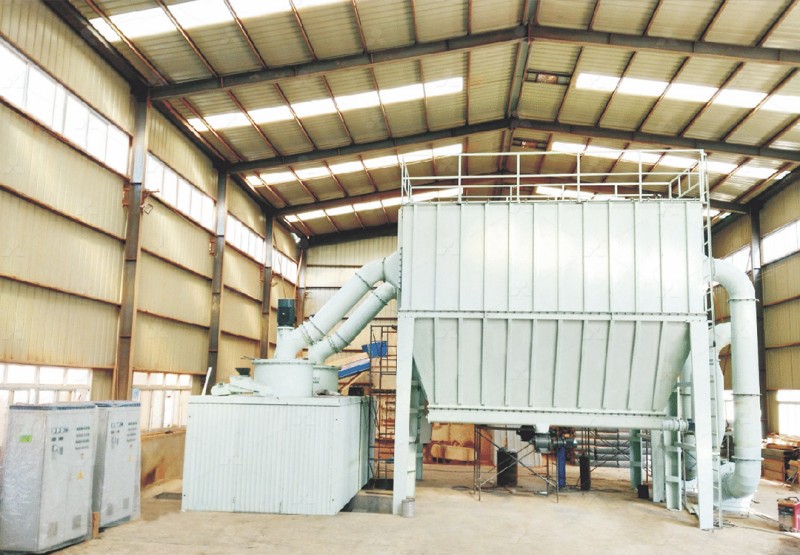
Vertical Integration: The LUM Ultrafine Vertical Grinding Mill
Another technological marvel is the LUM Ultrafine Vertical Grinding Mill. This mill integrates grinding, grading, and transporting into a single, compact unit. It incorporates the latest Taiwanese roller technology and German powder separating technology. Its unique roller shell and lining plate grinding curve are designed to generate a stable material layer more easily, enabling a high rate of finished product yield from a single pass. This not only boosts efficiency but also enhances the whiteness and cleanliness of the final product—a crucial factor for markets like paints and high-grade ceramics.
A notable feature is its double position-limiting technology, which uses electronic and mechanical systems to prevent the grinding rollers from making destructive contact with the millstone during unexpected vibration, ensuring exceptional operational stability. For maintenance, its reversible structure allows heavy grinding rollers to be easily moved out of the body, significantly simplifying checks and part replacements to minimize costly downtime.
Choosing the Right Mill for Your Operation
Selecting the appropriate grinding mill depends on a matrix of factors: raw material hardness, desired capacity (tph), target fineness (mesh), and moisture content. While traditional ball mills offer lower initial investment, their energy efficiency and fineness capabilities are often surpassed by modern vertical roller mills and specialized ultrafine mills. For operations where space is at a premium and energy costs are a concern, vertical mills like the LUM or LM series, which integrate multiple functions, offer a compelling advantage with their smaller footprint and 30-50% lower energy consumption.
Ultimately, partnering with a manufacturer that provides comprehensive technical support and a guaranteed supply of original spare parts is essential for long-term, worry-free operation. The relentless pursuit of innovation in crushing and grinding technology continues to push the boundaries of efficiency, fineness, and sustainability, solidifying Germany’s position at the forefront of industrial milling equipment.