
How Does the Speed of a Ball Mill Affect Grinding Efficiency and Productivity?
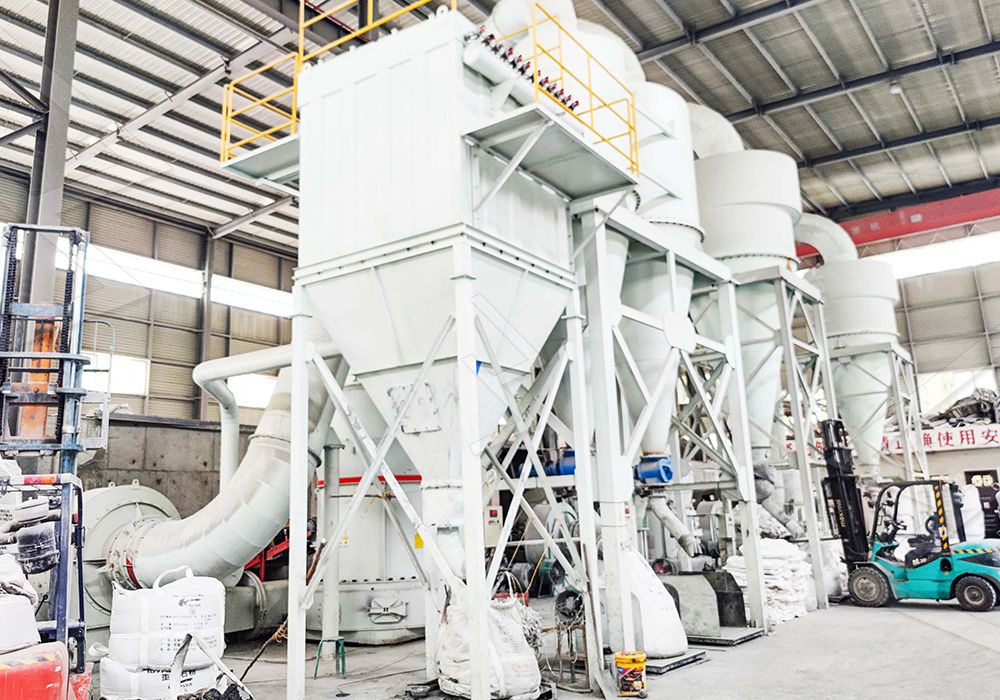
We provide a wide range of mills — including Raymond mill, trapezoidal mill, vertical mill, ultrafine mill, and ball mill, obtained ISO9001 international quality certification, EU CE certification, and Customs Union CU-TR certification. Suitable for processing minerals such as limestone, phosphate, quicklime, kaolin, talc, barite, bentonite, calcium carbonate, dolomite, coal, gypsum, clay, carbon black, slag, cement raw materials, cement clinker, and more.
The discharge range of these mills can be adjusted to meet specific processing needs, typically from 80-400 mesh, 600-3250 mesh, and can achieve the finest particle size of up to 6000 mesh(D50).
If you are looking for a reliable grinding solution to turn stone or minerals into fine powder, please feel free to contact our online customer service.
How Does the Speed of a Ball Mill Affect Grinding Efficiency and Productivity?
In mineral processing and many other industries, the ball mill is a cornerstone piece of equipment for size reduction. A critical operational parameter that directly influences its performance is the rotational speed. Understanding this relationship is key to optimizing your grinding circuit for maximum efficiency and productivity.
The Critical Speed Concept
The operation of a ball mill revolves around a concept known as the “critical speed.” This is the rotational velocity at which the centrifugal force is strong enough that the grinding media (the balls) are pinned against the inner wall of the mill, ceasing to perform any grinding action. Operating at or above 100% of critical speed is generally counterproductive.
Operating Below Critical Speed: The Cascading and Cataracting Effects
For effective grinding, mills operate at a percentage of their critical speed, typically between 65% and 80%. At this range, two key motions occur:
- Cascading: At lower speeds (e.g., 60-70% of critical speed), the media rolls over itself in a cascading motion. This is excellent for finer grinding as it generates more attrition and abrasion between particles.
- Cataracting: At higher speeds within the optimal range (e.g., 70-80% of critical speed), the media is lifted higher and then thrown across the mill in a parabolic trajectory, impacting the ore at the toe of the charge. This action is crucial for breaking larger particles with high-impact energy.
Finding the perfect balance between these two actions is the art of mill optimization. Too slow, and impact breakage is insufficient; too fast, and the media begins to centrifuge, grinding stops, and liner/ball wear increases exponentially without benefit.
Impact on Efficiency and Productivity
The speed directly dictates the energy imparted to the charge. Higher speeds increase power draw and can lead to higher throughput. However, there’s a point of diminishing returns where increased energy consumption does not translate to proportional increases in grinding efficiency. Excessive speed leads to:
- Higher wear rates on liners and grinding media.
- Increased mill vibration and potential mechanical issues.
- Over-grinding, which wastes energy and can create problematic slimes.
- Higher maintenance costs and downtime.
Beyond Traditional Ball Milling: The Modern Alternative
While optimizing ball mill speed is crucial, many operations are now turning to more advanced, efficient grinding technologies that eliminate this variable altogether. For operations requiring ultra-fine powders, our MW Ultrafine Grinding Mill presents a superior solution.
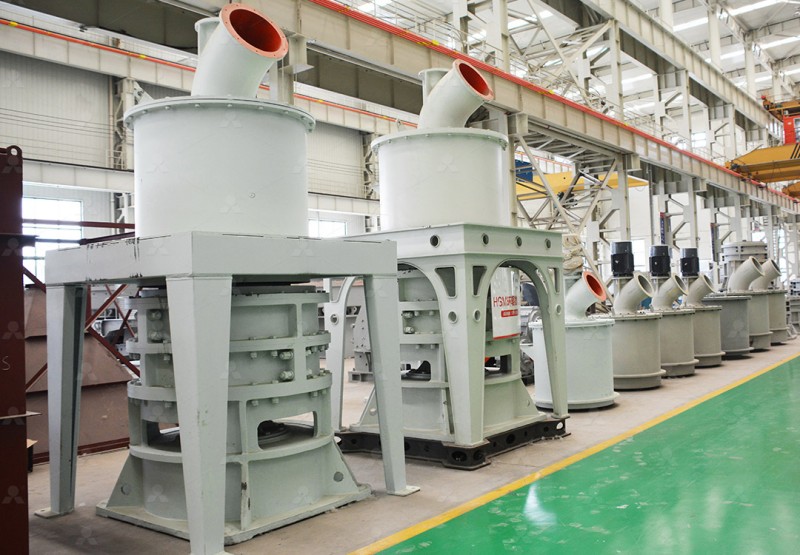
The MW Series Mill is engineered for customers who need to make ultra-fine powder efficiently. It operates on a different principle than a ball mill, using a ring and roller design that provides higher yielding and lower energy consumption. With a capacity range of 0.5-25 tph and the ability to adjust fineness between 325-2500 meshes, it offers unparalleled control. Its key advantages include:
- 40% higher production capacity than jet mills or stirred grinding mills with the same fineness and power.
- System energy consumption is only 30% of a jet grinding mill.
- No rolling bearings or screws in the grinding chamber, virtually eliminating worries about related mechanical failures.
- Fully eco-friendly operation with an integrated efficient pulse dust collector and muffler.
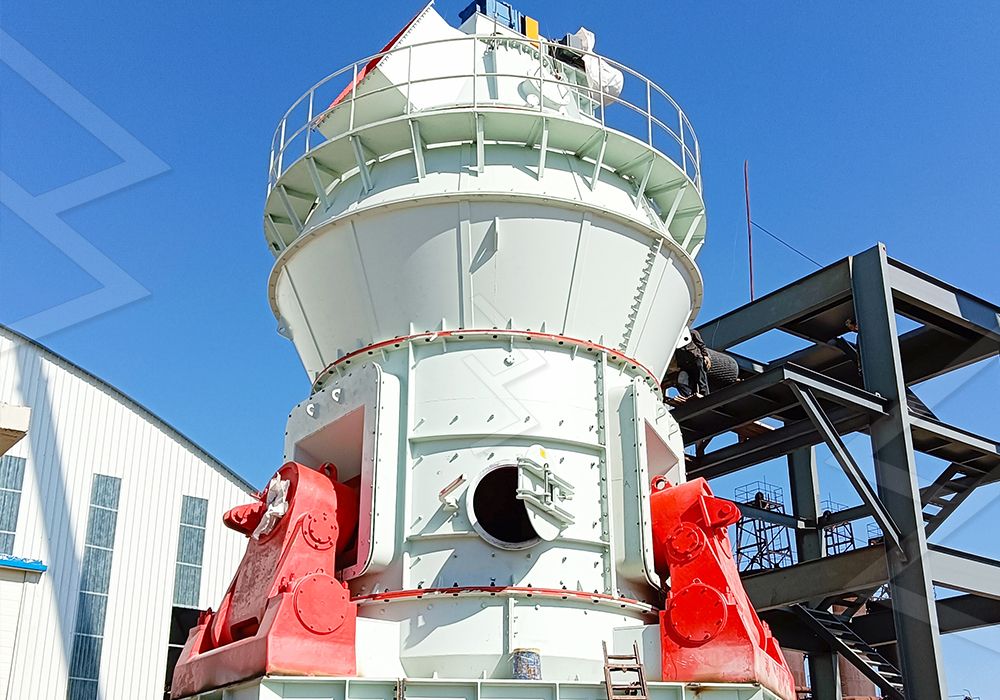
For larger scale coarse to medium-fine grinding applications, our LM Vertical Grinding Mill is another excellent high-efficiency option. It integrates crushing, drying, grinding, classifying and conveying together, reducing its footprint by 50% and saving energy consumption by 30%-40% compared to a traditional ball mill.
Conclusion
Optimizing the speed of a ball mill is a fundamental step toward improving grinding efficiency and plant productivity. It requires a careful balance to harness both cascading and cataracting motions for effective size reduction. However, for operations looking to leap forward in efficiency, yield, and product fineness, modern grinding solutions like our MW Ultrafine Grinding Mill or LM Vertical Mill offer a compelling alternative, delivering precise results with significantly lower operational costs and a smaller environmental footprint.