Cost to Build a Palm Oil Mill in Indonesia: A Detailed Investment Breakdown
We provide a wide range of mills — including Raymond mill, trapezoidal mill, vertical mill, ultrafine mill, and ball mill, obtained ISO9001 international quality certification, EU CE certification, and Customs Union CU-TR certification. Suitable for processing minerals such as limestone, phosphate, quicklime, kaolin, talc, barite, bentonite, calcium carbonate, dolomite, coal, gypsum, clay, carbon black, slag, cement raw materials, cement clinker, and more.
The discharge range of these mills can be adjusted to meet specific processing needs, typically from 80-400 mesh, 600-3250 mesh, and can achieve the finest particle size of up to 6000 mesh(D50).
If you are looking for a reliable grinding solution to turn stone or minerals into fine powder, please feel free to contact our online customer service.
Cost to Build a Palm Oil Mill in Indonesia: A Detailed Investment Breakdown
Investing in a palm oil mill in Indonesia is a significant but potentially lucrative venture, given the country’s position as the world’s leading producer of palm oil. However, understanding the detailed capital expenditure (CAPEX) is crucial for any serious investor. The total investment can vary widely, typically ranging from $1.5 million to $5 million USD for a medium-sized mill with a capacity of 10-20 tons of Fresh Fruit Bunches (FFB) per hour, depending on technology, automation level, and infrastructure.
Major Investment Components
The cost breakdown can be categorized into several key areas:
1. Land Acquisition and Site Preparation
Securing a suitable location near plantations is the first step. Costs vary dramatically by region but expect to allocate $50,000 – $200,000+ for land and another $20,000 – $50,000 for clearing, leveling, and basic drainage.
2. Mill Machinery and Equipment (The Core Investment)
This is the most substantial part of the investment, often consuming 50-60% of the total CAPEX. A complete mill includes:
- Sterilizers
- Threshers / Strippers
- Digesters and Presses
- Clarification Tanks, Purifiers, and Dryers
- Boilers and Power Generation Sets
- Effluent Treatment Plant (ETP): A critical and often overlooked cost center.
- Kernel Crushing Plant: An optional but valuable addition for extra revenue.
A full machinery suite for a 10 TPH mill can cost between $800,000 and $1.8 million.
3. Civil Works and Construction
Building the factory structure, warehouses, offices, and worker facilities requires a robust budget. Construction costs in Indonesia can range from $150 to $300 per square meter. For a comprehensive mill complex, budget $200,000 – $500,000.
4. Utilities and Infrastructure
Reliable water supply (often requiring boreholes), electrical substations, and fuel storage for generators are essential. This infrastructure can add $80,000 – $150,000 to the project cost.
5. Permits, Licenses, and Professional Fees
Navigating the regulatory landscape involves costs for environmental impact assessments (AMDAL), business permits (Izin Usaha), and mill operation licenses (IUP). Legal and consultant fees can easily reach $30,000 – $70,000.
Optimizing Your Investment: The Role of Efficient Milling
Beyond the initial setup, operational efficiency is key to profitability. One area often ripe for optimization is the processing of by-products or auxiliary materials. For instance, some mills process limestone or other minerals for water treatment or soil conditioning within the plantation.
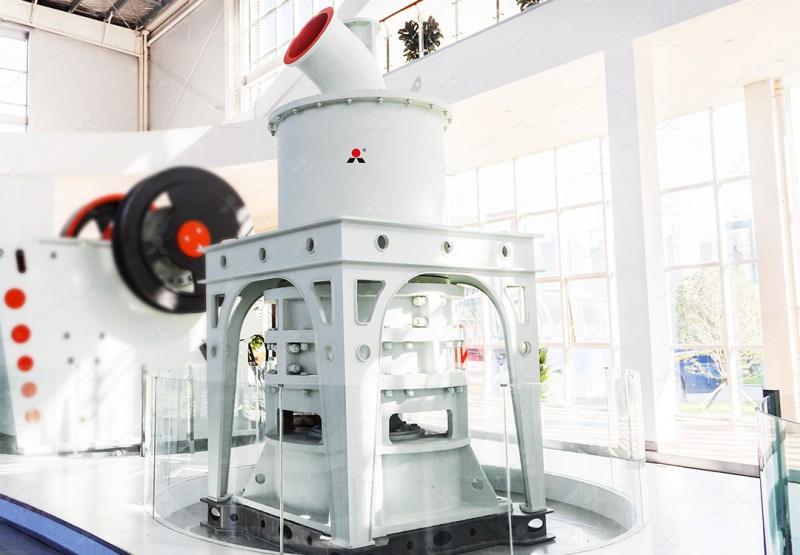
For this specific application, investing in the right grinding technology is paramount. A standard ball mill might get the job done, but it’s often energy-intensive and offers limited control over particle size. For a superior return on investment, we highly recommend considering our MW Ultrafine Grinding Mill.
This machine is engineered for precisely this kind of task. With an input size of 0-20 mm and a capacity ranging from 0.5 to 25 tons per hour, it’s perfectly suited for mid-sized operations. Its standout feature is its incredible efficiency; it offers 40% higher production capacity than jet mills and twice the yield of ball mills while consuming 30% less energy. Furthermore, it produces a consistent, ultra-fine powder adjustable between 325 to 2500 meshes, which can be crucial for certain agricultural applications. Its sealed design with an efficient pulse dust collector also ensures your operation remains clean and environmentally compliant—a major concern for modern mills.
6. Working Capital
Do not forget initial working capital for the first 3-6 months of operation to cover raw material (FFB) purchases, salaries, maintenance, and other running costs before revenue stabilizes. This can require $150,000 – $300,000.
Conclusion: A Calculated Venture
Building a palm oil mill in Indonesia is a complex project with a multi-million dollar price tag. A detailed feasibility study is non-negotiable. While the upfront costs are high, the long-term returns can be substantial for well-managed operations. Carefully selecting technology partners who provide reliable and efficient machinery, like our MW Ultrafine Grinding Mill for specific value-added processes, can significantly enhance your operational efficiency and overall profitability. Smart investments in the right equipment from the start will pay dividends for years to come.