
How to Calculate Motor Rating for a Cement Ball Mill
We provide a wide range of mills — including Raymond mill, trapezoidal mill, vertical mill, ultrafine mill, and ball mill, obtained ISO9001 international quality certification, EU CE certification, and Customs Union CU-TR certification. Suitable for processing minerals such as limestone, phosphate, quicklime, kaolin, talc, barite, bentonite, calcium carbonate, dolomite, coal, gypsum, clay, carbon black, slag, cement raw materials, cement clinker, and more.
The discharge range of these mills can be adjusted to meet specific processing needs, typically from 80-400 mesh, 600-3250 mesh, and can achieve the finest particle size of up to 6000 mesh(D50).
If you are looking for a reliable grinding solution to turn stone or minerals into fine powder, please feel free to contact our online customer service.
How to Calculate Motor Rating for a Cement Ball Mill
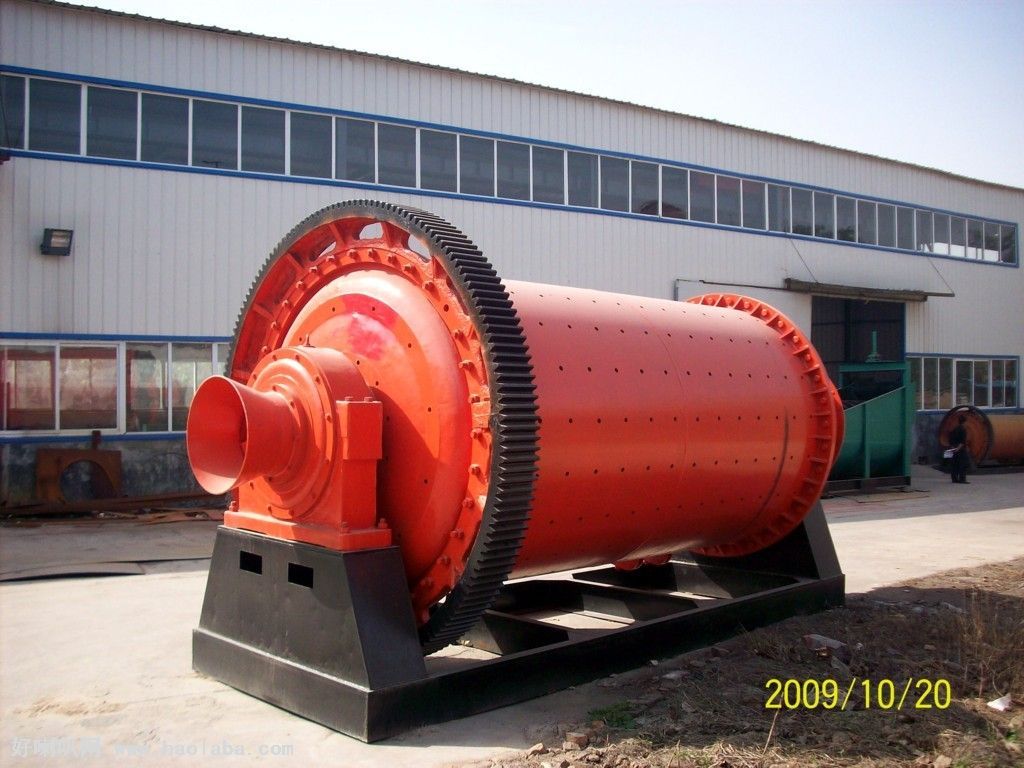
Selecting the correct motor rating for a cement ball mill is a critical step in plant design and operation. An undersized motor will lead to constant overloads, premature failure, and production bottlenecks. An oversized motor, while seemingly safe, results in higher capital expenditure, inefficient energy use, and a poor power factor. This guide outlines the key factors and a fundamental approach to determining the appropriate motor power.
Key Factors Influencing Motor Power
Several variables directly impact the power draw of a ball mill:
- Mill Dimensions: The internal diameter and effective length of the mill determine its volume and thus the capacity for grinding media and material.
- Grinding Media: The type, size, density, and filling degree of the balls are paramount. A higher filling degree requires more power to rotate the charge.
- Material Characteristics: The hardness, feed size, and required product fineness of the cement clinker and additives (like gypsum or slag) define the work index, a measure of grindability.
- Operating Speed: The mill’s rotation speed, expressed as a percentage of its critical speed (the speed at which centrifugal force pins the media to the shell), drastically affects power consumption. Optimal operation is typically 65-78% of critical speed.
- System Design: Whether the mill operates in open or closed circuit (with a separator) affects the recirculating load and overall efficiency.
Basic Calculation Methodology
While detailed software and empirical data from manufacturers are used for final selection, a simplified calculation provides a reliable estimate. The power draw (P) at the pinion shaft can be approximated using the following formula:
P = (C * W * D^{0.5} * (0.0616 * J – 0.0755 * φ) * (1 – (0.1 / (2^{(9 – 10*φ)}))) * ρ * L)
Where:
- P = Power at pinion shaft (kW)
- C = A constant (e.g., 0.23 for wet grinding, 0.20 for dry grinding)
- W = Work Index of the material (kWh/t)
- D = Internal mill diameter inside liners (m)
- J = Fraction of mill volume occupied by grinding media (e.g., 0.3 for 30%)
- φ = Mill speed as a fraction of critical speed (e.g., 0.72 for 72%)
- ρ = Bulk density of the grinding media (t/m³)
- L = Internal mill length inside liners (m)
Once the power required at the pinion shaft is calculated, the motor rating must account for losses in the drive system (gearbox, couplings) and provide a service factor for operational fluctuations. A typical service factor for a ball mill application is 1.10 to 1.15.
Motor Rating (kW) = P / (ηgearbox) * Service Factor
Where ηgearbox is the efficiency of the gearbox (often ~0.97-0.98).
Beyond Traditional Ball Mills: Modern Grinding Solutions
While ball mills are workhorses in cement plants, modern grinding technology offers significant advantages in efficiency and particle size control. For applications requiring ultra-fine powders or where energy consumption is a primary concern, advanced mills like our MW Ultrafine Grinding Mill present a superior alternative.
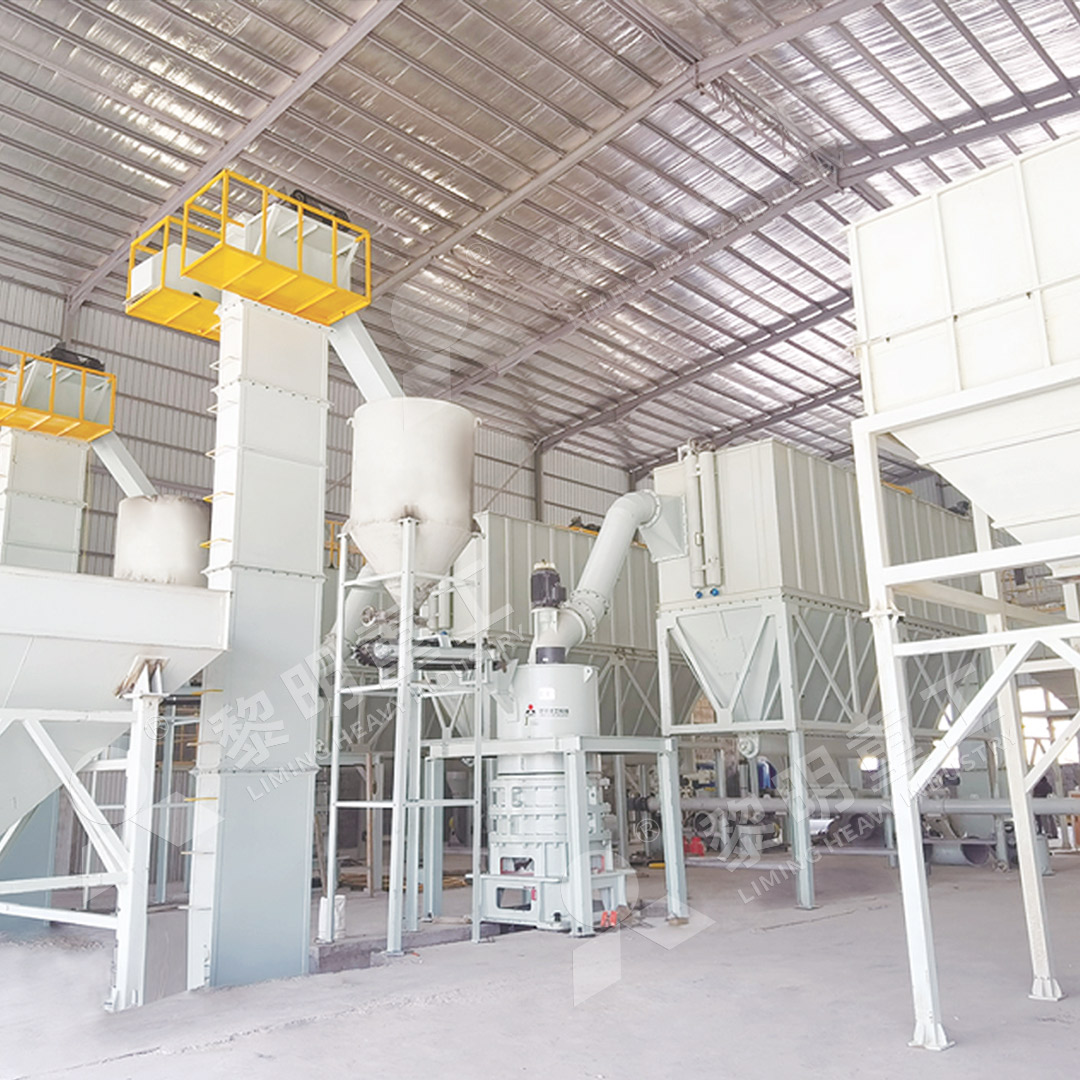
The MW Ultrafine Grinding Mill is engineered for customers needing to produce ultra-fine powder. With an input size of 0-20 mm and a capacity range of 0.5-25 tph, it excels in processing materials like limestone, calcite, and slag. Its innovative design, featuring a German-technology cage-type powder selector, allows for precise fineness adjustment between 325-2500 meshes. Crucially, its higher yielding and lower energy consumption mean it can achieve production capacities 40% higher than jet mills while using only 30% of the energy. This makes it an excellent choice for new projects or retrofits where reducing the operational load and motor rating requirements is a key objective.
For another robust option, our LUM Ultrafine Vertical Grinding Mill integrates grinding, grading, and transporting with even higher efficiency. It’s perfect for superfine dry powder of non-metal ores, offering energy savings of 30%-50% compared to common grinding mills.
Conclusion
Properly calculating the motor rating for a cement ball mill involves a careful analysis of mill geometry, media, material, and operating parameters. Using the established formulas provides a solid foundation. However, always consult with mill and motor manufacturers for the final specification, leveraging their experience and proprietary data. Furthermore, considering modern, energy-efficient grinding technologies from the outset can lead to a more optimized and cost-effective plant design, ultimately reducing the dependency on massive motor systems and slashing operational costs.