
Gypsum Powder Production Line Cost – Complete Price Breakdown & Equipment List
We provide a wide range of mills — including Raymond mill, trapezoidal mill, vertical mill, ultrafine mill, and ball mill, obtained ISO9001 international quality certification, EU CE certification, and Customs Union CU-TR certification. Suitable for processing minerals such as limestone, phosphate, quicklime, kaolin, talc, barite, bentonite, calcium carbonate, dolomite, coal, gypsum, clay, carbon black, slag, cement raw materials, cement clinker, and more.
The discharge range of these mills can be adjusted to meet specific processing needs, typically from 80-400 mesh, 600-3250 mesh, and can achieve the finest particle size of up to 6000 mesh(D50).
If you are looking for a reliable grinding solution to turn stone or minerals into fine powder, please feel free to contact our online customer service.
Gypsum Powder Production Line Cost – Complete Price Breakdown & Equipment List
Investing in a gypsum powder production line is a significant decision that requires careful consideration of both capital expenditure (CAPEX) and operational expenditure (OPEX). The total cost is influenced by the production scale, desired fineness of the final product, and the level of automation. This article provides a detailed breakdown to help you budget effectively.
Major Cost Components of a Gypsum Powder Plant
The total investment can be broadly categorized into equipment costs, installation & commissioning, civil works, and auxiliary systems.
1. Crushing Equipment
Raw gypsum ore (0-500mm) needs primary crushing. A jaw crusher is typically the first stage, reducing the size to about 0-50mm. Cost Range: $15,000 – $80,000.
2. Grinding Mill System (The Core Investment)
This is the heart of the production line and often the most significant cost. The choice of mill depends on your required capacity and product fineness (mesh size).
- Raymond Mill: A traditional, cost-effective option for coarse to medium fineness (80-325 mesh). Lower initial investment. Cost Range: $50,000 – $150,000.
- Ball Mill: Suitable for larger capacities but less energy-efficient for fine grinding. Cost Range: $100,000 – $500,000+.
- Vertical Roller Mill (e.g., LM Vertical Mill): Excellent for medium to large scales (3-340 tph), integrating drying and grinding. Higher efficiency but higher upfront cost. Cost Range: $500,000 – $2,000,000+.
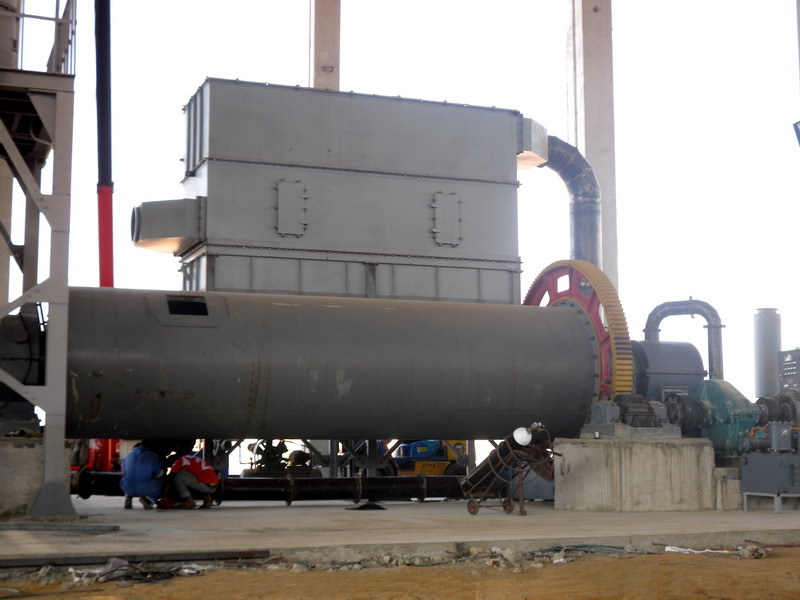
3. Calcining System (Kettle/Boiling Furnace or Rotary Kiln)
This equipment removes crystalline water from gypsum (CaSO₄·2H₂O) to produce plaster of paris (CaSO₄·½H₂O). Cost Range: $100,000 – $500,000.
4. Material Handling & Storage
This includes belt conveyors, bucket elevators, silos, and hoppers. Cost Range: $50,000 – $200,000.
5. Dust Collection & Environmental Control
Essential for meeting environmental standards and ensuring a clean operation. Pulse jet baghouses are common. Cost Range: $30,000 – $120,000.
6. Electrical Control System & Automation
PLCs and control panels for efficient and stable operation. Cost Range: $50,000 – $150,000.
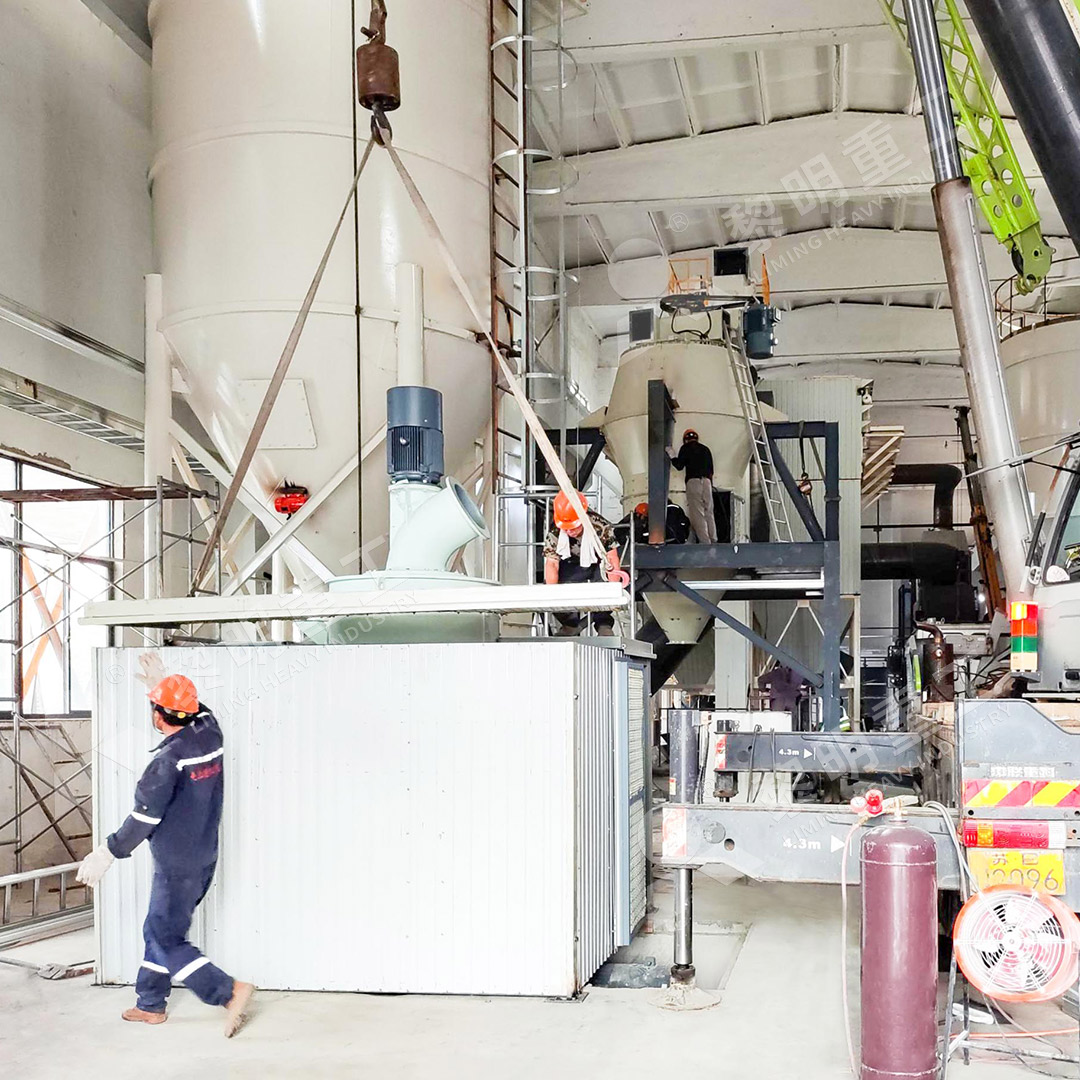
7. Installation, Commissioning, and Civil Works
Often accounts for 20%-40% of the total equipment cost. This includes foundation construction, steel structure, electrical wiring, and piping.
Recommended Equipment for Superior Fine Powder Production
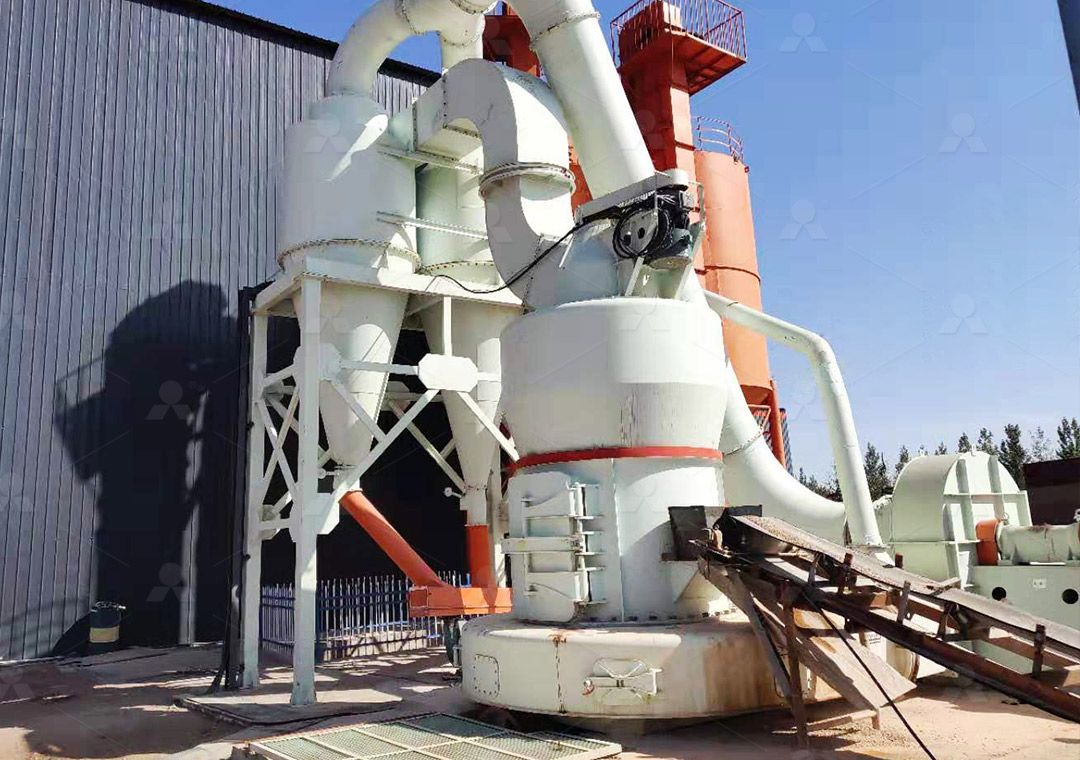
For producers aiming for high-value, ultra-fine gypsum powder (325-2500 meshes), traditional mills often fall short on efficiency and precision. For this application, we highly recommend our MW Ultrafine Grinding Mill.
The MW Ultrafine Grinding Mill is specifically engineered for customers requiring ultra-fine powders. It handles an input size of 0-20 mm with a capacity range of 0.5-25 tph, making it perfect for high-precision gypsum processing. Its key advantages include:
- Higher Yielding, Lower Energy Consumption: Its newly designed grinding curves enhance efficiency, offering 40% higher capacity than jet mills while using only 30% of the energy.
- Adjustable Fineness (325-2500 meshes): A German-tech cage-type powder selector ensures precise separation, allowing you to easily meet specific customer fineness requirements.
- Eco-friendly & Worry-free Operation: Equipped with an efficient pulse dust collector and muffler, it minimizes dust and noise pollution. The unique design with no rolling bearings or screws in the grinding chamber eliminates common failure points, ensuring 24/7 continuous operation.
For larger scale operations requiring integrated drying and grinding of gypsum, our LUM Ultrafine Vertical Grinding Mill is another excellent choice. It combines advanced grinding roller technology with efficient powder separation, offering capacities from 5-18 tph for a input size of 0-10mm.
Total Estimated Investment Range
- Small Scale (5-10 tph): $300,000 – $800,000
- Medium Scale (20-50 tph): $800,000 – $2,500,000
- Large Scale (100+ tph): $2,500,000 – $5,000,000+
Note: These are rough estimates. The final cost can vary significantly based on specific equipment selection, site conditions, and the degree of automation. Always request a detailed quotation from equipment suppliers for an accurate budget.
Conclusion
Choosing the right equipment is paramount to controlling both your initial investment and long-term operating costs. While a lower-cost Raymond mill might suffice for construction-grade plaster, investing in advanced technology like the MW Ultrafine Grinding Mill is crucial for entering the high-value, fine powder market with superior product quality and lower energy consumption. Carefully analyze your production goals and consult with experienced manufacturers to design the most cost-effective and efficient gypsum powder production line for your needs.