
How Much Does a Limestone Suspension Roller Grinding Mill Cost?
We provide a wide range of mills — including Raymond mill, trapezoidal mill, vertical mill, ultrafine mill, and ball mill, obtained ISO9001 international quality certification, EU CE certification, and Customs Union CU-TR certification. Suitable for processing minerals such as limestone, phosphate, quicklime, kaolin, talc, barite, bentonite, calcium carbonate, dolomite, coal, gypsum, clay, carbon black, slag, cement raw materials, cement clinker, and more.
The discharge range of these mills can be adjusted to meet specific processing needs, typically from 80-400 mesh, 600-3250 mesh, and can achieve the finest particle size of up to 6000 mesh(D50).
If you are looking for a reliable grinding solution to turn stone or minerals into fine powder, please feel free to contact our online customer service.
How Much Does a Limestone Suspension Roller Grinding Mill Cost?
This is a question we get asked a lot, and honestly, there’s no single, simple answer. The final price tag on a limestone suspension roller grinding mill depends on a whole bunch of factors. It’s not just about the machine itself, but the entire setup and your specific needs. Let’s break it down so you can get a clearer picture of what to expect budget-wise.
Key Factors Influencing the Cost
First off, you gotta consider the model and its capacity. A smaller mill for a pilot plant or a smaller operation will obviously cost less upfront than a massive industrial-grade beast designed for 24/7 high-tonnage output. Then there’s the fineness requirement. Grinding down to a coarse 325 mesh is one thing, but if you need superfine powder at 2500 mesh, you’re looking at more advanced (and more expensive) technology to achieve that.
Don’t forget about the auxiliary equipment! The mill is just the heart of the operation. You’ll also need things like a jaw crusher for primary crushing, an elevator, a vibrating feeder, a pulse dust collector (super important for keeping things clean and meeting environmental regs), and an electrical control cabinet. All of these add to the total system cost.
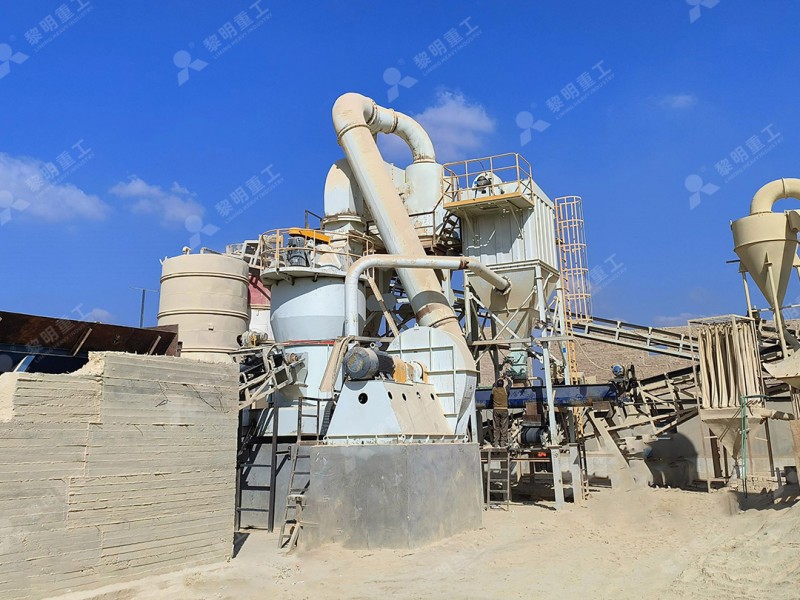
Other things that’ll affect the price include the customization level (special materials for abrasion resistance, etc.), shipping costs to your site, and installation & commissioning fees. It’s rarely just the sticker price of the mill itself.
A Smart Choice: Our MW Ultrafine Grinding Mill
For many of our clients processing limestone into high-value fine powders, our MW Ultrafine Grinding Mill has proven to be an incredibly efficient and cost-effective solution in the long run. Here’s why it might be perfect for your project:
- Higher Yielding, Lower Energy Consumption: Its newly designed grinding curves can boost production capacity by up to 40% compared to jet mills, while slashing energy use by about 30%. That means you produce more powder for less money on your electricity bill.
- Adjustable Fineness (325-2500 meshes): Its German-tech cage-type powder selector lets you dial in the exact fineness you need, up to a superfine d97≤5μm, giving you incredible flexibility for different products.
- Durable & Low Maintenance: A huge advantage is the absence of rolling bearings and screws in the grinding chamber. This eliminates a major point of failure and means you won’t have costly shutdowns from bearing seizures or loose screws. Lubrication is done externally without stopping production.
- Eco-Friendly Operation: It comes equipped with an efficient pulse dust collector and muffler, keeping dust and noise pollution well within national standards. This is pretty much essential these days.
Key Specs for MW Mill: Input Size: 0-20 mm | Capacity: 0.5-25 tph. It’s ideal for limestone, calcite, dolomite, and other non-metallic minerals used in everything from paints and cosmetics to medicine.
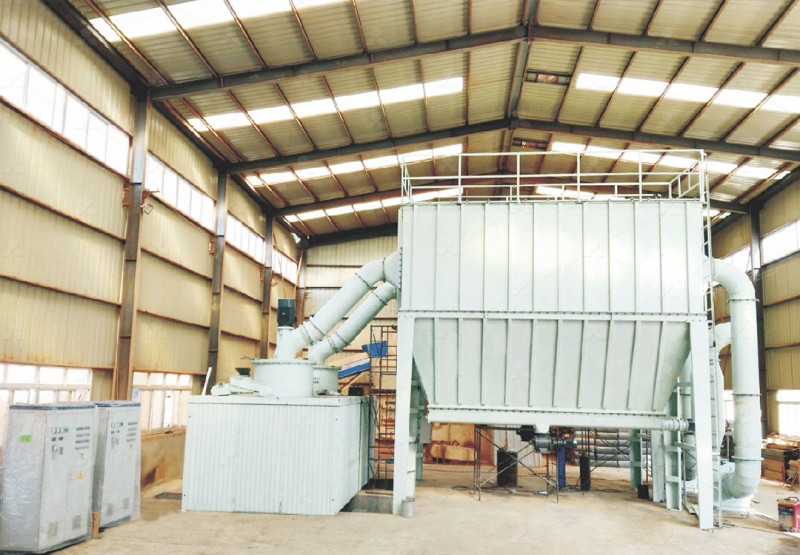
Considering a Vertical Option? The LUM Ultrafine Vertical Grinding Mill
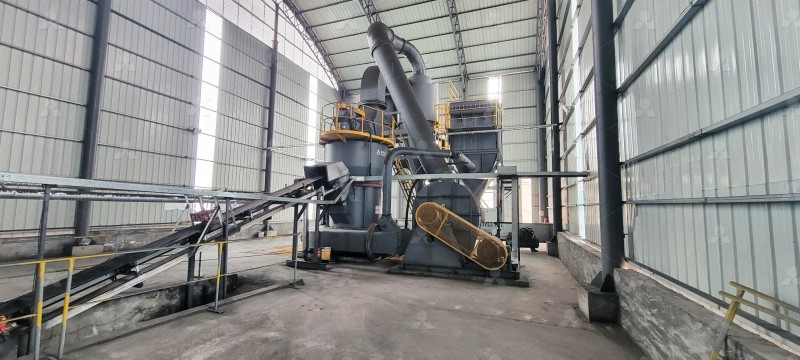
If your project has even stricter space constraints or requires exceptional stability, our LUM Ultrafine Vertical Grinding Mill is another top-tier option worth considering. It integrates grinding, grading, and transporting and is renowned for its stability and energy efficiency, often reducing consumption by 30-50% compared to common mills.
So, What’s the Bottom Line?
While we can’t give a precise number here without understanding your specific requirements, a complete limestone grinding system using a suspension roller mill like the MW series can range anywhere from tens of thousands to several hundred thousand dollars. The investment is significant, but the ROI comes from its high efficiency, low operating costs, durability, and ability to produce a high-quality product that commands a better market price.
The best way to get an accurate quote is to talk to our engineers. Share your desired capacity, final product fineness, and site conditions, and we’ll provide a detailed equipment list and a competitive price. Don’t just look at the initial cost—consider the total cost of ownership and the quality of the powder you’ll be producing.
Feel free to reach out for a consultation. We’re here to help you find the most economical and efficient grinding solution for your limestone operation.