
How to Calculate Ball Mill Grinding Efficiency Using the Bond Equation
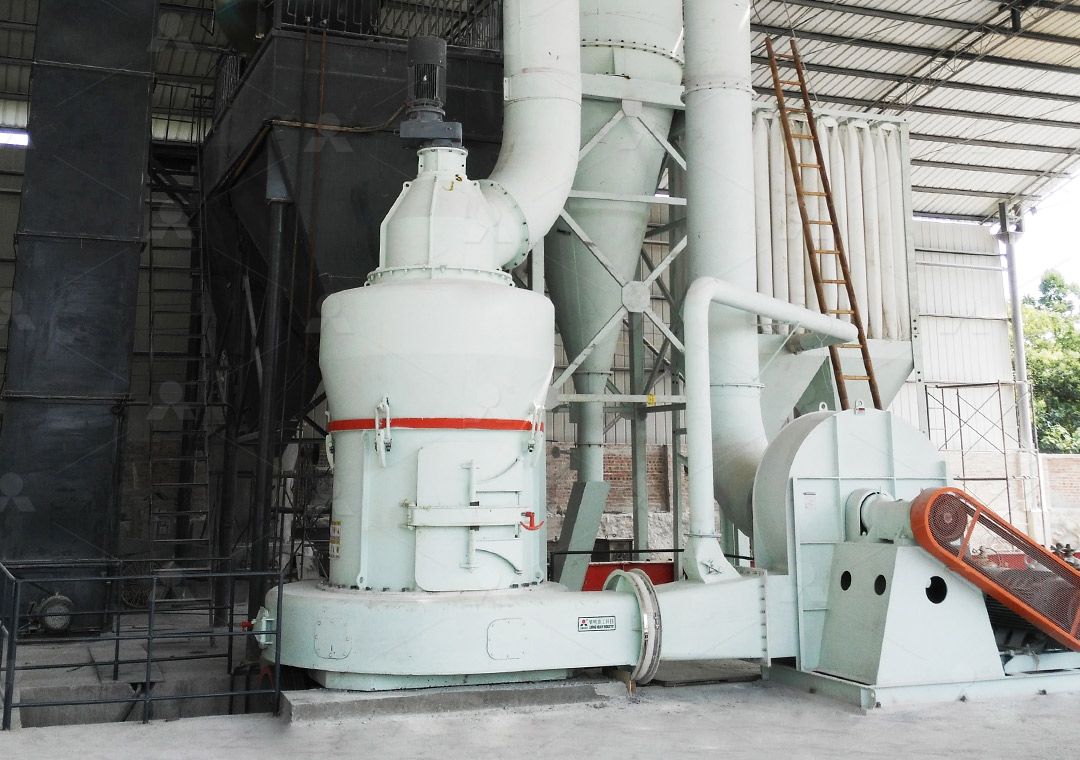
We provide a wide range of mills — including Raymond mill, trapezoidal mill, vertical mill, ultrafine mill, and ball mill, obtained ISO9001 international quality certification, EU CE certification, and Customs Union CU-TR certification. Suitable for processing minerals such as limestone, phosphate, quicklime, kaolin, talc, barite, bentonite, calcium carbonate, dolomite, coal, gypsum, clay, carbon black, slag, cement raw materials, cement clinker, and more.
The discharge range of these mills can be adjusted to meet specific processing needs, typically from 80-400 mesh, 600-3250 mesh, and can achieve the finest particle size of up to 6000 mesh(D50).
If you are looking for a reliable grinding solution to turn stone or minerals into fine powder, please feel free to contact our online customer service.
How to Calculate Ball Mill Grinding Efficiency Using the Bond Equation
For process engineers and plant operators in the mining and minerals industry, accurately assessing the efficiency of a grinding circuit is paramount to optimizing production and controlling costs. The Bond Equation, developed by Fred C. Bond in the 1950s, remains a cornerstone methodology for this task. It provides a standardized measure of the energy required to reduce ore from a theoretical infinite feed size to a specified product size, known as the Work Index (Wi). This article will guide you through the calculation process and explore how modern mill designs can significantly surpass the efficiency of traditional ball mills.
Understanding the Bond Work Index
The Bond Work Index is expressed in kilowatt-hours per short ton (kWh/sht) or per metric ton (kWh/t). It represents the comminution parameter of an ore, essentially its resistance to grinding. A higher Wi indicates a harder, more energy-intensive ore to grind. The standard Bond equation for a ball mill is:
W = W_i (10/√P80 – 10/√F80)
Where:
W = Specific grinding energy (kWh/t)
W_i = Bond Work Index (kWh/t)
F80 = Feed size (microns) through which 80% of the feed passes
P80 = Product size (microns) through which 80% of the product passes
Step-by-Step Calculation Guide
To calculate the theoretical energy requirement for your ball mill:
- Determine the Work Index (W_i): This is typically found through a standardized laboratory test (Bond Ball Mill Grindability Test) on a representative sample of your ore. Historical plant data can also be used for estimation if lab results are unavailable.
- Measure F80: Conduct a particle size analysis on the mill feed to find the sieve size that 80% of the material passes.
- Define P80: This is your target product fineness, based on downstream process requirements.
- Plug into the Formula: Input your values into the equation W = W_i (10/√P80 – 10/√F80). Ensure all units are consistent (usually microns for size and kWh/t for energy).
The result (W) gives you the theoretical minimum energy needed per ton of ore to achieve the desired size reduction. By comparing this figure to the actual energy consumption of your operating mill, you can calculate its efficiency:
Grinding Efficiency (%) = (Theoretical Energy / Actual Energy) × 100
A lower-than-expected efficiency indicates potential issues like improper ball size, low mill speed, overfilling, or a worn liner profile.
Beyond the Ball Mill: The Modern Efficiency Solution
While the Bond equation is invaluable, it’s based on mid-20th-century technology. Today’s advanced grinding solutions operate on fundamentally different principles, offering dramatic efficiency gains. For operations requiring ultra-fine powders (325-2500 meshes), traditional ball mills are notoriously inefficient due to high energy losses to heat, noise, and wear.
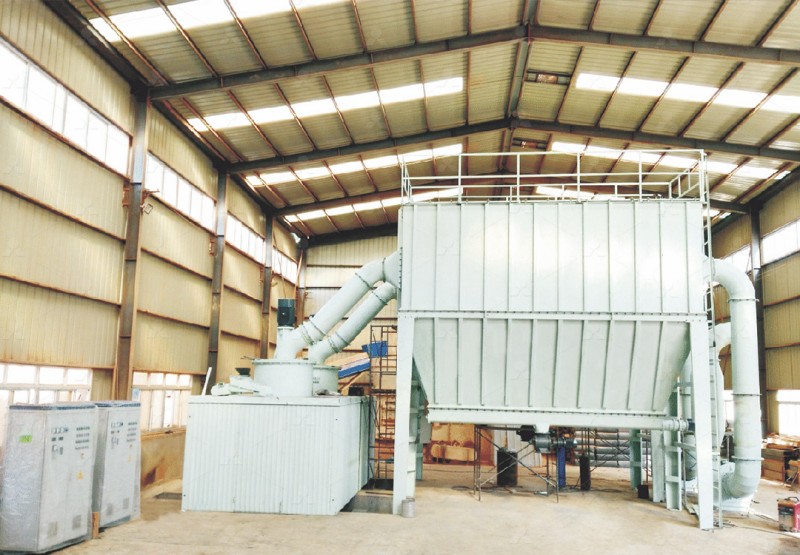
This is where our MW Ultrafine Grinding Mill presents a revolutionary alternative. Engineered for customers who need to make ultra-fine powder, the MW Mill addresses the core inefficiencies of ball milling:
- Higher Yielding, Lower Energy Consumption: With newly designed grinding curves, its production capacity is 40% higher than jet mills and twice as large as ball mills at the same fineness and power. Critically, its system energy consumption is a mere 30% of a comparable jet mill.
- Precise Fineness Control: Its German-technology cage-type powder selector allows adjustable fineness between 325-2500 meshes with high precision, achieving d97≤5μm in a single pass.
- Robust and Eco-Friendly Design: With no rolling bearings or screws in the grinding chamber, it eliminates common failure points. Equipped with an efficient pulse dust collector and muffler, it operates with minimal dust and noise pollution.
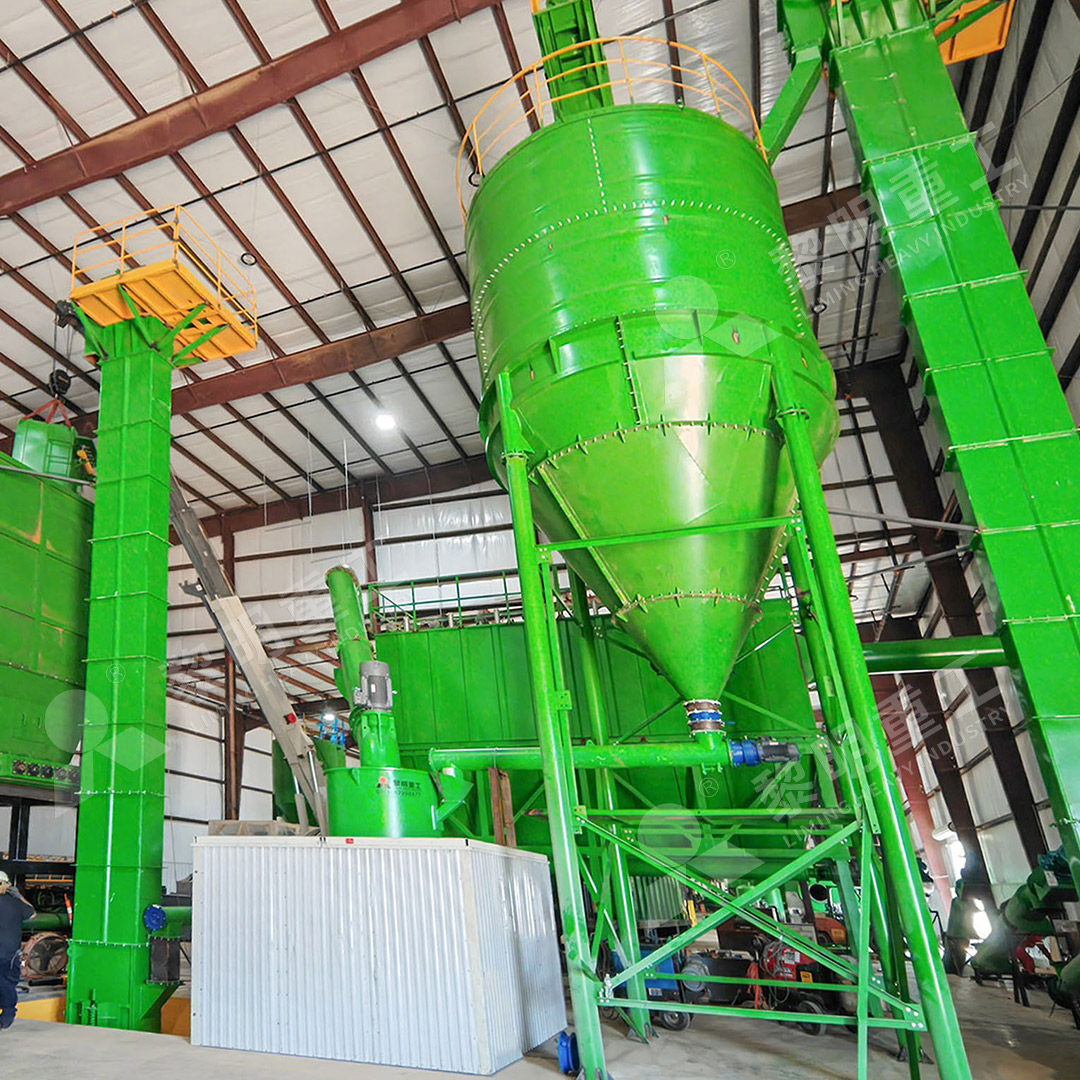
For a robust vertical grinding solution, our LUM Ultrafine Vertical Grinding Mill is another excellent high-efficiency choice, integrating grinding, classifying, and transporting with PLC-controlled multi-head powder separating technology.
Conclusion
Using the Bond equation to calculate ball mill efficiency is a critical first step in optimizing your grinding circuit. It provides a benchmark for performance. However, for operations targeting fine and ultra-fine powders, the most significant efficiency gains often come from upgrading to modern milling technology. By moving beyond the limitations of the ball mill with solutions like the MW Ultrafine Grinding Mill, plants can achieve substantially higher yields with drastically lower energy consumption and operational costs, making their entire process more productive and sustainable.