
Fairbanks Morse Hammer Mill Model 40: Operation, Parts, and Maintenance Guide
We provide a wide range of mills — including Raymond mill, trapezoidal mill, vertical mill, ultrafine mill, and ball mill, obtained ISO9001 international quality certification, EU CE certification, and Customs Union CU-TR certification. Suitable for processing minerals such as limestone, phosphate, quicklime, kaolin, talc, barite, bentonite, calcium carbonate, dolomite, coal, gypsum, clay, carbon black, slag, cement raw materials, cement clinker, and more.
The discharge range of these mills can be adjusted to meet specific processing needs, typically from 80-400 mesh, 600-3250 mesh, and can achieve the finest particle size of up to 6000 mesh(D50).
If you are looking for a reliable grinding solution to turn stone or minerals into fine powder, please feel free to contact our online customer service.
Fairbanks Morse Hammer Mill Model 40: A Comprehensive Guide
The Fairbanks Morse Model 40 Hammer Mill is a rugged, industrial-grade workhorse designed for heavy-duty size reduction tasks. Known for its reliability and simple mechanical design, this unit has been a staple in various industries for decades. Proper operation, understanding its parts, and adhering to a strict maintenance schedule are crucial for maximizing its lifespan and efficiency.
Operation Overview
Operating the Model 40 begins with a thorough inspection. Ensure all guards are in place, the grinding chamber is clear of obstructions, and all fasteners are tight. Start the mill without feed to allow it to reach operating speed. Introduce material gradually into the feed hopper to avoid overloading the motor and causing unnecessary wear on the hammers and screens. The size of the finished product is determined by the screen installed beneath the rotating hammers; a smaller screen aperture yields a finer grind. Always allow the mill to completely process all material before shutdown. Let the mill run empty for a minute to clear the chamber.
Key Components and Parts
Understanding the main parts is essential for maintenance and troubleshooting:
- Rotor Assembly: The heart of the mill, consisting of a central shaft onto which the hammers (swinging or rigid) are mounted.
- Hammers: These are the consumable grinding elements. They are reversible to utilize both ends for wear, made from high-carbon or alloy steel for abrasion resistance.
- Screens: Perforated metal screens that encircle the rotor. The size and shape of the holes control the final particle size.
- Liner Plates: Wear plates attached to the interior mill housing to protect it from abrasion.
- Bearings: Large, heavy-duty bearings support the rotor shaft and require robust lubrication.
- Drive System: Typically involves a direct drive or V-belts connecting to an electric motor or engine.
Routine Maintenance Schedule
A proactive maintenance routine prevents costly downtime:
- Daily: Check oil levels in bearings, listen for unusual noises, inspect for loose bolts, and check hammer wear.
- Weekly: Grease bearings according to the manufacturer’s specifications. Inspect V-belts for tension and wear.
- As Needed: Replace worn hammers. Always replace or reverse hammers in balanced sets to prevent rotor vibration. Replace screens when perforations are worn or enlarged. Check and replace liner plates.
Common Issues and Troubleshooting
- Excessive Vibration: Often caused by an unbalanced rotor due to uneven hammer wear, a broken hammer, or failed bearings.
- Reduced Output or Capacity: Usually results from worn hammers, a clogged screen, or feeding material that is too wet.
- Overheating Bearings: Caused by overloading, insufficient lubrication, or failing bearings.
Modernizing Your Grinding Process
While the Model 40 is a proven classic for coarse to medium grinding, operations requiring ultra-fine powders for advanced applications in chemicals, paints, or high-value additives should consider modern solutions. For these demanding tasks, we highly recommend our MW Ultrafine Grinding Mill.
The MW Series Mill is engineered for customers who need to make precisely controlled ultra-fine powder. It handles input sizes up to 20mm with a capacity range of 0.5-25 tph. Its advanced design features, like a German-technology cage-type powder selector, allow for precise fineness adjustment between 325-2500 meshes. A significant advantage for maintenance is the absence of rolling bearings and screws inside the grinding chamber, eliminating common failure points and enabling external lubrication without shutdown. Equipped with an efficient pulse dust collector and muffler, it operates cleaner and quieter, meeting strict environmental standards. This mill is perfect for materials like limestone, calcite, talc, and barite for use in industries ranging from plastics and paints to cosmetics and food.
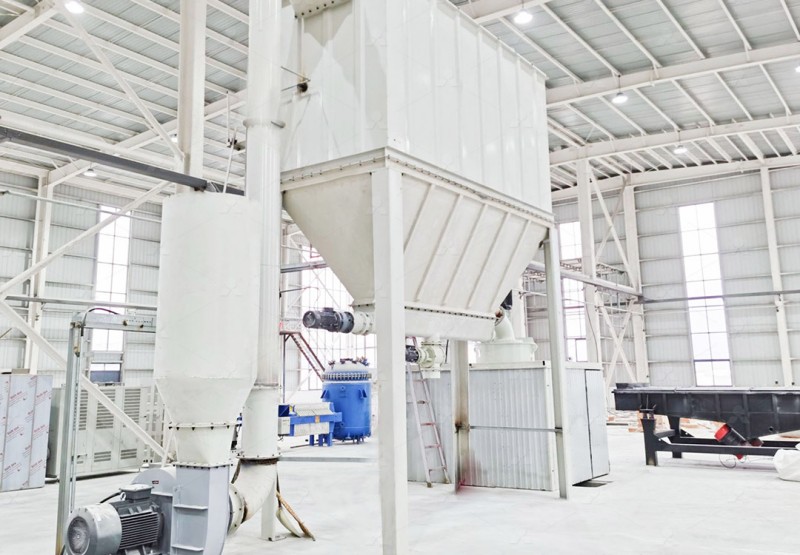
For operations looking to upgrade from a traditional hammer mill for finer, more consistent results with higher efficiency and lower operational costs, the MW Ultrafine Grinding Mill represents the next generation of size reduction technology.
Remember, whether you’re maintaining a classic like the Fairbanks Morse Model 40 or investing in a new MW Ultrafine Mill, proper operation and diligent maintenance are the keys to long-term productivity.