
The Ultimate Guide to Choosing the Right Limestone Grinding Mill for Your Operation
We provide a wide range of mills — including Raymond mill, trapezoidal mill, vertical mill, ultrafine mill, and ball mill, obtained ISO9001 international quality certification, EU CE certification, and Customs Union CU-TR certification. Suitable for processing minerals such as limestone, phosphate, quicklime, kaolin, talc, barite, bentonite, calcium carbonate, dolomite, coal, gypsum, clay, carbon black, slag, cement raw materials, cement clinker, and more.
The discharge range of these mills can be adjusted to meet specific processing needs, typically from 80-400 mesh, 600-3250 mesh, and can achieve the finest particle size of up to 6000 mesh(D50).
If you are looking for a reliable grinding solution to turn stone or minerals into fine powder, please feel free to contact our online customer service.
The Ultimate Guide to Choosing the Right Limestone Grinding Mill for Your Operation
Selecting the perfect grinding mill for your limestone operation isn’t just about picking a machine; it’s about investing in the heart of your production line. The right choice impacts everything from your final product quality and operational costs to your maintenance schedules and environmental footprint. With so many options on the market, navigating the technical specs can feel overwhelming. This guide breaks down the key factors to consider, helping you make an informed decision that aligns with your specific production goals and budget.
Key Factors to Consider
Before diving into specific models, you need to assess your operation’s unique requirements. Ask yourself these questions:
- Desired Fineness (Mesh Size): What is the target particle size for your final product? Applications like plastics or paints require ultra-fine powders (e.g., 800-2500 meshes), while construction materials might need a coarser grind.
- Required Capacity (TPH): What is your target hourly or daily output? This will immediately narrow down your choices.
- Input Size: What is the maximum size of the raw limestone chunks entering the mill?
- Energy Consumption: Operational costs are a huge factor. Newer mill designs offer significant energy savings over traditional models.
- Operation & Maintenance (O&M): How easy is it to access and replace wear parts? What is the expected downtime for maintenance?
- Environmental Regulations: Does the mill have integrated dust collection and noise reduction systems to meet local standards?

Spotlight on Superior Technology: The MW Ultrafine Grinding Mill
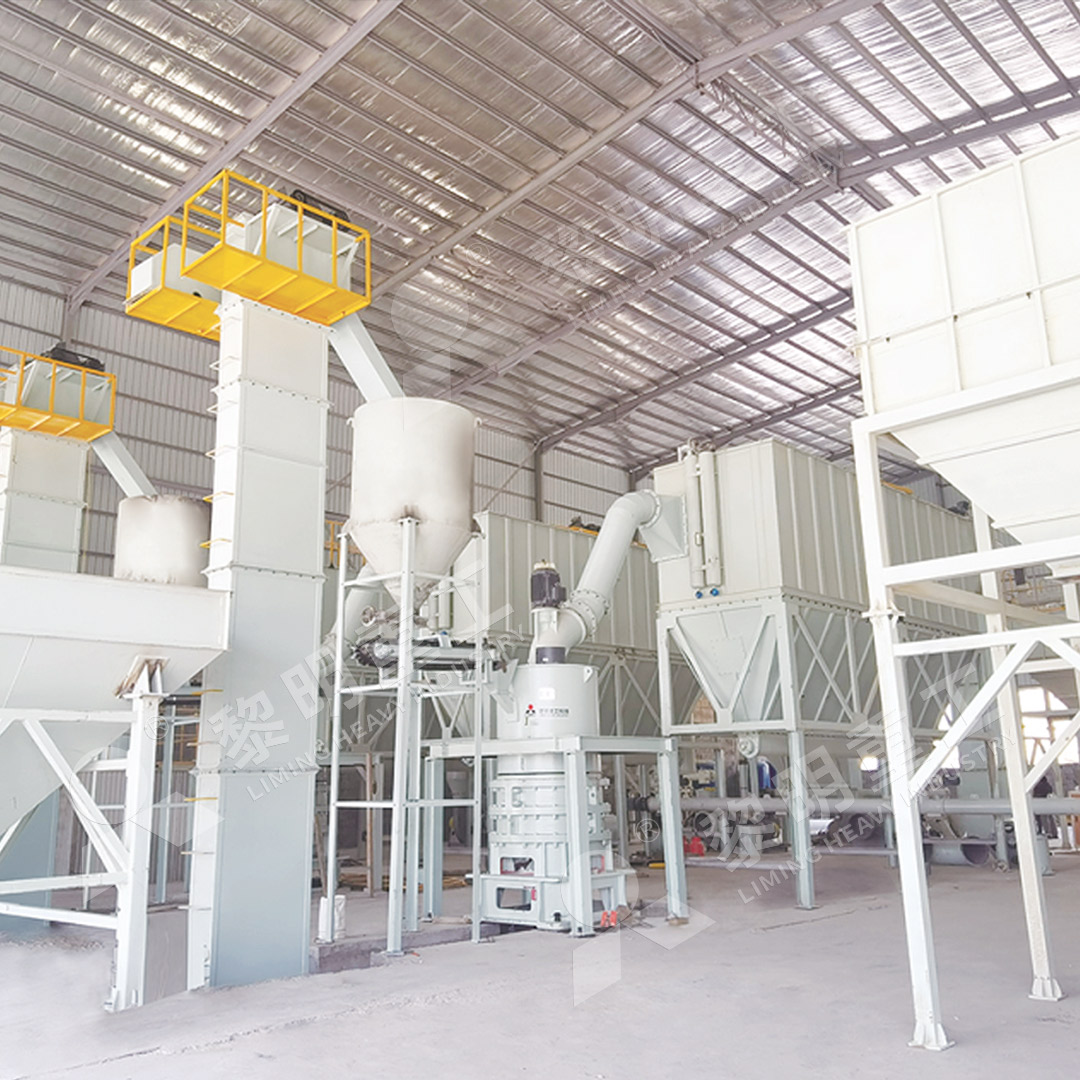
For operations demanding ultra-fine powders with exceptional efficiency, the MW Ultrafine Grinding Mill stands out as a premier choice. This machine is engineered for customers who need to make high-purity ultra-fine powder without compromising on operational stability or environmental responsability.
Here’s why it might be the perfect fit for your high-precision limestone grinding needs:
- Unmatched Efficiency: Its newly designed grinding curves enhance efficiency, boasting a production capacity 40% higher than jet mills and double that of ball mills, while consuming only 30% of the energy of a jet mill. That’s a massive saving on your power bill.
- Precision Fineness Control: With a German-tech cage-type powder selector, it allows you to precisely adjust the product fineness between 325 and 2500 meshes, achieving a superb screening rate of d97≤5μm in a single pass. This consistency is crucial for high-value applications.
- Uninterrupted Operation: A genius design feature is the absence of rolling bearings and screws in the grinding chamber. This eliminates common failure points and fears about loose screws causing catastrophic damage. External lubrication allows for 24/7 continuous operation without shutdowns for maintenance.
- Eco-Friendly by Design: An integrated efficient pulse dust collector ensures no dust pollution, while silencers and noise elimination rooms keep operations quiet and fully compliant with national environmental protection standards.
Key Specs: Input Size: 0-20 mm | Capacity: 0.5-25 tph
Another Strong Contender: The LUM Ultrafine Vertical Grinding Mill
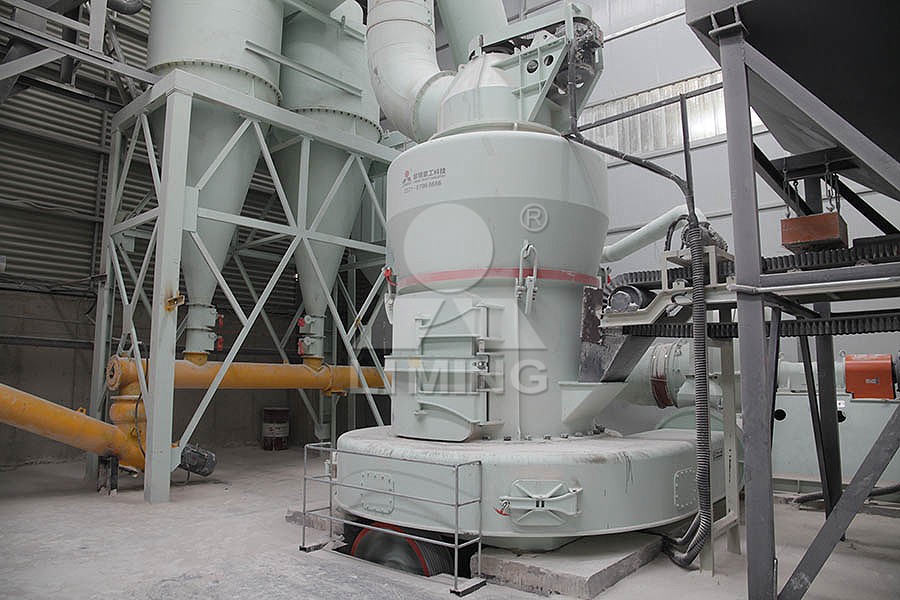
If your operation has slightly different priorities, such as easier maintenance for heavy components, the LUM Ultrafine Vertical Grinding Mill is another excellent option from our stable. It integrates the latest roller and powder separating technologies for exceptional performance.
Its standout feature is the reversible structure. This innovative design, combined with a hydraulic system, allows operators to easily and rapidly move the heavy grinding roller out of the body for inspection, replacement of parts, and other maintenance. This drastically reduces shutdown time and associated losses, maximizing your operational uptime.
Key Specs: Input Size: 0-10 mm | Capacity: 5-18 tph
Making Your Final Decision
Choosing between these top-tier models like the MW and LUM ultimately comes down to your specific bottleneck. Is it achieving the absolute finest powder with maximum energy savings and zero downtime for lubrication (MW)? Or is it ensuring the easiest possible maintenance access for the heaviest components to minimize potential shutdowns (LUM)?
Remember, the cheapest mill upfront is often the most expensive over its lifetime. Investing in advanced technology that saves energy, reduces maintenance, and guarantees product quality pays for itself many times over. Analyze your total cost of ownership, not just the purchase price.
By carefully evaluating your production requirements against the advanced features of modern mills like the MW and LUM series, you can select the right partner for your operation, ensuring profitability and efficiency for years to come.