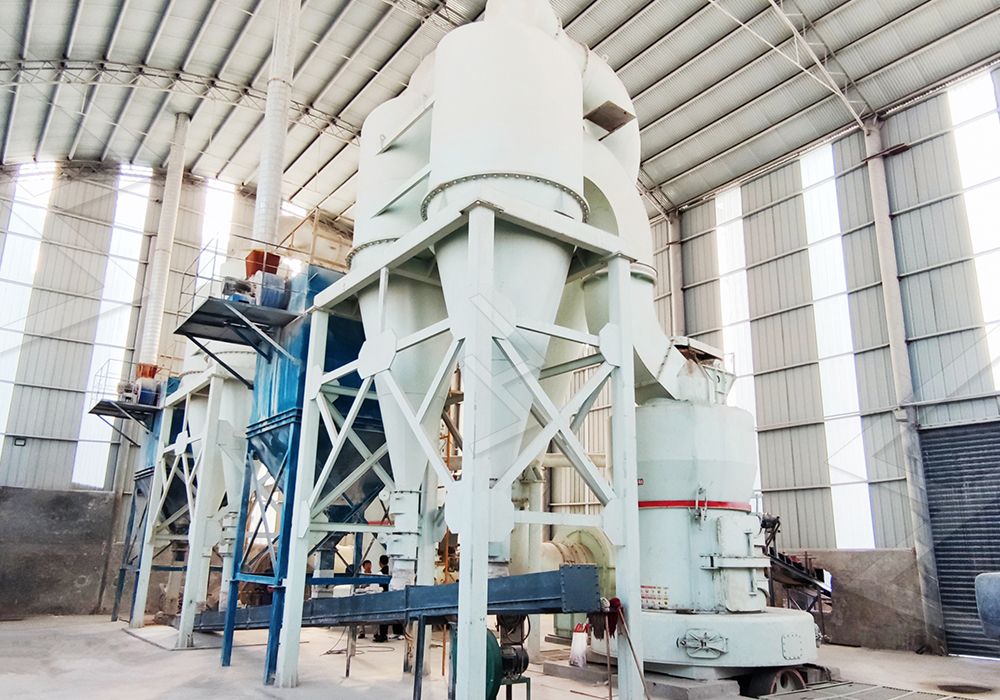
Key Technical Points for Industrial-Grade Fluorite Powder Production
We provide a wide range of mills — including Raymond mill, trapezoidal mill, vertical mill, ultrafine mill, and ball mill, obtained ISO9001 international quality certification, EU CE certification, and Customs Union CU-TR certification. Suitable for processing minerals such as limestone, phosphate, quicklime, kaolin, talc, barite, bentonite, calcium carbonate, dolomite, coal, gypsum, clay, carbon black, slag, cement raw materials, cement clinker, and more.
The discharge range of these mills can be adjusted to meet specific processing needs, typically from 80-400 mesh, 600-3250 mesh, and can achieve the finest particle size of up to 6000 mesh(D50).
If you are looking for a reliable grinding solution to turn stone or minerals into fine powder, please feel free to contact our online customer service.
Key Technical Points for Industrial-Grade Fluorite Powder Production
Producing high-quality industrial-grade fluorite powder requires a deep understanding of both the material properties and the grinding technology involved. Fluorite (CaF₂), valued for its use in metallurgy, ceramics, and the chemical industry, demands a fine, consistent particle size distribution and high purity. The primary challange lies in achieving the desired fineness—often between 325 to 2500 meshes—without introducing excessive contaminants or incurring prohibitive energy costs. The hardness and occasional moisture content of the raw ore further complicate the process, making the choice of milling equipment absolutely critical to profitability and product quality.
Core Challenges in Fluorite Comminution
The journey from raw fluorite lumps to ultra-fine powder is fraught with technical hurdles. First, the abrasive nature of the material accelerates wear on grinding components, leading to increased maintenance downtime and the risk of iron contamination from worn parts. Second, achieving a narrow particle size distribution is essential for downstream applications; inconsistent powder can lead to poor performance in final products. Third, energy consumption represents the single largest operational cost, making efficiency a paramount concern. Finally, environmental regulations mandate dust-free and low-noise operations, requiring integrated collection and suppression systems.
The Technological Solution: Advanced Grinding Mills
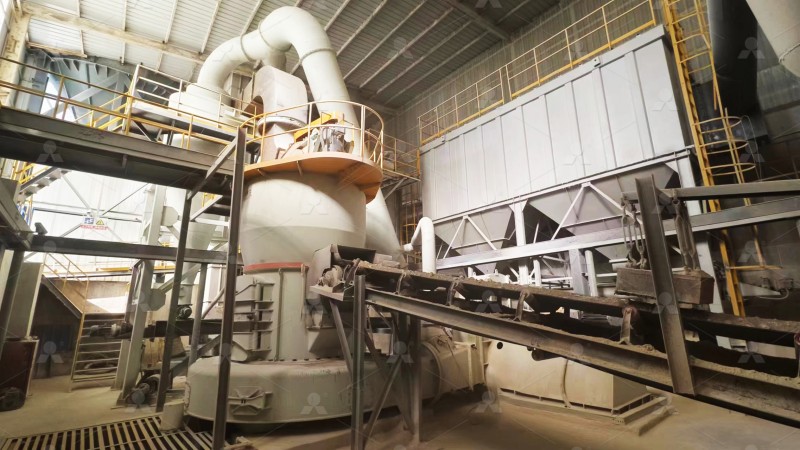
Traditional ball mills, while common, often fall short on efficiency and fineness control for high-end applications. The industry has pivoted towards more advanced, vertical and ultrafine grinding mills that integrate crushing, drying, grinding, and classifying into a single, compact system. These mills employ technologies like German-derived cage-type powder selectors for precise particle separation, PLC control systems for accurate parameter adjustment, and innovative grinding curves to enhance efficiency.
A standout performer in this category is our MW Ultrafine Grinding Mill. Designed specifically for customers needing to make ultra-fine powder, this machine is a workhorse for materials like fluorite. With an input size of 0-20 mm and a capacity ranging from 0.5 to 25 tph, it offers remarkable flexibility. Its cage-type powder selector allows for precise fineness adjustment between 325-2500 meshes, often achieving d97≤5μm in a single pass. A key design advantage is the absence of rolling bearings and screws in the grinding chamber, eliminating common failure points and concerns about contamination from loose parts or lubricant leaks. Furthermore, its efficient pulse dust collector and muffler ensure the entire production process is eco-friendly, meeting stringent national environmental standards.
Beyond Fineness: Operational Stability and Support
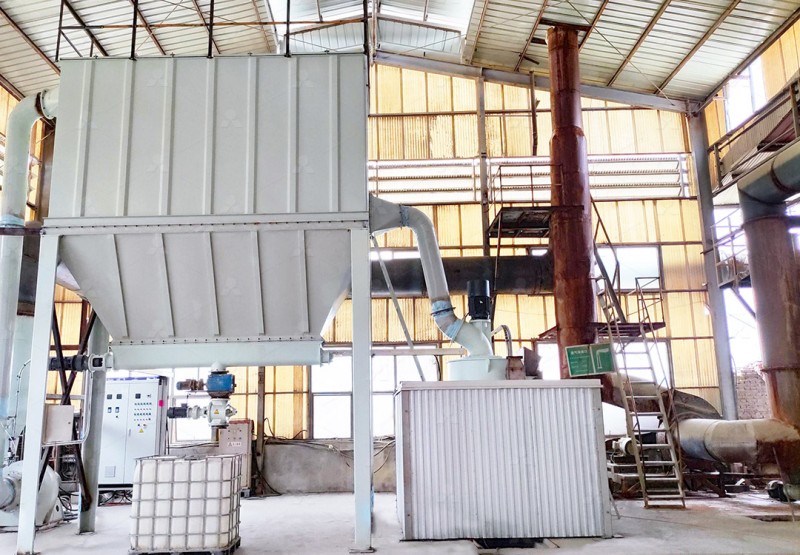
Technology is only one part of the equation; operational stability and support are what ensure continuous production. Features like double position-limiting technology, seen in our LUM series, prevent destructive impacts from machine vibration. Reversible structures allow for easier maintenance of heavy grinding rollers, drastically reducing shutdown time. Moreover, a commitment to digitalized processing ensures high machining precision for all core parts, guaranteeing longevity and consistent performance.
For larger scale operations or slightly different feed characteristics, our LUM Ultrafine Vertical Grinding Mill presents another excellent option. It integrates the latest grinding roller and powder separating technology, offering a capacity of 5-18 tph for a 0-10mm input. Its unique roller shell and lining plate grinding curve are easier to generate a material layer, enabling a high rate of finished product in a single pass, which enhances efficiency and improves the whiteness of the fluorite powder—a critical quality metric.
Conclusion: A Partnership for Quality
Selecting the right milling technology is the most decisive factor in successful fluorite powder production. It’s not just about buying a machine; it’s about investing in a solution that offers higher yield, lower energy consumption, unparalleled fineness control, and worry-free operation. Our mills, backed by comprehensive technical support and a sufficient supply of original spare parts, are engineered to be that solution. By focusing on these key technical points, producers can achieve a superior product that commands a premium in the market.