
Which Grinding Mill is Best for Limestone Desulfurization in Power Plants?
We provide a wide range of mills — including Raymond mill, trapezoidal mill, vertical mill, ultrafine mill, and ball mill, obtained ISO9001 international quality certification, EU CE certification, and Customs Union CU-TR certification. Suitable for processing minerals such as limestone, phosphate, quicklime, kaolin, talc, barite, bentonite, calcium carbonate, dolomite, coal, gypsum, clay, carbon black, slag, cement raw materials, cement clinker, and more.
The discharge range of these mills can be adjusted to meet specific processing needs, typically from 80-400 mesh, 600-3250 mesh, and can achieve the finest particle size of up to 6000 mesh(D50).
If you are looking for a reliable grinding solution to turn stone or minerals into fine powder, please feel free to contact our online customer service.
Which Grinding Mill is Best for Limestone Desulfurization in Power Plants?
Flue Gas Desulfurization (FGD) is a critical process for power plants to meet stringent environmental regulations. At the heart of any wet limestone FGD system lies the grinding mill, responsible for producing the fine limestone slurry that reacts with and removes sulfur dioxide (SO₂) from exhaust gases. Selecting the right mill is paramount for operational efficiency, cost-effectiveness, and compliance.
The Key Requirements for FGD Limestone Grinding
Not every mill is cut out for the demanding task of FGD. The ideal equipment must deliver:
- High & Consistent Fineness: A narrow particle size distribution, typically around 250-325 mesh (44-63 microns), is crucial for maximizing surface area and reaction kinetics.
- High Capacity & Availability: Power plants operate continuously. The mill must handle large tonnages reliably with minimal unplanned downtime.
- Low Energy Consumption: Grinding is an energy-intensive process. A more efficient mill significantly reduces operating costs.
- Environmental Compatibility: The system must be sealed to prevent dust emissions and operate with low noise levels.
- Low Iron Contamination: Minimizing iron wear from the grinding process helps maintain the purity and effectiveness of the limestone slurry.
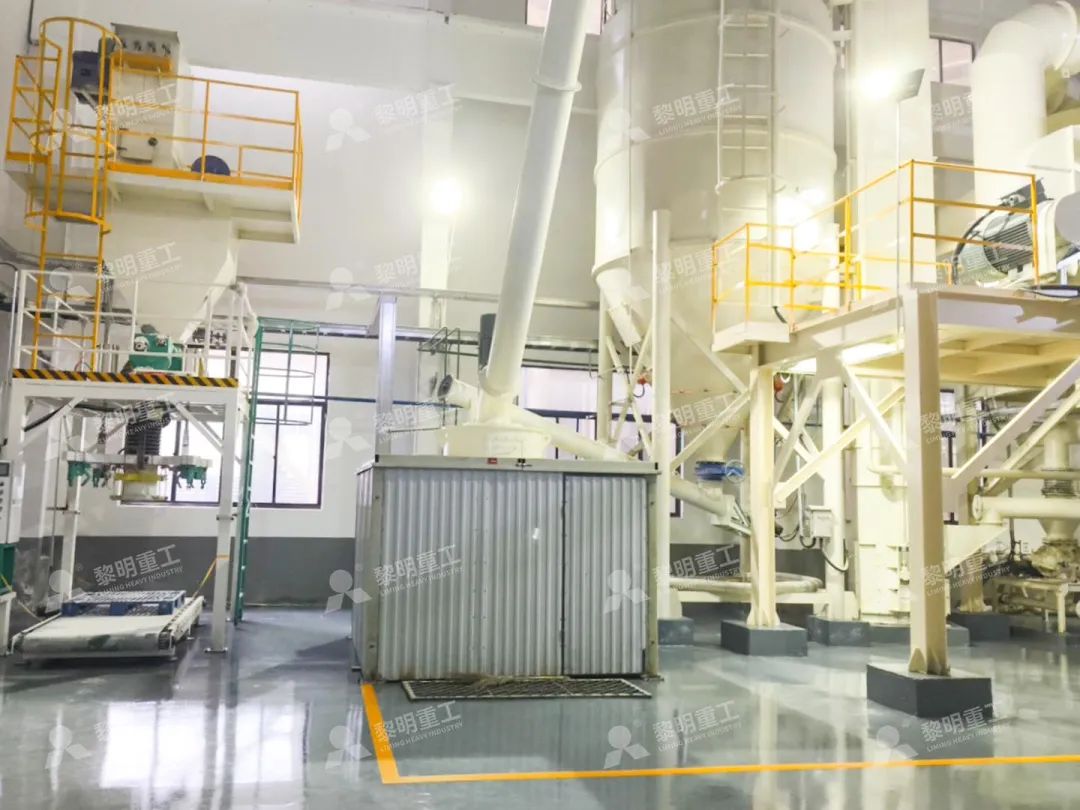
Evaluating Mill Options for FGD
While traditional options like ball mills and Raymond mills have been used, modern power plants require advanced technology to meet higher standards.
Ball Mills: These are robust but often inefficient. They have high energy consumption, and the finished product can have a broad particle size distribution, leading to less reactive limestone and potential waste.
Raymond Mills (Roller Mills): A common choice for coarser grinding, they can struggle to achieve the consistent, high fineness required for the most efficient FGD systems without multiple passes or classification.
Vertical Roller Mills (VRM): This is where technology shines. VRMs have become the industry standard for new installations due to their superior efficiency. They integrate grinding, drying, and classification in a single unit, offering lower energy use and excellent control over product fineness.
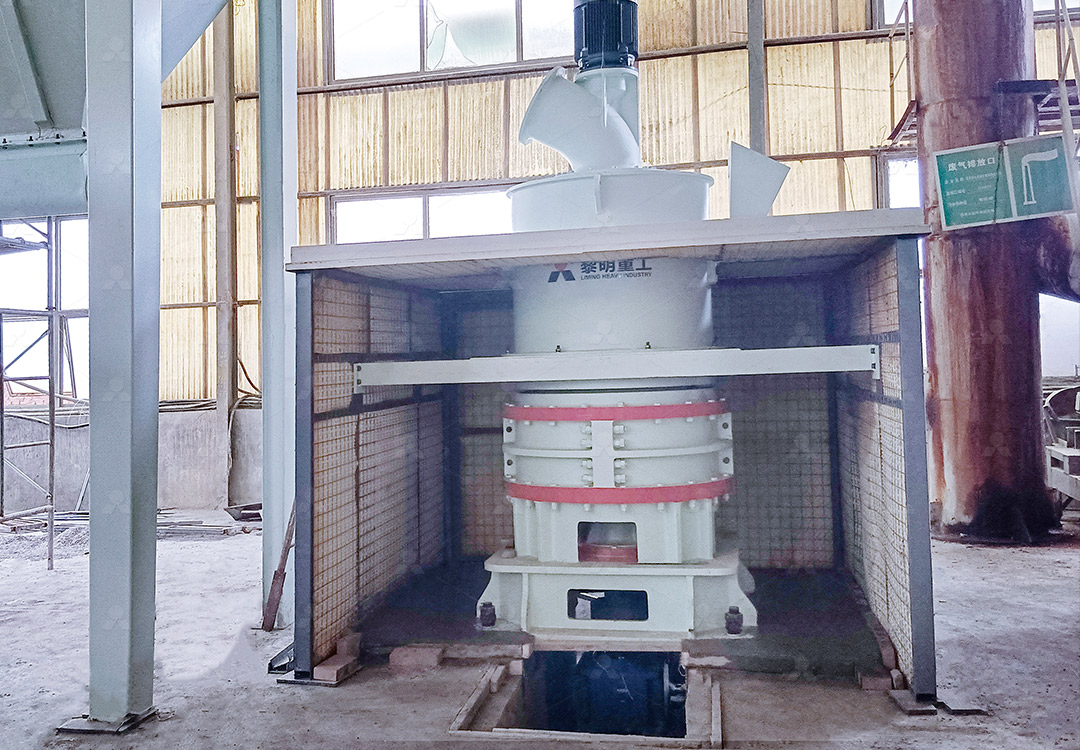
Our Recommended Solution: The MW Ultrafine Grinding Mill
For power plants seeking the pinnacle of performance in limestone desulfurization, our MW Ultrafine Grinding Mill represents the optimal solution. Engineered for customers who need to make ultra-fine powder efficiently, it is specifically suited for high-reactivity FGD slurry production.
Here’s why the MW Mill stands out:
- Superior Efficiency: Its newly designed grinding curves enhance efficiency, offering production capacity 40% higher than jet mills and twice that of ball mills, while slashing system energy consumption by up to 70%.
- Precise Fineness Control: With a German-technology cage-type powder selector, it effortlessly achieves the target fineness between 325-2500 meshes, ensuring the perfect particle size for maximum SO₂ absorption.
- Exceptional Reliability: The innovative design eliminates rolling bearings and screws in the grinding chamber, removing common failure points. External lubrication allows for 24/7 continuous operation.
- Environmentally Friendly Operation: Equipped with an efficient pulse dust collector and silencer, the entire system operates cleanly and quietly, with no dust pollution and minimal noise.
With an input size of 0-20mm and a capacity range of 0.5-25 tph, the MW Mill is versatile enough to suit various plant sizes.
A Strong Alternative: The LUM Ultrafine Vertical Grinding Mill
For projects requiring a different approach, our LUM Ultrafine Vertical Grinding Mill is another top-tier contender. Integrating the latest roller and powder separating technology, it excels in producing superfine dry powder.
Its advantages include a unique roller shell design for higher yield and better product quality, multi-head powder separating technology for 30%-50% energy savings, and double position-limiting technology for remarkable operational stability. With an input size of 0-10mm and capacity of 5-18 tph, it’s a powerful and efficient choice.
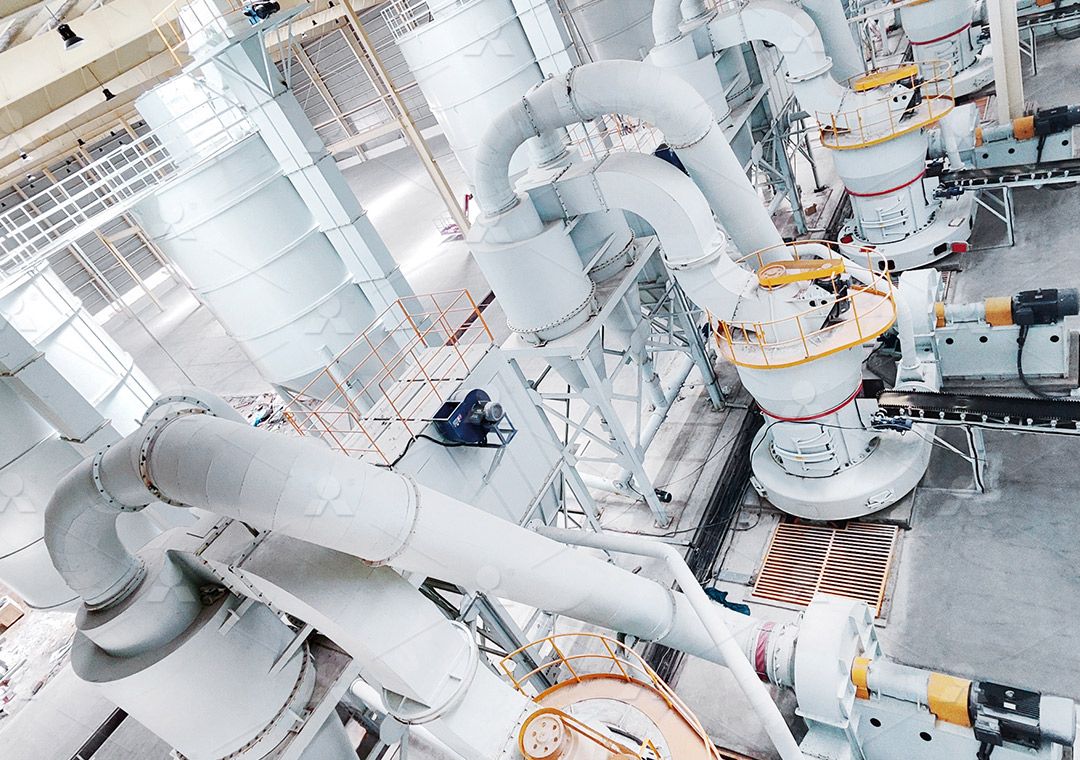
Conclusion
The choice of grinding mill directly impacts the efficiency, cost, and environmental footprint of your flue gas desulfurization system. While older technologies can suffice, moving to advanced vertical and ultrafine grinding mills like our MW and LUM series is the clear path forward. They offer the precise fineness, energy savings, reliability, and clean operation that modern power plants demand. For a future-proof FGD system, investing in the right grinding technology is not just an option—it’s a necessity.