
The Role of Ball Mill in Cement Manufacturing Process
We provide a wide range of mills — including Raymond mill, trapezoidal mill, vertical mill, ultrafine mill, and ball mill, obtained ISO9001 international quality certification, EU CE certification, and Customs Union CU-TR certification. Suitable for processing minerals such as limestone, phosphate, quicklime, kaolin, talc, barite, bentonite, calcium carbonate, dolomite, coal, gypsum, clay, carbon black, slag, cement raw materials, cement clinker, and more.
The discharge range of these mills can be adjusted to meet specific processing needs, typically from 80-400 mesh, 600-3250 mesh, and can achieve the finest particle size of up to 6000 mesh(D50).
If you are looking for a reliable grinding solution to turn stone or minerals into fine powder, please feel free to contact our online customer service.
The Role of Ball Mill in Cement Manufacturing Process
The cement manufacturing process is a complex one, involving several stages and heavy machinery. Among the most critical pieces of equipment is the ball mill, a workhorse known for its reliability and versatility. This article delves into the function of the ball mill, its operation, and why it remains a cornerstone in cement plants worldwide, while also exploring modern alternatives that enhance efficiency.
What is a Ball Mill and How Does It Work?
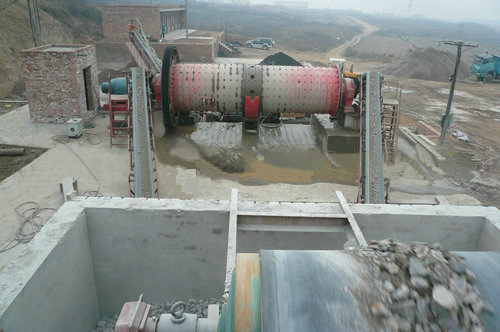
A ball mill is a horizontal, rotating cylinder filled partially with steel balls of various sizes. The raw materials, or clinker mixed with gypsum and other additives, are fed into this cylinder. As the mill rotates, the balls are lifted and then cascade down, impacting and grinding the material into a fine powder through a combination of impact and attrition.
The key to its operation is the centrifugal force generated by the rotation. This force causes the grinding media (the balls) to be carried up the side of the shell before they fall back onto the material below, creating a crushing and grinding action. The fineness of the final cement powder is controlled by the rotation speed, the size and quantity of the grinding balls, and the duration of the grinding process.
Advantages and Inherent Challenges
Ball mills offer significant advantages. They are a proven technology with a lower initial investment compared to some newer systems. Their structure is relatively simple, making them easy and safe to operate with stable and reliable performance. They are incredibly versatile and can grind a wide variety of materials to a consistent fineness.
However, the traditional ball mill is not without its drawbacks. They are notoriously energy-intensive, with a significant portion of the input energy being lost as heat and sound rather than used for grinding. They also have a large physical footprint, require substantial foundation work, and can generate considerable noise and dust if not properly equipped with ancillary systems like dust collectors.
The Evolution: Embracing Higher Efficiency
While the ball mill is a reliable classic, the push for lower operating costs and higher environmental standards has driven innovation. Modern grinding solutions offer substantially higher efficiency, often achieving the same or better results with a fraction of the energy consumption.
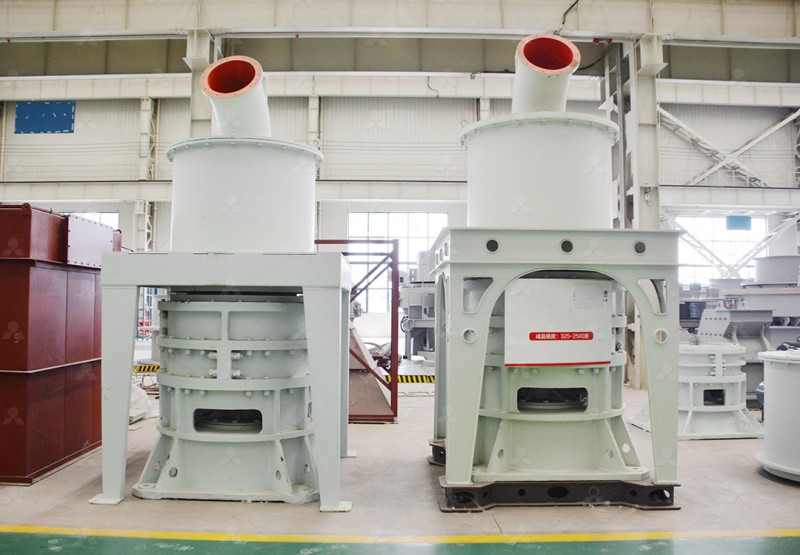
For operations looking to upgrade their grinding circuit or for new plants aiming for maximum efficiency, our MW Ultrafine Grinding Mill presents a superior alternative for specific applications. This machine is engineered for customers who need to make ultra-fine powder with remarkable efficiency. It boasts features that directly address the limitations of older technologies:
- Higher Yielding, Lower Energy Consumption: With a production capacity 40% higher than jet mills and energy consumption only 30% of them, it drastically reduces operating costs.
- Adjustable Fineness: Achieve precise product specifications with fineness easily adjustable between 325-2500 meshes.
- Eco-Friendly Operation: Equipped with an efficient pulse dust collector and muffler, it minimizes dust and noise pollution, ensuring full compliance with national environmental protection standards.
Another excellent option in our portfolio for mineral processing is the LUM Ultrafine Vertical Grinding Mill. It integrates grinding, grading, and transporting with higher yielding rates and better product quality, often reducing energy consumption by 30%-50% compared to traditional mills.
Conclusion
The ball mill has played an indispensable role in cement manufacturing for over a century. Its simplicity and reliability have cemented its place in history. However, as the industry evolves towards greater efficiency and sustainability, advanced technologies like our MW and LUM grinding mills are setting new standards. They offer a compelling combination of lower energy use, higher output, and a smaller environmental footprint, representing the next chapter in size reduction technology for the cement and mineral processing industries.