
Industrial Calcium Carbonate Powder Production Process: From Quarry to Final Product
We provide a wide range of mills — including Raymond mill, trapezoidal mill, vertical mill, ultrafine mill, and ball mill, obtained ISO9001 international quality certification, EU CE certification, and Customs Union CU-TR certification. Suitable for processing minerals such as limestone, phosphate, quicklime, kaolin, talc, barite, bentonite, calcium carbonate, dolomite, coal, gypsum, clay, carbon black, slag, cement raw materials, cement clinker, and more.
The discharge range of these mills can be adjusted to meet specific processing needs, typically from 80-400 mesh, 600-3250 mesh, and can achieve the finest particle size of up to 6000 mesh(D50).
If you are looking for a reliable grinding solution to turn stone or minerals into fine powder, please feel free to contact our online customer service.
Industrial Calcium Carbonate Powder Production Process: From Quarry to Final Product
The journey of industrial calcium carbonate powder is a fascinating blend of geology, engineering, and precision manufacturing. It all begins deep within the earth, in vast limestone quarries. Limestone, a sedimentary rock composed primarily of calcite (CaCO3), is the raw material for this ubiquitous industrial powder. The production process is a multi-stage operation that transforms massive, rugged rock into a fine, consistent powder essential for countless applications, from plastics and paints to pharmaceuticals and food.
Stage 1: Quarrying and Primary Crushing
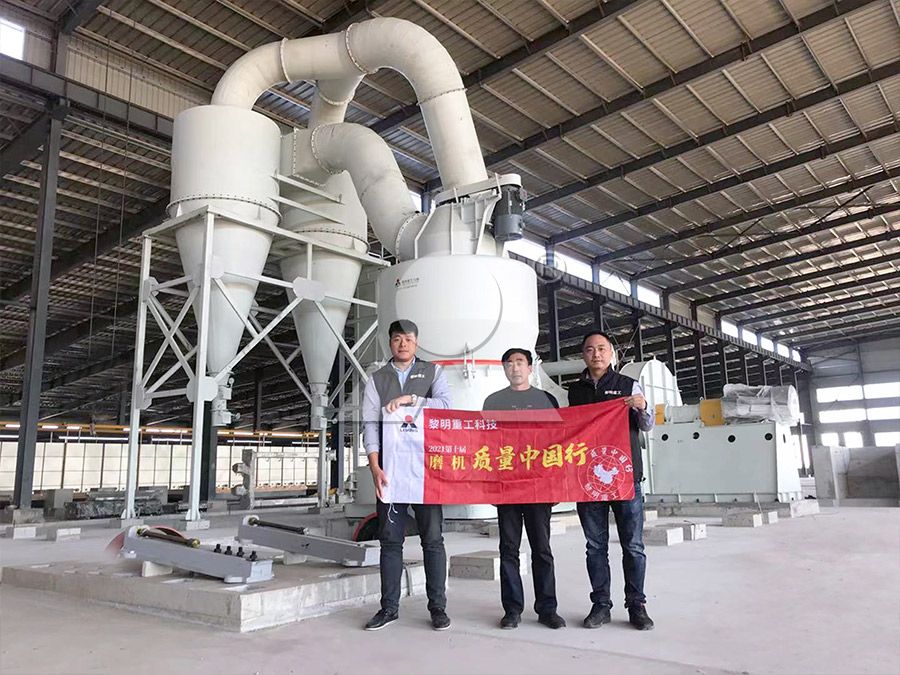
The process initiates at the quarry site, where large blocks of limestone are extracted through drilling and blasting. These oversized rocks are then transported to a primary crusher, typically a jaw crusher, which reduces them to manageable sizes, usually below 100 mm. This first crushing stage is crucial for preparing the material for further size reduction and handling.
Stage 2: Secondary and Tertiary Crushing
The coarsely crushed limestone undergoes secondary crushing, often using a cone crusher or impact crusher, to achieve a smaller, more uniform particle size. For many grinding mills, a final tertiary crushing stage might be employed to get the feed size down to the specific requirements of the grinding equipment, often aiming for particles smaller than 20-25 mm.
Stage 3: Grinding – The Heart of the Process
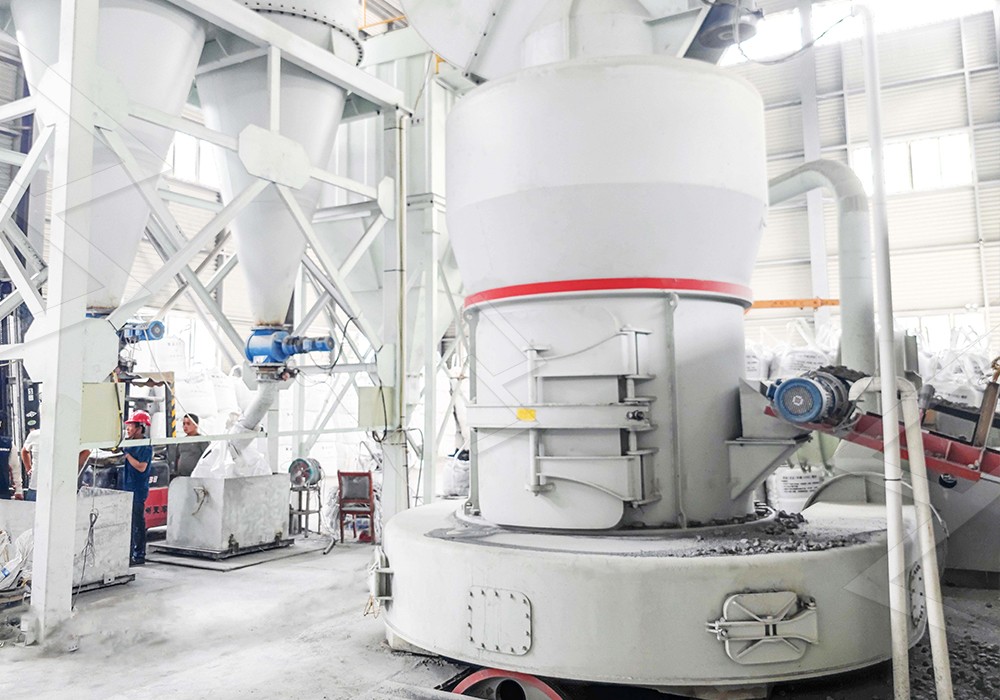
This is where the true transformation occurs. The crushed limestone is fed into a grinding mill to be pulverized into a fine powder. The choice of grinding mill is paramount and depends on the desired fineness (mesh size) and production capacity. While traditional Raymond Mills or Ball Mills are common, modern production demands higher efficiency and finer products.
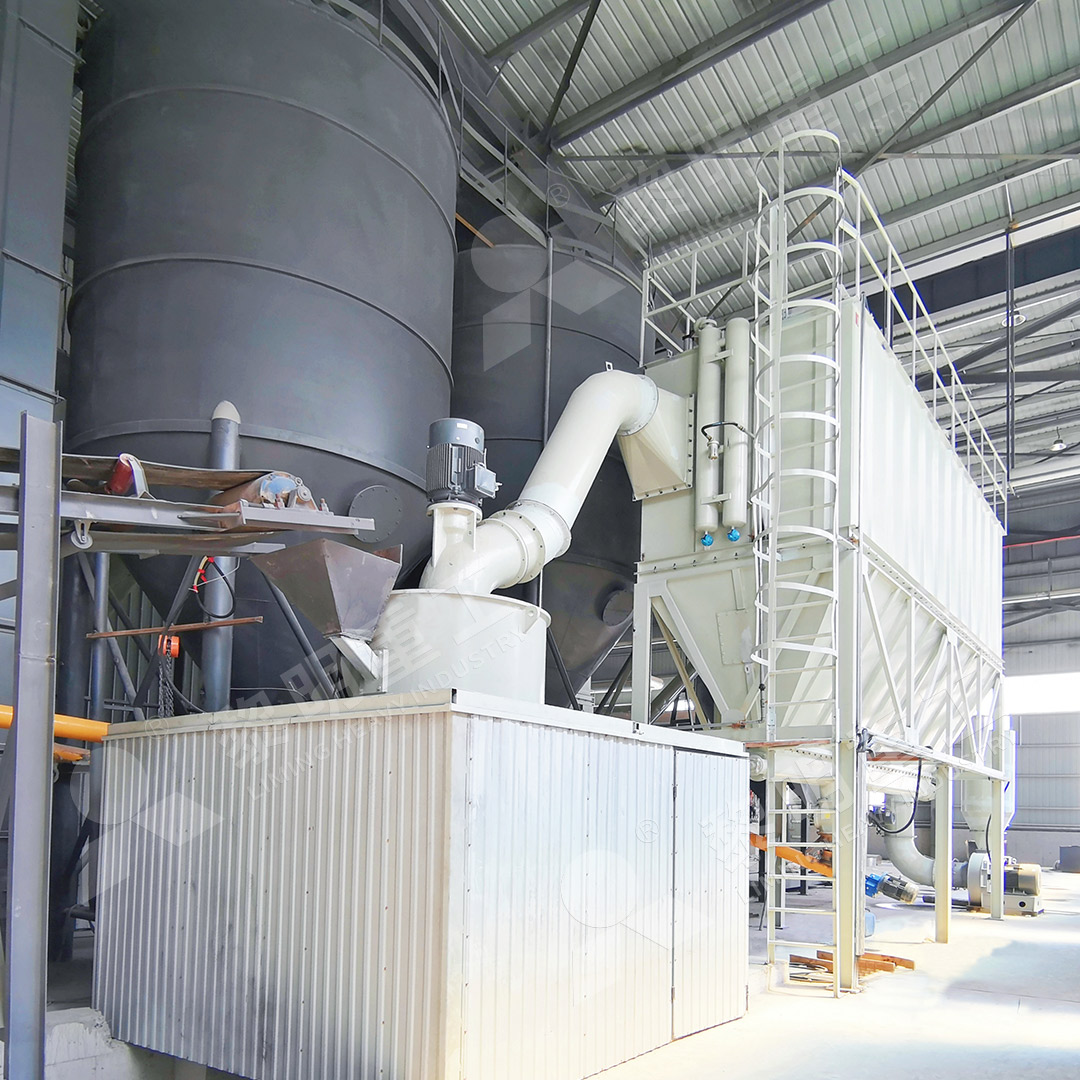
For producers aiming for ultra-fine powders (325-2500 meshes) with higher yield and lower energy consumption, advanced milling technology is the answer. This is where a mill like our MW Ultrafine Grinding Mill truly excels. Designed for customers who need to make ultra-fine powder, this machine is a game-changer. It boasts a grinding efficiency that allows production capacity to be 40% higher than jet mills while consuming only 30% of the energy. Its German-technology cage-type powder selector ensures precise fineness adjustment between 325-2500 meshes, achieving a superb screening rate of d97≤5μm in a single pass. Furthermore, its innovative design with no rolling bearings or screws in the grinding chamber eliminates common failure points, ensuring worry-free, continuous 24/7 operation.
Stage 4: Classification and Separation
After grinding, the powder-air mixture enters a classifier or separator. Here, particles are sorted by size. Oversized particles are rejected and returned to the grinding chamber for further milling, while correctly sized powder is carried through the system by the air flow. The efficiency of this separation stage directly impacts the final product’s particle size distribution.
Stage 5: Collection and Packaging
The fine powder is separated from the air stream in high-efficiency cyclone collectors or baghouse filters. The collected calcium carbonate powder is then transported to silos for storage. Before packaging, it may be subjected to quality control tests to ensure it meets specifications for brightness, particle size, and chemical composition. Finally, the powder is packaged in bags, semi-bulk bags, or even loaded in bulk tankers for shipment to customers.
Conclusion: A Process of Precision and Efficiency
The production of industrial calcium carbonate powder is a continuous process that demands robust equipment and precise control. From the raw quarry block to the precisely graded final product, each stage is critical. Investing in modern, efficient grinding technology like the MW Ultrafine Grinding Mill is not just about reducing particle size; it’s about enhancing overall productivity, significantly cutting energy costs, and ensuring a reliable, high-quality output that meets the stringent demands of today’s industrial markets. For any operation looking to upgrade its milling circuit, focusing on energy efficiency, operational stability, and product quality is the key to success.