
Working Principle of Blast Furnace Slag Micro-Powder Vertical Mill
We provide a wide range of mills — including Raymond mill, trapezoidal mill, vertical mill, ultrafine mill, and ball mill, obtained ISO9001 international quality certification, EU CE certification, and Customs Union CU-TR certification. Suitable for processing minerals such as limestone, phosphate, quicklime, kaolin, talc, barite, bentonite, calcium carbonate, dolomite, coal, gypsum, clay, carbon black, slag, cement raw materials, cement clinker, and more.
The discharge range of these mills can be adjusted to meet specific processing needs, typically from 80-400 mesh, 600-3250 mesh, and can achieve the finest particle size of up to 6000 mesh(D50).
If you are looking for a reliable grinding solution to turn stone or minerals into fine powder, please feel free to contact our online customer service.
Working Principle of Blast Furnace Slag Micro-Powder Vertical Mill
Blast furnace slag, a by-product of iron production, has found extensive applications in the construction industry, particularly as a supplementary cementitious material. To unlock its full potential, the slag must be ground into a fine powder. Vertical roller mills (VRMs) have emerged as the preferred technology for this task due to their superior efficiency and lower energy consumption compared to traditional ball mills.
Core Working Mechanism
The fundamental operation of a slag vertical mill can be broken down into several key stages: feeding, grinding, classification, and collection.
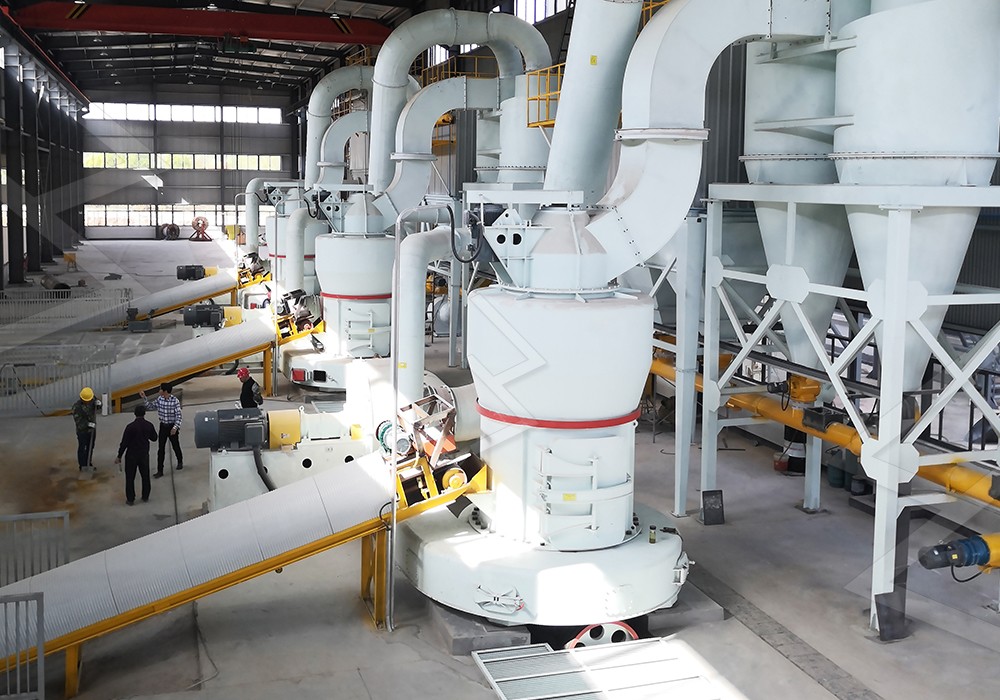
Crushed slag, with a typical input size of 0-20mm, is fed onto the center of a rotating grinding table (or millstone) via a screw feeder. As the table rotates, centrifugal force throws the material outward under the path of heavy, hydraulically-loaded grinding rollers. These rollers exert tremendous pressure on the material bed, crushing and grinding the slag particles through a combination of compression and inter-particle attrition. This is a more efficient process than the impact-dominated grinding in ball mills.
A critical component of the system is the hot gas inlet, which serves a dual purpose: it dries the moist slag simultaneously with grinding and transports the fine powder upwards. The ground material is carried by the hot air stream to an integrated, high-efficiency classifier at the top of the mill.
Classification and Product Collection
The classifier, often a cage-type or rotor-type separator, is the heart of achieving precise fineness control. It spins at an adjustable speed. Coarse particles, due to their higher mass, are rejected by the classifier’s rotating vanes and fall back onto the grinding table for further size reduction. This internal recirculation ensures that only particles meeting the target fineness exit the mill.
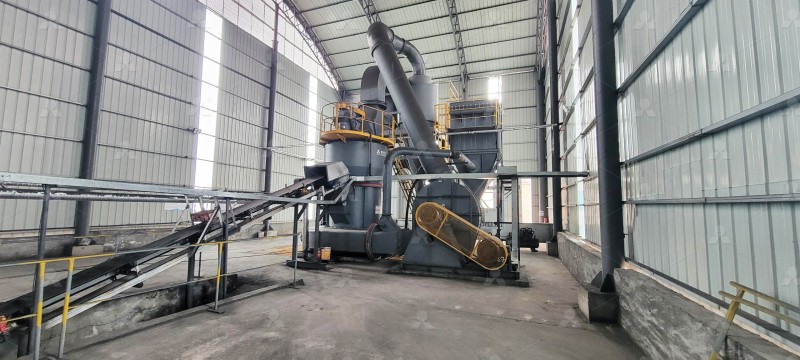
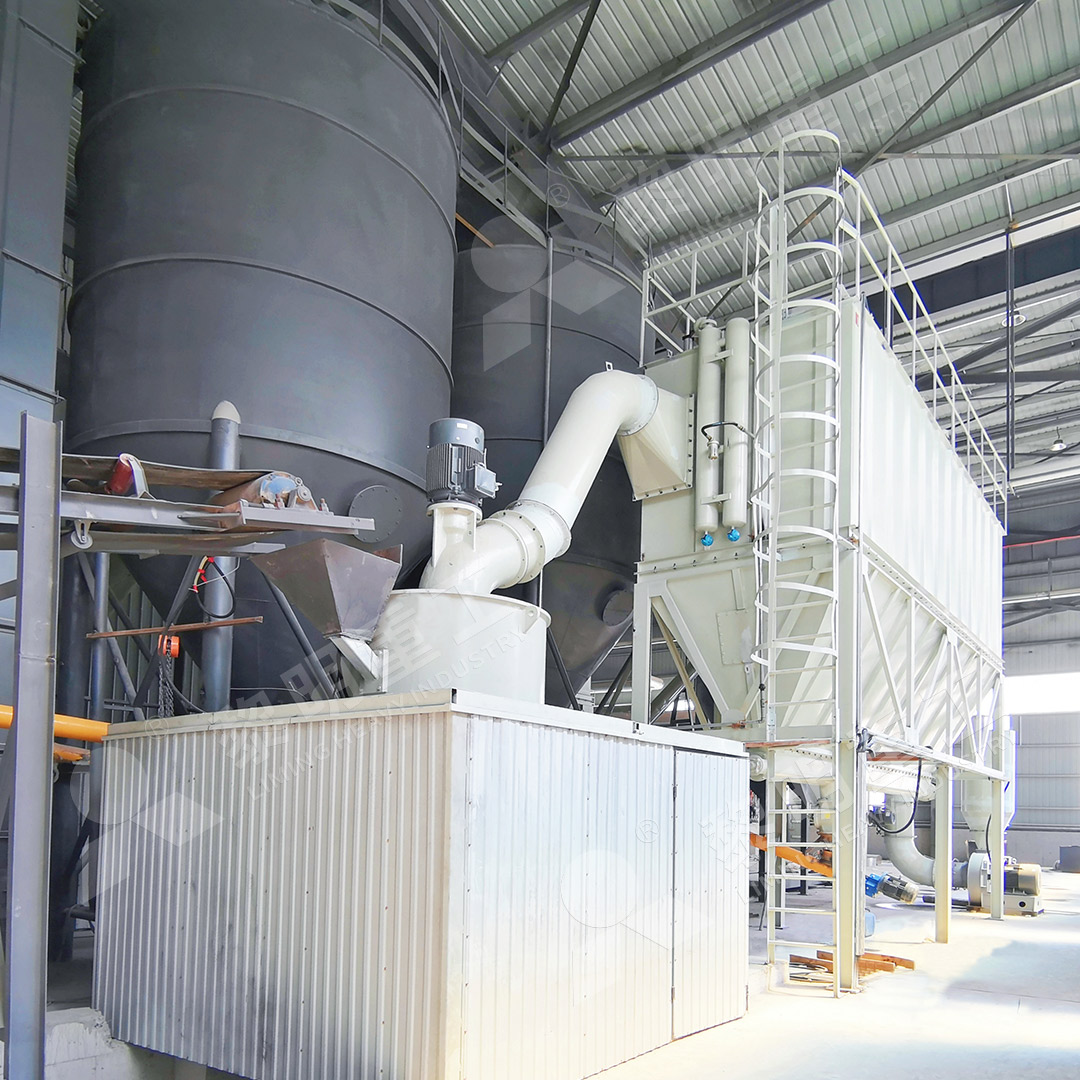
The fine powder that passes the classifier is then transported by the air stream to a downstream baghouse dust collector or a cyclone. Here, the product is separated from the air. The cleaned air is often recirculated back into the mill system by a fan, making it a closed-loop, dust-free operation. The final micro-powder, with fineness easily adjustable between 325 to 2500 meshes, is discharged from the collector via a airlock valve for storage or packaging.
Why a Vertical Mill is Ideal for Slag
The properties of blast furnace slag make it an ideal candidate for vertical milling. Its moderate hardness and abrasiveness are well-suited for the bed-compression grinding principle. Furthermore, the integrated drying capability is crucial for handling slag with inherent moisture. The ability to produce a consistent, high-surface-area powder directly enhances the slag’s reactivity in cement applications.
Recommended Equipment for Slag Grinding
For producers seeking to establish or upgrade a slag micropowder production line, selecting the right mill is paramount. Our MW Ultrafine Grinding Mill is exceptionally well-suited for this application. Designed for customers who need to make ultra-fine powder, it handles an input size of 0-20 mm with a capacity ranging from 0.5 to 25 tph. Its cage-type powder selector, adopting German technologies, allows for precise fineness adjustment between 325-2500 meshes. A significant advantage for continuous industrial operation is the absence of rolling bearings and screws in the grinding chamber, eliminating worries about bearing failures or loose screws causing downtime. Furthermore, the efficient pulse dust collector ensures the entire milling system operates without dust pollution, making it a truly eco-friendly solution.
For larger scale operations or slightly different feed characteristics, our LUM Ultrafine Vertical Grinding Mill is another excellent choice. It integrates the latest grinding roller and powder separating technology for higher yielding rates and better product quality, with an energy consumption that is 30%-50% lower than common grinding mills.
In conclusion, the vertical roller mill, with its efficient grinding principle, integrated drying and classification, and low energy footprint, is the technological cornerstone of modern blast furnace slag valorization. It transforms an industrial waste product into a valuable, high-performance construction material.