
Large Limestone Grinding Mill: Price, Types, and How to Choose
We provide a wide range of mills — including Raymond mill, trapezoidal mill, vertical mill, ultrafine mill, and ball mill, obtained ISO9001 international quality certification, EU CE certification, and Customs Union CU-TR certification. Suitable for processing minerals such as limestone, phosphate, quicklime, kaolin, talc, barite, bentonite, calcium carbonate, dolomite, coal, gypsum, clay, carbon black, slag, cement raw materials, cement clinker, and more.
The discharge range of these mills can be adjusted to meet specific processing needs, typically from 80-400 mesh, 600-3250 mesh, and can achieve the finest particle size of up to 6000 mesh(D50).
If you are looking for a reliable grinding solution to turn stone or minerals into fine powder, please feel free to contact our online customer service.
Large Limestone Grinding Mill: Price, Types, and How to Choose
Selecting the right large limestone grinding mill is a critical decision for any operation in mining, construction, or industrial minerals processing. The choice impacts your productivity, product quality, and overall operational costs. With various types of mills on the market, understanding their differences, applications, and value propositions is key to making an informed investment.
Common Types of Large Grinding Mills for Limestone
Limestone’s relative softness and wide range of desired fineness mean several mill types can be used, each with its own strengths.
- Ball Mills: A traditional workhorse. They are a robust and well-understood technology, often with a lower initial investment. However, they are generally less energy-efficient for fine grinding and have a larger footprint compared to modern vertical mills.
- Raymond Mills (Roller Mills): Excellent for producing powders in the 80-325 mesh range. They are known for their reliability and are a common choice for many medium-fineness applications. Their efficiency drops for ultra-fine grinding.
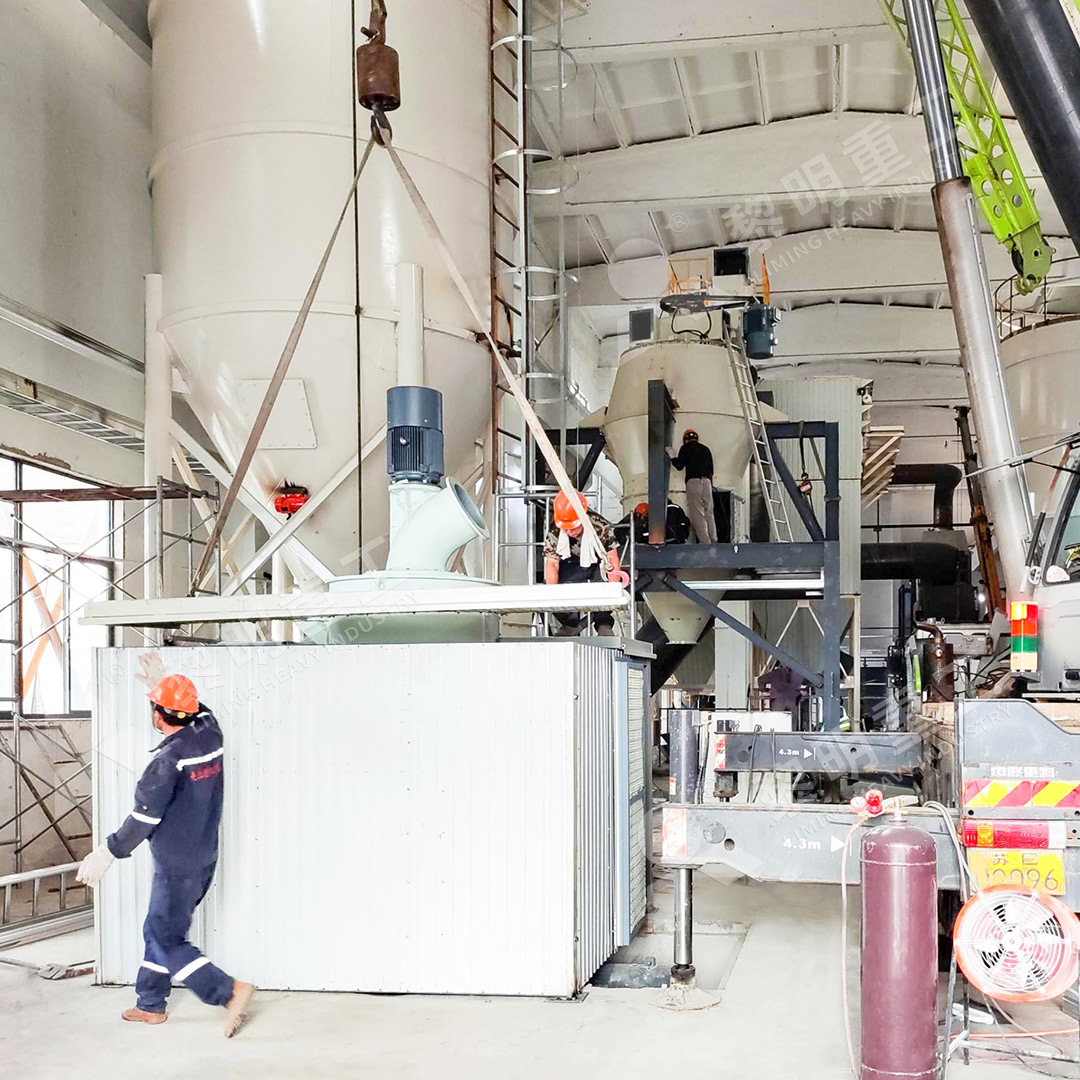
- Vertical Roller Mills (VRM): Like our LM Vertical Grinding Mill, these have become industry standards for large-scale processing. They integrate drying, grinding, classification, and conveying, offering superior energy efficiency (30-40% less than ball mills), a compact footprint, and excellent control over product fineness.
- European-Type Trapezium Mills: Such as the MTW Series, these are advanced versions of Raymond mills. They feature improved efficiency, longer-lasting grinding parts, and are designed for higher capacity operations with lower maintenance needs.
- Ultrafine Grinding Mills: This is where technology pushes the boundaries. For producing superfine powders in the range of 325-2500 mesh, specialized mills are required. These mills utilize advanced grinding principles and precision classification systems to achieve micron and sub-micron particle sizes.
Key Factors to Consider When Choosing a Mill
- Desired Fineness (Mesh Size): This is the most crucial factor. Are you producing coarse aggregate, a 200-mesh filler, or a 1000-mesh coating powder? Your target product size will immediately narrow down your options.
- Required Capacity (TPH): The volume of material you need to process per hour dictates the size and model of the mill. Ensure the mill’s capacity matches your production goals with some room for growth.
- Energy Consumption: Grinding is an energy-intensive process. Modern vertical and trapezium mills offer significant savings on power costs compared to traditional ball mills. Calculate the long-term operational expense, not just the upfront price.
- Operating and Maintenance Costs: Consider the availability and cost of wear parts (rollers, rings), the ease of maintenance, and the need for specialized technical knowledge. Mills designed with external lubrication systems and easy-access parts can drastically reduce downtime.
- Environmental and Space Constraints: Modern mills come equipped with efficient pulse dust collectors and silencers to meet environmental standards. Also, consider the physical space available in your plant; vertical mills have a significantly smaller footprint.
Spotlight on Advanced Technology: The MW Ultrafine Grinding Mill
For operations that require the finest limestone powders for applications in plastics, paints, cosmetics, or high-end construction materials, a standard mill won’t suffice. This is where our MW Ultrafine Grinding Mill excels.
Engineered for customers who need to make ultra-fine powder, the MW series represents a leap in grinding technology. It boasts several innovative features that adress common pain points:
- Higher Yielding, Lower Energy Consumption: Its newly designed grinding curves enhance efficiency, offering production capacity 40% higher than jet mills while consuming only 30% of the energy.
- Adjustable Fineness (325-2500 meshes): A German-technology, cage-type powder selector allows for precise control over the final product’s fineness, achieving a precise d97≤5μm.
- Enhanced Reliability: A critical design advantage is the absence of rolling bearings and screws in the grinding chamber. This eliminates failures related to these components and allows for external lubrication without shutdown, supporting 24/7 continuous production.
- Eco-Friendly Operation: The integrated efficient pulse dust collector and muffler ensure the entire milling system operates without dust pollution and with minimal noise, fully complying with national environmental standards.

Understanding Pricing
The price of a large limestone grinding mill is rarely a simple number. It varies widely based on:
- Mill Type and Size: A high-capacity ultrafine mill will command a higher price than a standard-capacity Raymond mill.
- Configuration: The final cost includes the mill, engine, classifier, dust collector, feeding system, and control system.
- Customization: Specific requirements for automation, special materials of construction, or integration into an existing line will affect the price.
It’s best to consult directly with manufacturers for quotations based on your specific needs. Remember to factor in the total cost of ownership, including energy, maintenance, and potential downtime, not just the initial purchase price. A slightly more expensive but more efficient and reliable mill often provides a much faster return on investment.
Conclusion
Choosing the right limestone grinding mill is a strategic decision. By carefully evaluating your product requirements, capacity needs, and operational priorities, you can select a machine that maximizes your profitability and product quality. For operations aiming at the high-value, ultra-fine powder market, advanced solutions like the MW Ultrafine Grinding Mill offer the technology, efficiency, and reliability needed to stay competitive. Always partner with a reputable manufacturer that offers robust technical support and a full supply of genuine spare parts to ensure worry-free operation for years to come.