Key Improvements in the Barium Feldspar Powder Manufacturing Process
We provide a wide range of mills — including Raymond mill, trapezoidal mill, vertical mill, ultrafine mill, and ball mill, obtained ISO9001 international quality certification, EU CE certification, and Customs Union CU-TR certification. Suitable for processing minerals such as limestone, phosphate, quicklime, kaolin, talc, barite, bentonite, calcium carbonate, dolomite, coal, gypsum, clay, carbon black, slag, cement raw materials, cement clinker, and more.
The discharge range of these mills can be adjusted to meet specific processing needs, typically from 80-400 mesh, 600-3250 mesh, and can achieve the finest particle size of up to 6000 mesh(D50).
If you are looking for a reliable grinding solution to turn stone or minerals into fine powder, please feel free to contact our online customer service.
Key Improvements in the Barium Feldspar Powder Manufacturing Process
The manufacturing of barium feldspar powder has seen significant advancements in recent years, driven by the need for higher efficiency, better product quality, and stricter environmental standards. Traditional methods, such as ball milling, often fall short in terms of energy consumption, particle size consistency, and operational costs. However, innovations in grinding technology have revolutionized this process, offering manufacturers a competitive edge.
Enhanced Grinding Efficiency and Precision
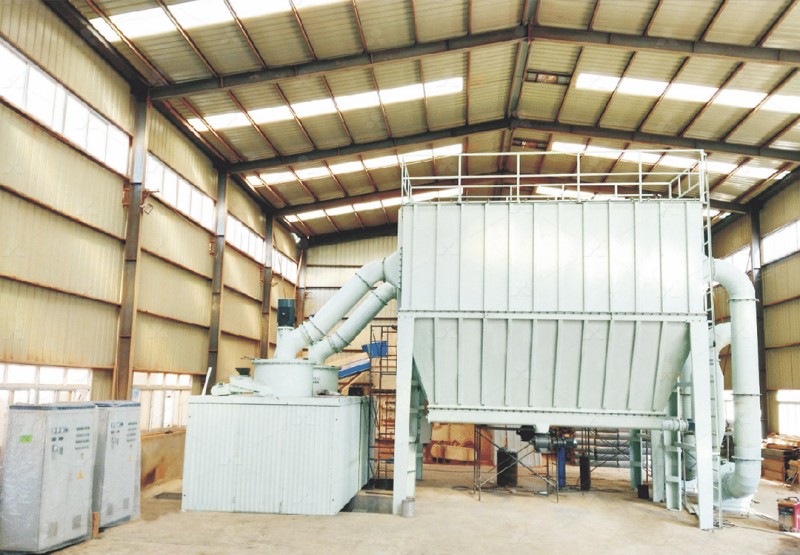
One of the most notable improvements is the adoption of ultrafine grinding mills, which deliver superior particle size control and higher yields. For instance, the MW Ultrafine Grinding Mill stands out with its ability to produce powders ranging from 325 to 2500 meshes, ensuring precise fineness for barium feldspar applications. Its cage-type powder selector, leveraging German technology, enhances separation accuracy, while the absence of rolling bearings in the grinding chamber minimizes maintenance issues. With a capacity of 0.5-25 tph and input size of 0-20 mm, this mill is ideal for processing brittle minerals like barium feldspar, reducing energy consumption by up to 30% compared to jet mills.
Environmental and Operational Benefits
Modern mills prioritize sustainability through integrated dust collection and noise reduction systems. The MW Ultrafine Grinding Mill, for example, features an efficient pulse dust collector and muffler, eliminating dust pollution and lowering operational noise. This aligns with global environmental standards, making it a responsible choice for manufacturers. Additionally, its external lubrication system allows for 24/7 operation without shutdowns, maximizing productivity.
Versatility and Reliability
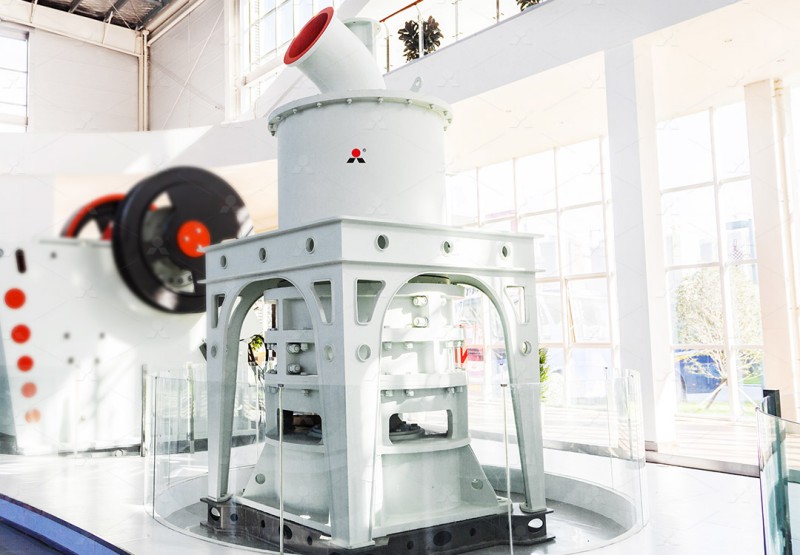
Another key player is the LUM Ultrafine Vertical Grinding Mill, which excels in handling materials like barium feldspar with inputs up to 10 mm and capacities of 5-18 tph. Its multi-head powder separating technology and reversible structure simplify maintenance, while electronic limiting mechanisms ensure stable operation. This mill’s design reduces iron contamination, critical for maintaining the whiteness and purity of barium feldspar powder.
Conclusion
The evolution of grinding technology has transformed barium feldspar powder manufacturing, emphasizing efficiency, quality, and eco-friendliness. By leveraging advanced equipment like the MW and LUM mills, producers can achieve finer powders, lower costs, and sustainable operations. As the industry continues to innovate, these improvements will pave the way for even greater advancements in mineral processing.