
Complete Stone Flour Milling Plant Machinery and Equipment
We provide a wide range of mills — including Raymond mill, trapezoidal mill, vertical mill, ultrafine mill, and ball mill, obtained ISO9001 international quality certification, EU CE certification, and Customs Union CU-TR certification. Suitable for processing minerals such as limestone, phosphate, quicklime, kaolin, talc, barite, bentonite, calcium carbonate, dolomite, coal, gypsum, clay, carbon black, slag, cement raw materials, cement clinker, and more.
The discharge range of these mills can be adjusted to meet specific processing needs, typically from 80-400 mesh, 600-3250 mesh, and can achieve the finest particle size of up to 6000 mesh(D50).
If you are looking for a reliable grinding solution to turn stone or minerals into fine powder, please feel free to contact our online customer service.
Complete Stone Flour Milling Plant Machinery and Equipment
For any industrial operation focused on transforming raw stone into fine powders, the selection of a complete milling plant is a critical strategic decision. It’s not merely about purchasing a single machine; it’s about integrating a cohesive system designed for efficiency, reliability, and long-term profitability. A well-designed stone flour milling plant seamlessly combines crushing, grinding, classifying, and collecting processes into a single, automated workflow. The core of this system is invariably the grinding mill, whose technology dictates the final product’s quality, yield, and operational costs.
Modern milling plants have evolved far beyond simple crushing mechanisms. Today’s systems are engineered with a holistic view, prioritizing energy conservation, minimal environmental footprint, and operational ease. Key considerations include the raw material’s hardness and moisture content, the required production capacity, and the specific fineness (often measured in meshes or microns) of the end product. From coarse aggregates for construction to ultra-fine powders for high-value industries like cosmetics and pharmaceuticals, the machinery must be precisely matched to the application.
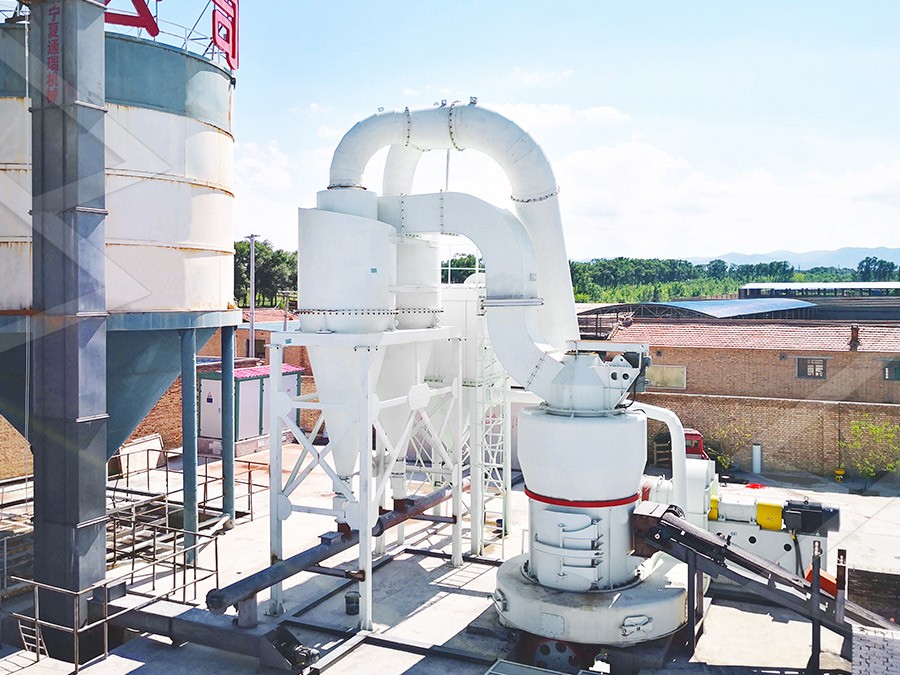
The Heart of the Plant: Grinding Mill Technology
The grinding mill is the centerpiece where the actual size reduction occurs. Several mill types exist, each with distinct advantages. Traditional ball mills are known for their robustness but often suffer from high energy consumption and potential for product contamination. Raymond mills offer a proven solution for medium-fine powders. However, for operations demanding superior efficiency and ultra-fine outputs, advanced vertical roller mills and trapezium mills have become the industry benchmarks.
These advanced mills integrate multiple functions. They often feature internal dynamic classifiers that immediately separate fine particles from coarse ones, sending the latter back for further grinding. This closed-circuit system enhances efficiency and ensures a consistent particle size distribution. Furthermore, contemporary designs incorporate robust dust collection systems and noise dampening technologies, making the entire plant compliant with stringent environmental and workplace safety regulations.
Introducing the MW Ultrafine Grinding Mill: Precision for Demanding Applications
For projects requiring the pinnacle of fineness and purity, the MW Ultrafine Grinding Mill represents a significant technological leap. Engineered for customers who need to produce ultra-fine powder between 325 and 2500 meshes, this machine is a paradigm of efficiency and clean operation. Its design directly addresses common pain points in fine grinding.
A key innovation is its higher yield with lower energy consumption. The newly designed grinding curves of the roller and ring enhance grinding efficiency dramatically. Compared to jet mills or stirred mills with the same fineness and power, the MW Mill’s production capacity can be up to 40% higher, while its system energy consumption is only about 30%. This translates directly to a lower cost per ton of output.
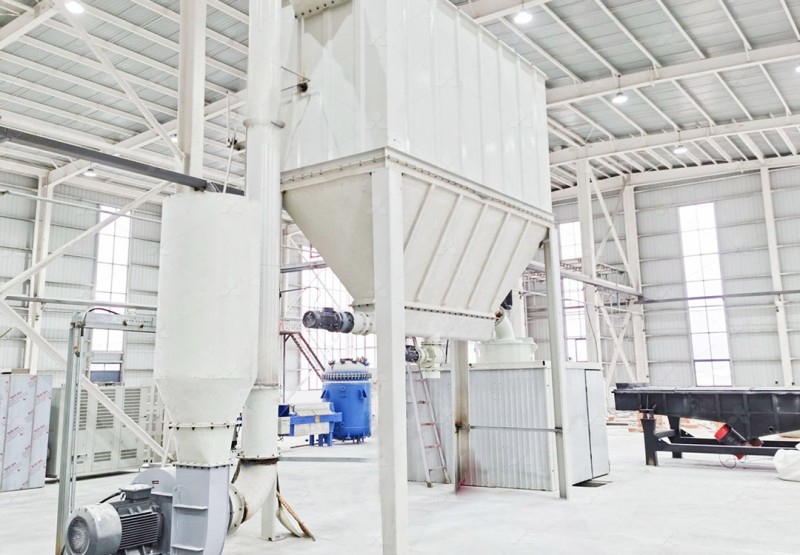
Reliability is built into its core. Notably, there are no rolling bearings or screws inside the grinding chamber. This eliminates the frequent failures associated with bearing damage or loose screws in high-vibration environments. The lubrication points are externally accessible, allowing for maintenance without shutdowns, supporting continuous 24/7 production cycles. Coupled with its efficient pulse dust collector and muffler, the MW Mill ensures the production process is both productive and environmentally responsible, with no dust pollution and minimal noise.
System Integration and Support
A milling plant is more than its primary mill. A complete system includes auxiliary equipment such as jaw crushers for primary size reduction, vibrating feeders for consistent material flow, bucket elevators, and sophisticated powder collectors like cyclones or bag filters. The entire process is typically managed by a centralized PLC control system, allowing for remote monitoring, precise parameter adjustment, and automated operation.
When selecting a supplier, it is crucial to partner with one that offers not just equipment, but comprehensive support. This includes plant layout design, installation supervision, operator training, and—vitally—a guaranteed supply of original spare parts. A manufacturer that stands behind its products with a direct service commitment ensures worry-free operation and protects your investment for the long term.
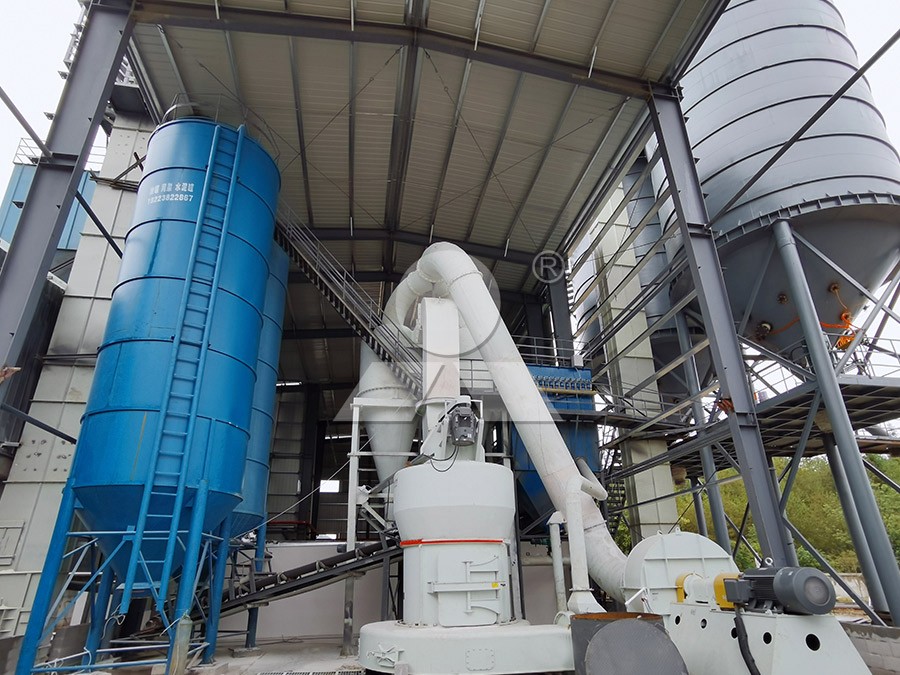
Conclusion: Investing in a Cohesive Solution
Choosing machinery for a complete stone flour milling plant is a complex decision with lasting implications for operational efficiency and product quality. By focusing on integrated systems that prioritize energy savings, environmental controls, and advanced grinding technology—such as that exemplified by the MW Ultrafine Grinding Mill for ultra-fine applications—businesses can secure a competitive edge. The optimal plant delivers not just powder, but consistency, purity, and profitability, forming a reliable foundation for growth in an increasingly demanding market.
Frequently Asked Questions (FAQ)
- What are the key factors in selecting the right grinding mill for my stone material?
The primary factors are the hardness and abrasiveness of the raw stone, the required production capacity (tph), the desired final fineness (mesh or micron size), and the moisture content. A detailed material analysis is recommended before selection. - How does a complete milling plant manage dust and environmental pollution?
Modern plants integrate pulse-jet bag dust collectors or cyclone systems at key transfer points and above the mill. Closed-system designs with negative pressure prevent dust escape, while silencers and soundproofing enclosures control noise levels. - What is the advantage of a mill with an external lubrication system?
External lubrication allows for maintenance and oil checks/refills without shutting down the mill. This is critical for continuous 24/7 operations, maximizing uptime and production efficiency. - Can one mill produce multiple grades of fineness for different products?
Yes, mills equipped with advanced, adjustable classifiers (like the cage-type powder selector in the MW Mill) allow operators to precisely control the fineness, often within a wide range (e.g., 325-2500 meshes), by adjusting the separator speed. - What does “integrated crushing, drying, grinding, and conveying” mean in practice?
It means the mill system is designed to handle moderately moist materials by using hot air introduced during grinding for simultaneous drying. It also incorporates feeders and elevators, creating a single, continuous process line from raw feed to final product collection. - How important is the availability of original spare parts?
It is crucial. Using non-original or inferior spare parts can drastically reduce mill performance, increase wear on other components, and void warranties. A reliable supplier guarantees the availability of precision-engineered original parts. - What level of automation can I expect from a modern milling plant?
Fully automated plants are common, featuring PLC control systems for remote start/stop, real-time monitoring of pressure, temperature and amperage, automatic feedback loops for feed rate control, and data logging for production analysis.