
Limestone Powder Production Line: Complete Plant Setup and Process
We provide a wide range of mills — including Raymond mill, trapezoidal mill, vertical mill, ultrafine mill, and ball mill, obtained ISO9001 international quality certification, EU CE certification, and Customs Union CU-TR certification. Suitable for processing minerals such as limestone, phosphate, quicklime, kaolin, talc, barite, bentonite, calcium carbonate, dolomite, coal, gypsum, clay, carbon black, slag, cement raw materials, cement clinker, and more.
The discharge range of these mills can be adjusted to meet specific processing needs, typically from 80-400 mesh, 600-3250 mesh, and can achieve the finest particle size of up to 6000 mesh(D50).
If you are looking for a reliable grinding solution to turn stone or minerals into fine powder, please feel free to contact our online customer service.
Limestone Powder Production Line: Complete Plant Setup and Process
Establishing a high-efficiency limestone powder production line is a strategic investment that demands careful planning, the right equipment selection, and a deep understanding of the entire process. From raw material handling to final product packaging, each stage must be optimized for yield, quality, and operational cost. This article provides a comprehensive overview of setting up a complete plant, detailing the key stages and highlighting critical equipment choices for modern, profitable operations.
1. Core Process Stages of a Limestone Powder Plant
A typical production line can be broken down into several interconnected stages:
1.1 Primary Crushing and Pre-Homogenization
Run-of-mine limestone is first reduced in size by a primary crusher, such as a jaw crusher or impact crusher, to a manageable dimension (typically below 50mm). This stage often includes a pre-homogenization yard where limestone from different quarry layers is blended to ensure consistent chemical composition for the final product, which is crucial for applications in plastics, paints, or pharmaceuticals.
1.2 Raw Material Storage and Feeding
Crushed limestone is then conveyed to storage silos or stockpiles. A controlled feeding system, using vibrating feeders or belt feeders, ensures a steady and regulated supply of material to the grinding mill. Consistency here is key to maintaining stable grinding conditions and preventing mill overload or starvation.
1.3 Grinding & Classification: The Heart of the Operation
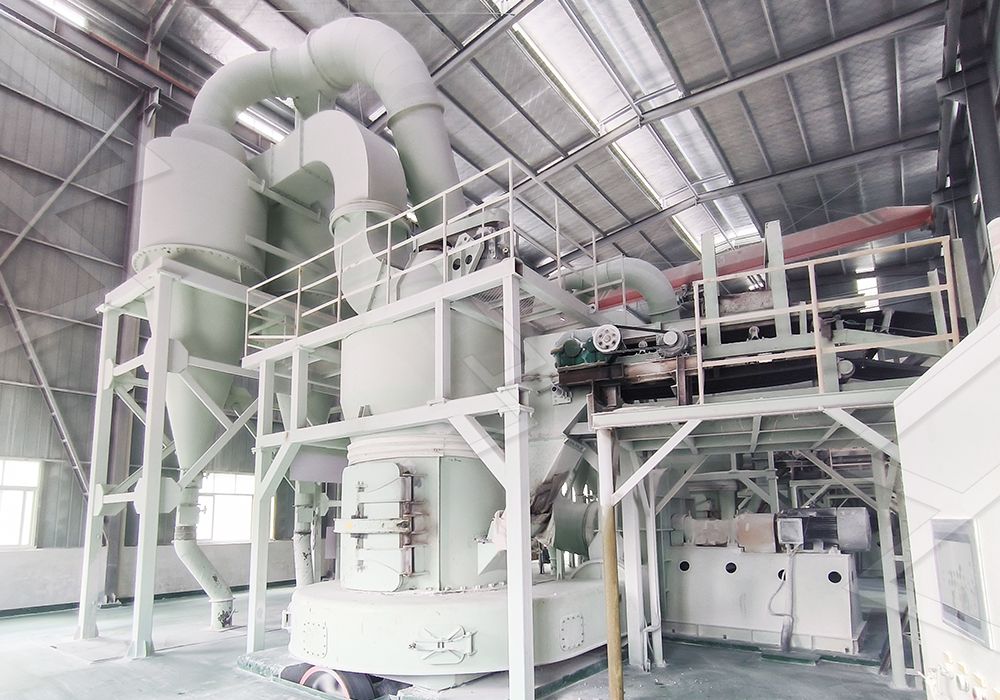
This is the most critical stage where limestone is transformed into powder. The choice of grinding mill directly dictates the production capacity, particle size distribution (fineness), and energy efficiency. Modern plants move beyond traditional ball mills to more advanced grinding systems.
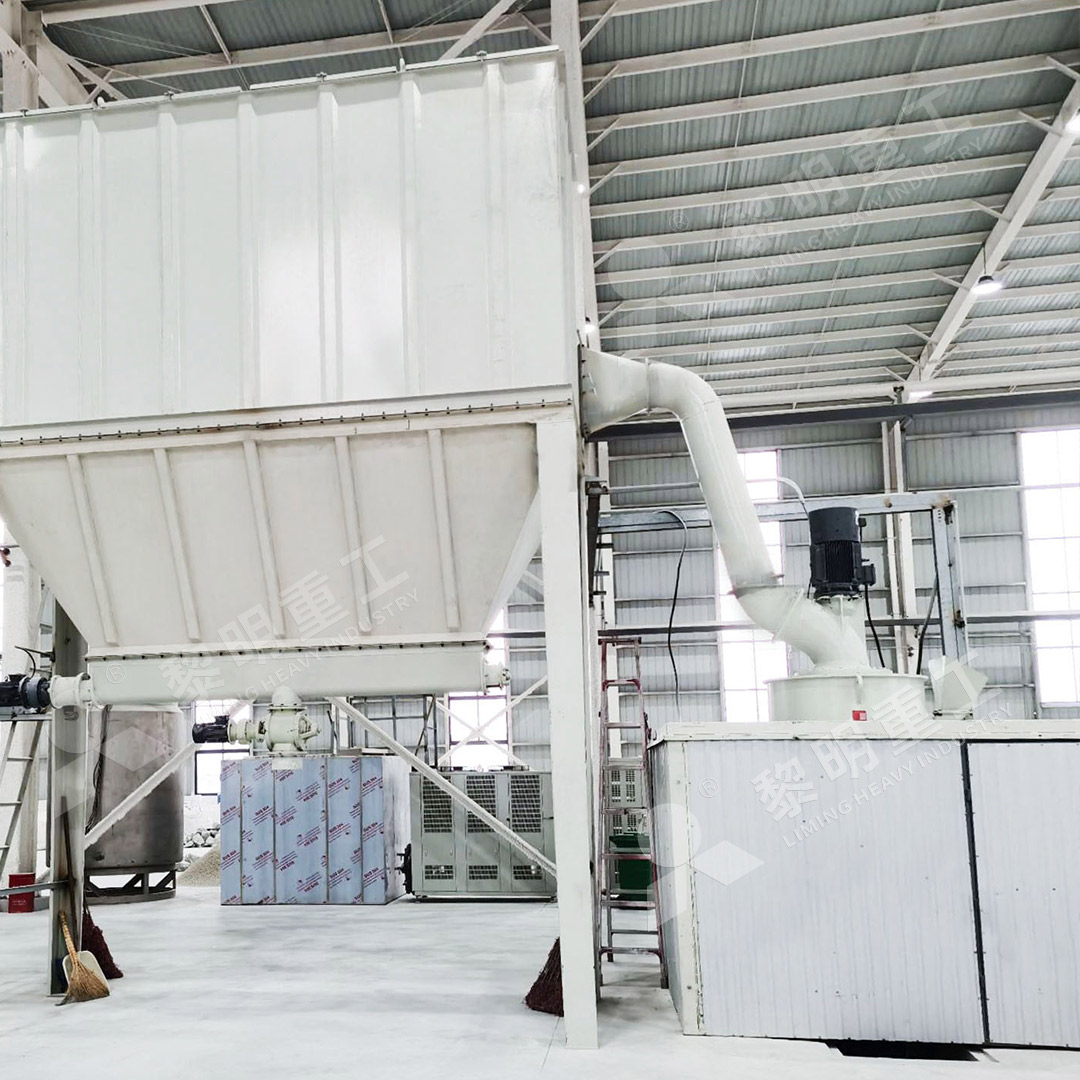
For producing high-value, ultra-fine limestone powder (325-2500 meshes), an MW Ultrafine Grinding Mill represents a technological leap. Engineered for customers requiring superior fineness, this mill integrates an efficient pulse dust collector and muffler, ensuring minimal environmental impact. Its design eliminates rolling bearings and screws inside the grinding chamber, virtually eradicating concerns about bearing damage or loose screw failures. A standout feature is its German-technology cage-type powder selector, which allows precise fineness adjustment between 325-2500 meshes and achieves a high screening rate of d97≤5μm in a single pass. With a capacity range of 0.5-25 tph for feed sizes up to 20mm, it offers 40% higher output than jet mills while consuming only 30% of the energy, making it an ideal centerpiece for high-grade powder production.
1.4 Product Collection and Dedusting
After classification, the fine powder is separated from the air stream using high-efficiency cyclone collectors and baghouse filters. A modern, closed-circuit system is essential to achieve near-zero dust emission, protecting the environment and recovering valuable product. The integrated pulse dust collector in mills like the MW series is a prime example of this eco-friendly approach.
1.5 Packaging, Storage, and Dispatch
The finished limestone powder is conveyed to product silos. Automated packaging systems—ranging from valve bag packers for 25-50kg bags to bulk loading stations for tanker trucks—ensure dust-free and efficient handling. Proper silo design prevents moisture absorption and caking.

2. Plant Design Considerations and Equipment Synergy
Successful integration goes beyond individual machines. Plant layout must prioritize smooth material flow, minimal transfer points, and easy maintenance access. The electrical and control systems should allow for centralized monitoring and automation of the entire line. Conveying system design (using bucket elevators, screw conveyors, or pneumatic systems) must match the characteristics of the powdered material.
For operations targeting a broad range of products, from coarse filler to ultra-fine powder, complementing the MW mill with a vertical roller mill like the LUM Ultrafine Vertical Grinding Mill can be a powerful strategy. The LUM mill, with its advanced grinding roller and powder separating technology, excels in energy efficiency and offers easier maintenance due to its reversible roller structure. It handles a feed size of 0-10mm with a capacity of 5-18 tph, making it perfect for producing fine powders with excellent whiteness and cleanliness. Its PLC control system allows for precise parameter adjustments, seamlessly integrating into a fully automated plant control room.
3. The Path to a Profitable and Sustainable Operation
Investing in a complete, well-designed limestone powder plant is an investment in long-term profitability and sustainability. Key to this is selecting robust, energy-efficient, and intelligent equipment from a reliable supplier. Partnering with a manufacturer like LIMING, which offers comprehensive technical support and a guaranteed supply of original spare parts, ensures worry-free operation and maximizes uptime. By focusing on process optimization and choosing advanced mills like the MW or LUM series, producers can achieve superior product quality, lower operating costs, and meet stringent environmental standards, securing a strong position in the competitive market for industrial minerals.
Frequently Asked Questions (FAQ)
- What is the typical energy consumption of a modern limestone grinding line?
Energy use varies with fineness and mill type. Advanced mills like the MW Ultrafine Grinding Mill can reduce energy consumption by up to 40-50% compared to traditional ball mills and 70% compared to jet mills for similar ultra-fine products, making them highly cost-effective. - How do you control the fineness of the final limestone powder?
Fineness is primarily controlled by the internal classifier or powder separator. Mills such as the MW series feature an adjustable cage-type selector, allowing operators to precisely dial in the desired particle size distribution between 325 and 2500 meshes without stopping production. - What are the key environmental considerations for a powder plant?
Modern plants must control dust and noise. This is achieved through fully enclosed conveying systems, mills equipped with integrated pulse jet dust collectors (like the MW mill), silencers, and negative-pressure operation to prevent any dust spillage, ensuring compliance with environmental standards. - How important is after-sales service and spare parts availability?
It is critical for minimizing downtime. Choosing a supplier like LIMING, which manufactures its own equipment and guarantees the supply of original spare parts, provides long-term operational security and technical support for the entire production line. - Can one production line produce multiple grades of limestone powder?
Yes, with a flexible grinding and classification system. By adjusting the classifier speed, grinding pressure, and feed rate, a single line equipped with a versatile mill can switch between producing different fineness grades to meet various customer demands.