
Zircon Sand Trapezium Mill: Key Features and Industrial Applications
We provide a wide range of mills — including Raymond mill, trapezoidal mill, vertical mill, ultrafine mill, and ball mill, obtained ISO9001 international quality certification, EU CE certification, and Customs Union CU-TR certification. Suitable for processing minerals such as limestone, phosphate, quicklime, kaolin, talc, barite, bentonite, calcium carbonate, dolomite, coal, gypsum, clay, carbon black, slag, cement raw materials, cement clinker, and more.
The discharge range of these mills can be adjusted to meet specific processing needs, typically from 80-400 mesh, 600-3250 mesh, and can achieve the finest particle size of up to 6000 mesh(D50).
If you are looking for a reliable grinding solution to turn stone or minerals into fine powder, please feel free to contact our online customer service.
Zircon Sand Trapezium Mill: Key Features and Industrial Applications
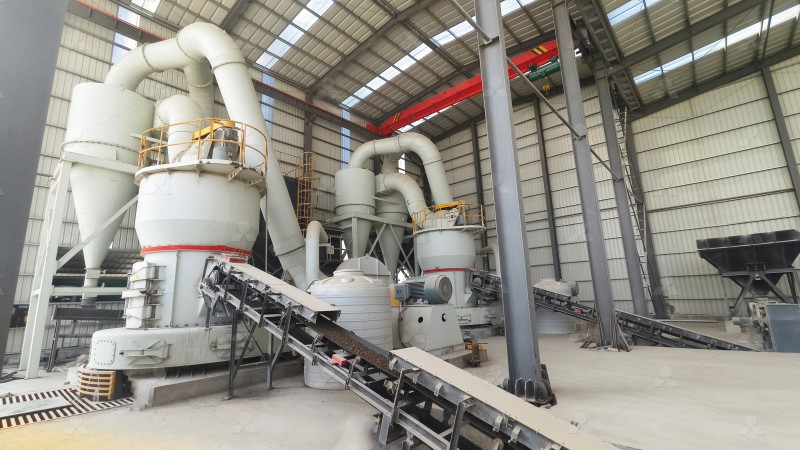
Zircon sand, a critical industrial mineral prized for its high heat resistance, durability, and chemical inertness, demands precise and efficient processing to unlock its full value. Achieving the required particle size distribution and purity for advanced applications is a significant challenge in mineral processing. Among the various milling technologies available, the trapezium mill has emerged as a particularly effective solution for grinding zircon sand, balancing high throughput with fine, controlled particle sizing.
The Grinding Challenge for Zircon Sand
Processing zircon sand is not a trivial task. The material’s inherent hardness and abrasiveness can lead to excessive wear on grinding components, increased energy consumption, and contamination from grinding media in traditional systems like ball mills. Furthermore, many end-use applications in the ceramics, foundry, and refractory industries require a very specific and consistent fineness, often within a tight micron range. Inefficient grinding can result in poor yield, high operational costs, and product quality that fails to meet stringent industry specifications.
Why Trapezium Mill Technology Excels
The modern trapezium mill design directly addresses these challenges through several key engineering innovations. Unlike older Raymond mill designs, contemporary trapezium mills feature a more efficient grinding chamber geometry and advanced material handling systems.
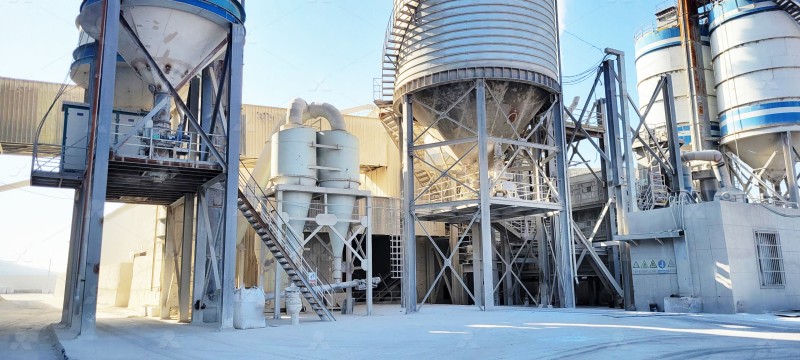
A prime example of this evolution is our MTW-Z European Trapezium Mill. This mill is engineered for robustness and efficiency when handling medium-hard to hard materials like zircon sand. It features a grinding roller assembly that utilizes a dilute oil lubrication system, a significant advancement over traditional grease lubrication. This system is virtually maintenance-free, reduces friction effectively, and extends the service life of critical wear parts, directly lowering long-term operating costs. Furthermore, its elastic volute damping structure absorbs operational vibrations, ensuring smoother, more stable running—a crucial factor for consistent product fineness and reduced mechanical stress.
Critical Features for Optimal Zircon Processing
When selecting a trapezium mill for zircon sand, several features are non-negotiable:
- Advanced Powder Classifier: A high-efficiency, cage-type powder separator is essential. It allows for precise control over the final product’s fineness, enabling adjustments typically between 80 to 800 mesh, and ensures a narrow particle size distribution critical for zircon flour applications.
- Wear-Resistant Material Construction: Grinding rollers and rings must be made from specialized wear-resistant alloys to withstand the abrasive nature of zircon sand, minimizing contamination and frequency of part replacement.
- Integrated Drying Capability: For zircon sand that may contain moisture, the mill’s air-flow system can integrate with a hot air source to perform simultaneous grinding and drying, streamlining the process.
- Environmental and Operational Control: Modern systems come equipped with efficient pulse-jet baghouse dust collectors and noise reduction technologies, ensuring the plant operates within environmental regulations while protecting workers.
Industrial Applications of Processed Zircon Sand
Finely ground zircon sand produced by trapezium mills is indispensable across several high-tech industries:
- Ceramics & Refractories: As an opacifier in ceramic glazes and a key component in high-temperature refractory bricks and shapes due to its exceptional thermal stability.
- Foundry Casting: Used to create molds and cores for precision metal casting, where its low thermal expansion produces accurate, smooth castings.
- Advanced Ceramics & Electronics: In zirconia-based structural ceramics and certain electronic components.
- Abrasive and Coating Industries: As a base material for certain abrasives and in wear-resistant surface coatings.
Beyond Standard Grinding: The Ultrafine Solution
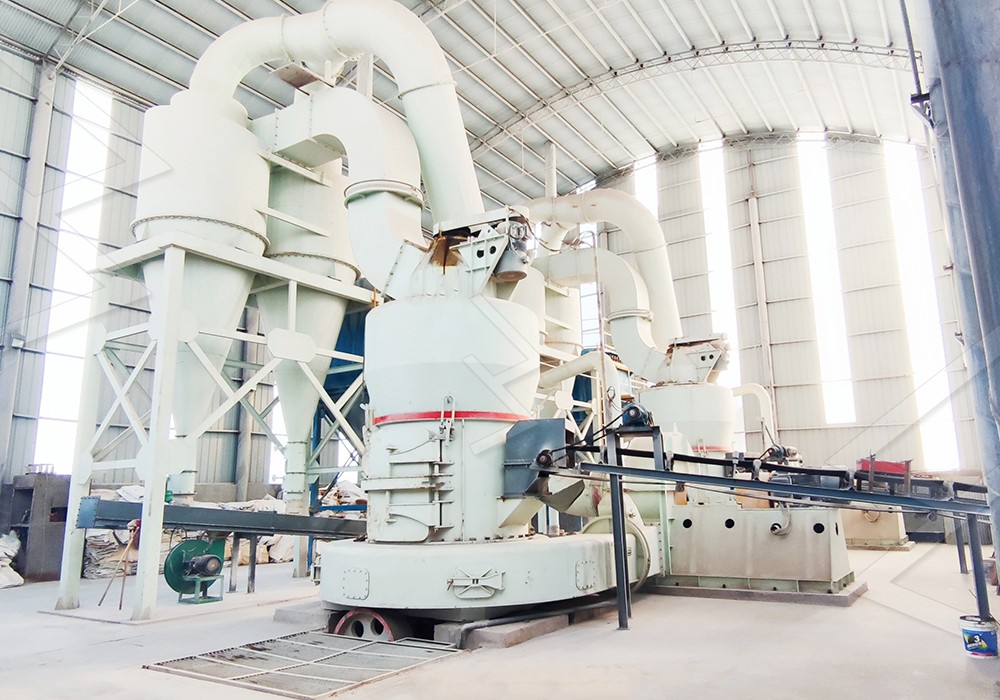
For applications demanding even finer specifications, such as high-performance ceramics or specialized pigments, a standard trapezium mill may reach its limit. In these cases, the process requires an ultrafine grinding solution. For customers needing to produce ultra-fine zircon powder, we highly recommend our MW Ultrafine Grinding Mill. This machine is specifically designed for producing powders in the range of 325 to 2500 meshes. It features a highly precise, multi-head cage-type powder selector based on German technology, achieving a screening rate of d97≤5μm in a single pass. Notably, its grinding chamber contains no rolling bearings or screws, eliminating common failure points and concerns about contamination from loose parts. Coupled with its higher yield and 30% lower energy consumption compared to jet mills, the MW series represents the next step in precision zircon processing for the most demanding industrial applications.
Conclusion
The selection of the right milling technology is paramount for the profitable and efficient processing of zircon sand. The modern trapezium mill, exemplified by models like the MTW-Z, offers a reliable, cost-effective, and controllable solution for producing high-quality zircon flour for mainstream industrial uses. For projects pushing the boundaries of fineness and purity, advanced systems like the MW Ultrafine Grinding Mill provide the necessary technological edge. By focusing on key features such as classifier precision, wear resistance, and system stability, processors can ensure optimal product quality, reduced downtime, and a strong return on investment in their zircon sand operations.
Frequently Asked Questions (FAQ)
- What is the typical output fineness range for a trapezium mill processing zircon sand?
A modern trapezium mill like the MTW-Z can typically grind zircon sand to a fineness between 80 and 800 mesh (approximately 180 to 20 microns). Finer adjustments depend on the material’s characteristics and the classifier’s settings. - How does the trapezium mill manage the abrasive nature of zircon sand?
Key wear components, such as the grinding rollers and ring, are manufactured from special wear-resistant alloy materials. Features like the dilute oil lubrication system in the MTW-Z also reduce friction and wear, extending the operational life of these parts significantly compared to standard materials. - Can the mill handle zircon sand with some moisture content?
Yes. The system can be integrated with a hot air generator. The hot air flow entering the grinding chamber simultaneously dries and transports the material, allowing for the processing of zircon sand with moderate moisture content. - What are the main advantages of a trapezium mill over a traditional ball mill for zircon?
Trapezium mills offer higher grinding efficiency, lower energy consumption (by 30-40% in some cases), a more compact footprint, and superior control over particle size distribution. They also significantly reduce the risk of iron contamination from grinding media, which is crucial for zircon’s color-sensitive applications. - Is the system environmentally friendly?
Absolutely. Modern trapezium mills are designed as negative-pressure, closed-loop systems. They are equipped with high-efficiency pulse jet dust collectors (like the one on the MW Ultrafine Mill) that capture over 99.9% of process dust, and mufflers to reduce noise, ensuring full compliance with industrial environmental standards. - What kind of maintenance should be expected?
Maintenance is greatly simplified. The dilute oil lubrication system requires minimal intervention. The primary maintenance involves periodic inspection and replacement of wear parts like grinding rolls and rings, which is streamlined due to the accessible design and availability of original spare parts from the manufacturer.