
HGM Medium Speed Grinding Mill for Feldspathic Sandstone Processing
We provide a wide range of mills — including Raymond mill, trapezoidal mill, vertical mill, ultrafine mill, and ball mill, obtained ISO9001 international quality certification, EU CE certification, and Customs Union CU-TR certification. Suitable for processing minerals such as limestone, phosphate, quicklime, kaolin, talc, barite, bentonite, calcium carbonate, dolomite, coal, gypsum, clay, carbon black, slag, cement raw materials, cement clinker, and more.
The discharge range of these mills can be adjusted to meet specific processing needs, typically from 80-400 mesh, 600-3250 mesh, and can achieve the finest particle size of up to 6000 mesh(D50).
If you are looking for a reliable grinding solution to turn stone or minerals into fine powder, please feel free to contact our online customer service.
Unlocking the Potential of Feldspathic Sandstone: The Role of Medium-Speed Grinding
Feldspathic sandstone, a complex sedimentary rock rich in feldspar, quartz, and other minerals, presents unique challenges in mineral processing. Its variable hardness and abrasive nature demand grinding solutions that balance efficiency, particle size control, and operational economy. Traditional ball mills or high-speed impact mills often fall short, leading to inconsistent product quality, high wear rates, or excessive energy consumption. The HGM series medium-speed grinding mill emerges as a purpose-engineered technology to address these specific demands, offering a refined approach to transforming raw feldspathic sandstone into high-value powders for ceramics, glass, and filler applications.
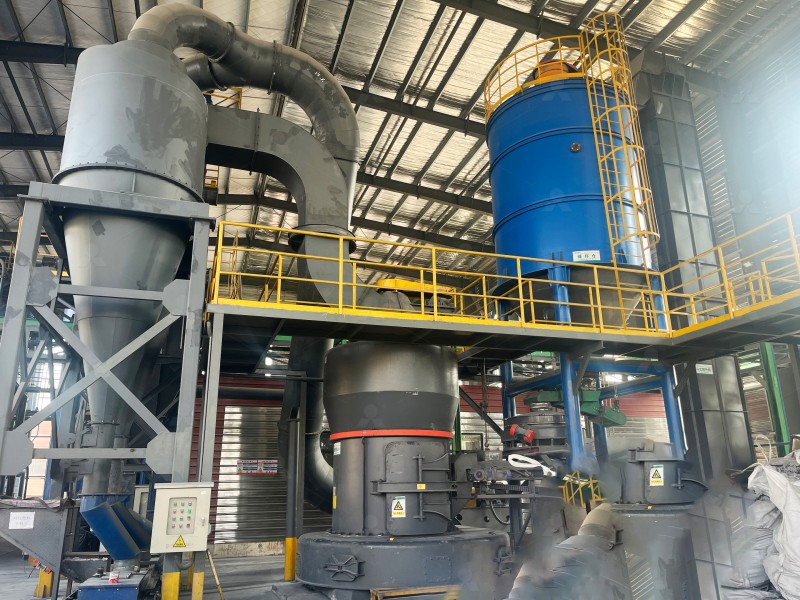
The Engineering Philosophy Behind Medium-Speed Grinding
The core advantage of the HGM mill lies in its operating principle. Operating at a carefully calibrated medium speed, it utilizes multiple grinding rollers rotating against a stationary ring. Material is fed centrally and, under centrifugal force, moves outward through the grinding zone. This creates a sustained, layered grinding action rather than a single high-impact event. For feldspathic sandstone, this translates to a more controlled breakdown of mineral constituents. The shearing and compressive forces effectively liberate feldspar grains from the quartz matrix with reduced over-grinding of softer components, yielding a powder with a more uniform particle size distribution (PSD) and enhanced purity—critical factors for downstream industrial processes.
Key Performance Advantages for Sandstone Processing
When evaluating grinding equipment for abrasive materials like feldspathic sandstone, several factors are paramount:
- Wear Resistance & Maintenance: HGM mills are constructed with wear-resistant alloy grinding rollers and rings. Their design often allows for the reversal or replacement of wearing parts without dismantling the main shaft assembly, significantly reducing downtime for maintenance—a vital consideration given the abrasive nature of sandstone.
- Energy Efficiency: The medium-speed operation and optimized grinding curve design ensure that energy is used primarily for productive grinding rather than overcoming excessive mechanical friction or heat generation. This results in a lower specific energy consumption per ton of product compared to many traditional systems.
- Product Fineness & Adjustability: Integrated dynamic classifiers or separators allow for real-time adjustment of product fineness, typically ranging from 150 to 2500 mesh. Operators can precisely target the PSD required for specific applications, whether it’s a coarse filler or an ultra-fine ceramic glaze component.
- System Integration & Environmental Control: Modern HGM systems are designed as complete closed-circuit loops with integrated feeders, classifiers, and high-efficiency pulse-jet baghouse dust collectors. This ensures a clean operating environment, contains valuable product, and meets stringent environmental regulations.
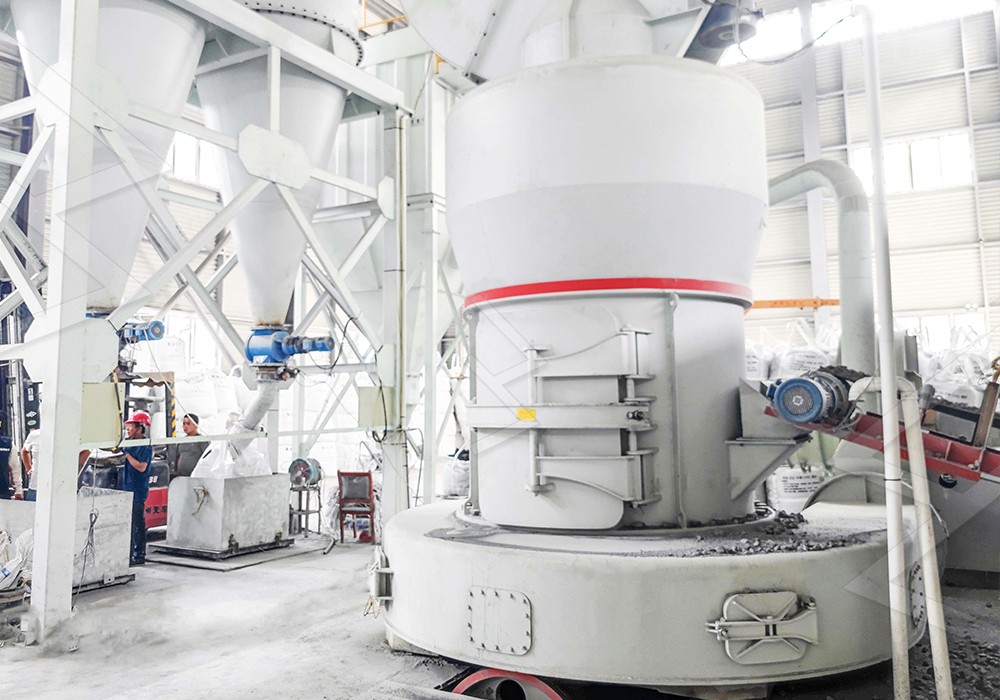
Beyond HGM: Complementary Solutions for Diverse Needs
While the HGM series is an excellent fit for many feldspathic sandstone projects, specific project scopes may require different technological approaches. For operations demanding ultra-fine powders (325-2500 meshes) from pre-crushed sandstone, or for processing other non-metallic minerals alongside sandstone, our MW Ultrafine Grinding Mill presents a compelling alternative. The MW series is engineered for customers dedicated to producing ultra-fine powder. It features a cage-type powder selector with German technology for high-precision separation, allowing adjustable fineness between 325-2500 meshes with a screening rate achieving d97≤5μm. Notably, its grinding chamber contains no rolling bearings or screws, eliminating concerns about bearing seal failure or loose screw damage. This design, coupled with an external lubrication system that allows for maintenance without shutdown, enables continuous 24/7 production—a key advantage for high-volume operations.
Furthermore, for large-scale processing of raw feldspathic sandstone with integrated drying requirements, our LM Vertical Grinding Mill offers unparalleled efficiency. The LM mill integrates crushing, drying, grinding, classifying, and conveying in a single unit. Its compact footprint occupies about 50% of the area of a ball mill system while saving 30%-40% in energy consumption. The material’s short residence time minimizes repeated grinding and reduces iron contamination, effectively guaranteeing the whiteness and purity of the final powder—an essential quality for premium ceramic and glass batches.
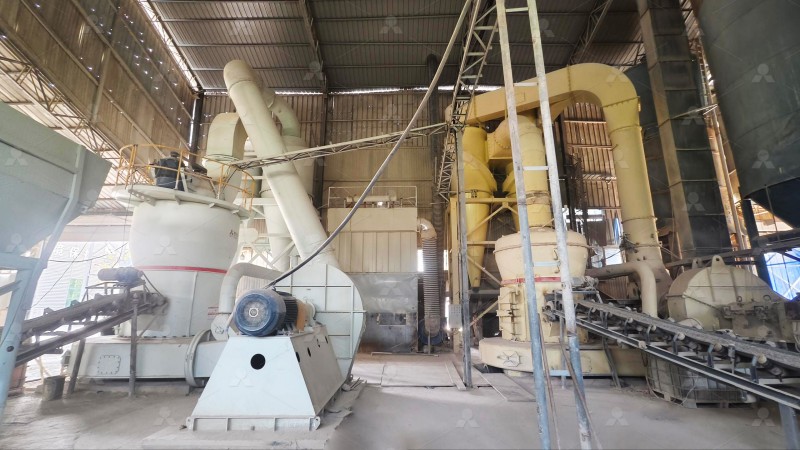
Conclusion: A Strategic Investment in Quality and Efficiency
Selecting the right grinding technology is a strategic decision that impacts product quality, operational cost, and long-term profitability. The HGM Medium Speed Grinding Mill provides a robust, efficient, and controllable solution specifically tailored to the challenges of feldspathic sandstone. By prioritizing controlled grinding force, wear management, and system integration, it delivers consistent, high-quality powder that meets the exacting standards of modern industry. For projects requiring ultra-fine outputs or fully integrated processing, complementary technologies like the MW Ultrafine Mill and LM Vertical Mill extend our capability to provide a perfect match for every processing need, ensuring optimal performance from quarry to final product.
Frequently Asked Questions (FAQ)
1. What is the typical input size and capacity range for an HGM mill processing feldspathic sandstone?
The HGM mill typically accepts feed material crushed to below 20mm. Capacity varies based on model configuration and desired product fineness, generally ranging from 1 to 25 tonnes per hour for standard units. A detailed assessment of your raw material characteristics and production goals is recommended for precise sizing.
2. How does the HGM mill manage the abrasive nature of feldspathic sandstone to reduce maintenance?
The mill employs several strategies: the use of high-chromium or other wear-resistant alloys for grinding rollers and rings; a design that allows worn roller surfaces to be reversed or replaced relatively easily; and an optimized grinding curve that promotes material-on-material grinding to cushion direct wear on metal parts. These features collectively extend service life and simplify maintenance.
3. Can the HGM system achieve both very fine (e.g., 1250 mesh) and coarser (e.g., 200 mesh) products from the same material?
Yes. A key feature of the HGM system is its integrated dynamic classifier. By adjusting the classifier’s rotor speed, the cut point for particle separation can be accurately controlled, allowing the same mill to produce a wide spectrum of product fineness from a single feed material, often without requiring mechanical changes.
4. What auxiliary equipment is typically required with an HGM mill for a complete processing line?
A complete circuit usually includes a jaw crusher for primary size reduction, a bucket elevator or conveyor, a storage hopper with vibrating feeder, the HGM mill itself, a turbo classifier, a cyclone collector, a pulse-jet baghouse dust collector, a screw conveyor for final product, and an electrical control cabinet. The system is designed as a negative-pressure, closed-loop to ensure dust-free operation.
5. How does the energy consumption of an HGM mill compare to a traditional ball mill for similar output?
The HGM medium-speed grinding mill is significantly more energy-efficient. Due to its direct grinding mechanism and efficient classifier, it can reduce specific energy consumption by approximately 30% to 50% compared to a ball mill producing powder of equivalent fineness, leading to substantial operational cost savings.
6. Is the system automated, and what level of operational oversight is required?
Modern HGM milling systems are equipped with PLC-based automatic control systems. They can monitor and regulate feeding rate, grinding pressure, classifier speed, and temperature. While the system can run continuously with minimal manual intervention, routine checks for mechanical condition, lubrication, and system pressures are part of standard operational practice.