
Raymond Mill Specifications and Technical Parameters: A Comprehensive Guide
We provide a wide range of mills — including Raymond mill, trapezoidal mill, vertical mill, ultrafine mill, and ball mill, obtained ISO9001 international quality certification, EU CE certification, and Customs Union CU-TR certification. Suitable for processing minerals such as limestone, phosphate, quicklime, kaolin, talc, barite, bentonite, calcium carbonate, dolomite, coal, gypsum, clay, carbon black, slag, cement raw materials, cement clinker, and more.
The discharge range of these mills can be adjusted to meet specific processing needs, typically from 80-400 mesh, 600-3250 mesh, and can achieve the finest particle size of up to 6000 mesh(D50).
If you are looking for a reliable grinding solution to turn stone or minerals into fine powder, please feel free to contact our online customer service.
Raymond Mill Specifications and Technical Parameters
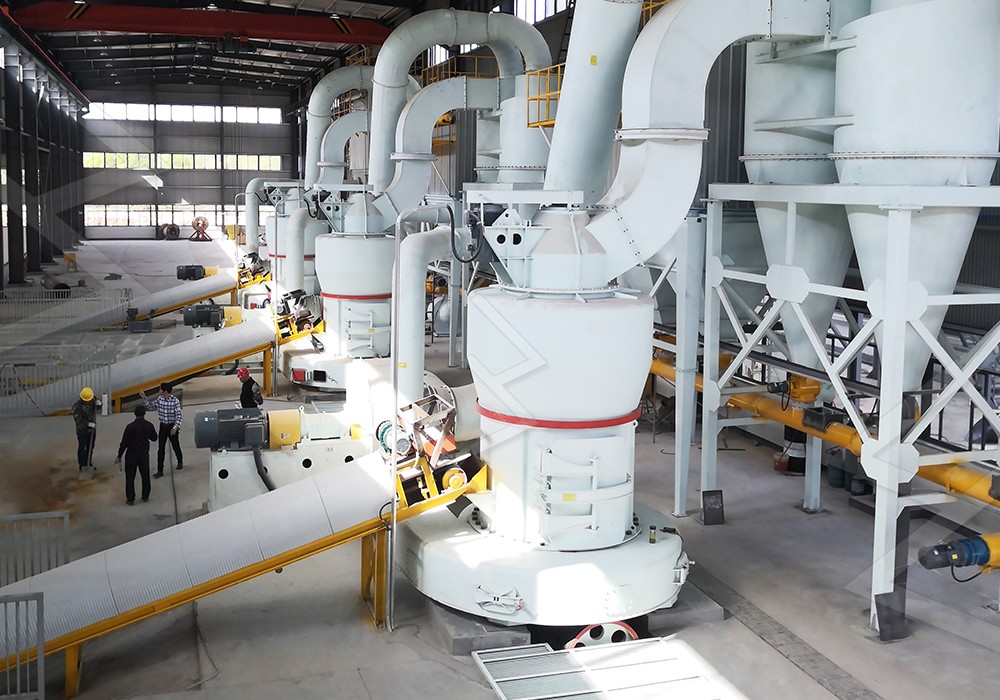
For over a century, the Raymond mill has stood as a cornerstone in the world of fine powder processing. Its enduring design, characterized by a central shaft with grinding rollers that swing outward under centrifugal force to press against a stationary grinding ring, has proven remarkably effective for a vast range of materials. However, the term “Raymond mill” has evolved into a broad category encompassing various pendulum roller mill designs, each with its own set of specifications and technical parameters critical for selecting the right equipment for your operation.
Core Specifications: Understanding the Basics
When evaluating any Raymond-type mill, several fundamental specifications form the basis of comparison. The input size, typically ranging from less than 25mm to 70mm depending on the model, dictates the required pre-crushing stage. The capacity, expressed in tons per hour (tph), varies dramatically from small-scale laboratory units at 0.6 tph to large industrial systems exceeding 50 tph. This is directly tied to the mill’s power, physical dimensions, and design efficiency.
Another pivotal parameter is the fineness range. Traditional Raymond mills often achieve a grind between 80 and 325 meshes. However, modern iterations and specialized models have vastly expanded this range. For instance, advanced mills equipped with high-precision, multi-head cage-type powder selectors can now produce powders from 325 mesh all the way to an ultra-fine 2500 mesh, catering to high-value industries like cosmetics, pharmaceuticals, and advanced composites.
Key Technical Parameters and Performance Drivers
Beyond basic specs, deeper technical parameters determine operational efficiency and cost. Grinding pressure, often adjustable via spring or hydraulic systems, influences throughput and final particle size distribution. The design of the grinding roller and ring—their curvature, material (e.g., high manganese steel or wear-resistant alloy), and size—is paramount for grinding efficiency and service life. Modern designs feature optimized curves to create a better material bed and enhance grinding action.
The classifier or powder separator is arguably the brain of the system. Its speed and design control the cut point for particle size. Technologies like German-derived cage-type separators or PLC-controlled multi-head systems allow for precise, adjustable fineness without stopping the mill. Furthermore, system energy consumption is a major differentiator. Innovative designs in air duct geometry, grinding mechanics, and drive systems can reduce power consumption by 30% to 50% compared to older mill designs or ball mills of equivalent output.
Modern Advancements: Beyond Traditional Design
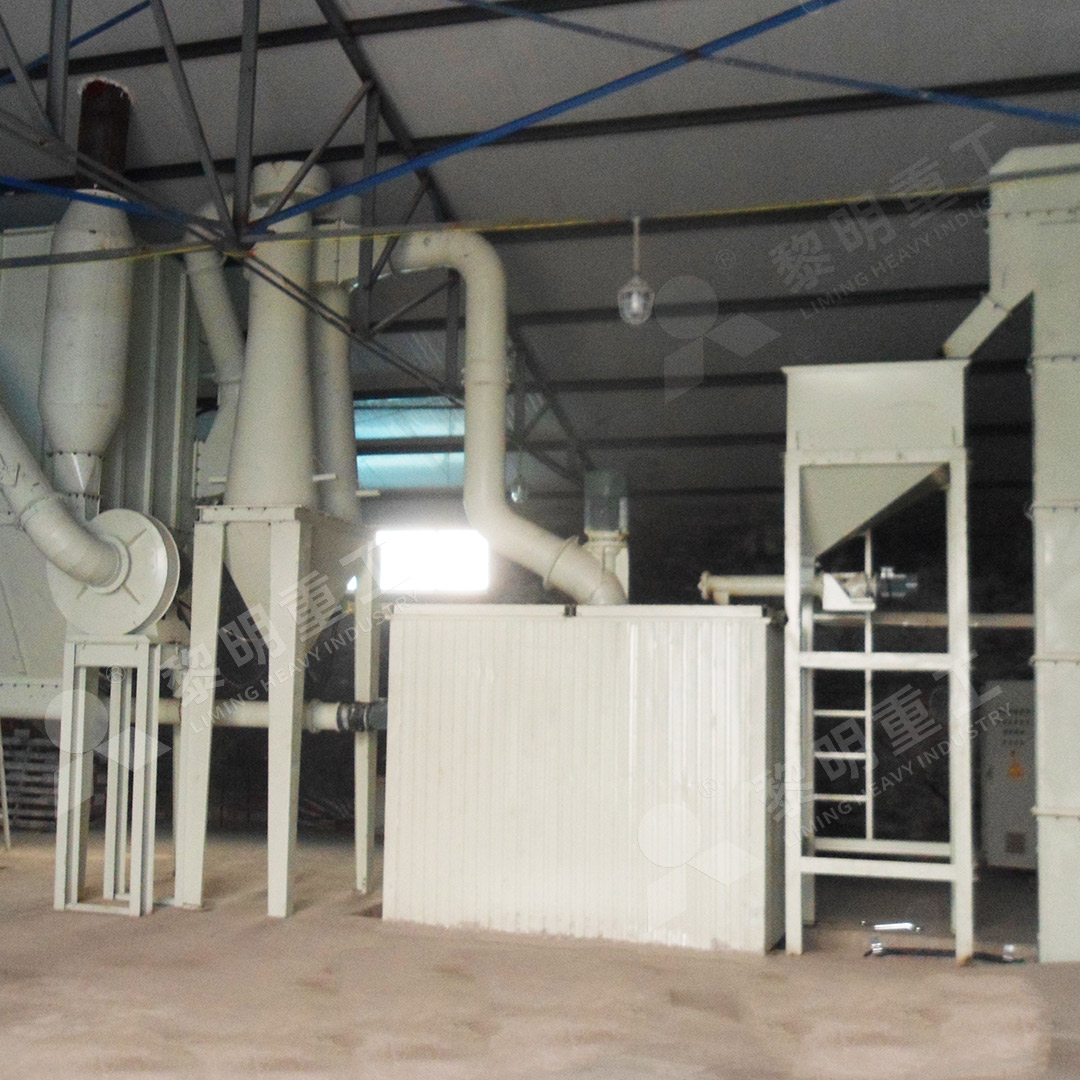
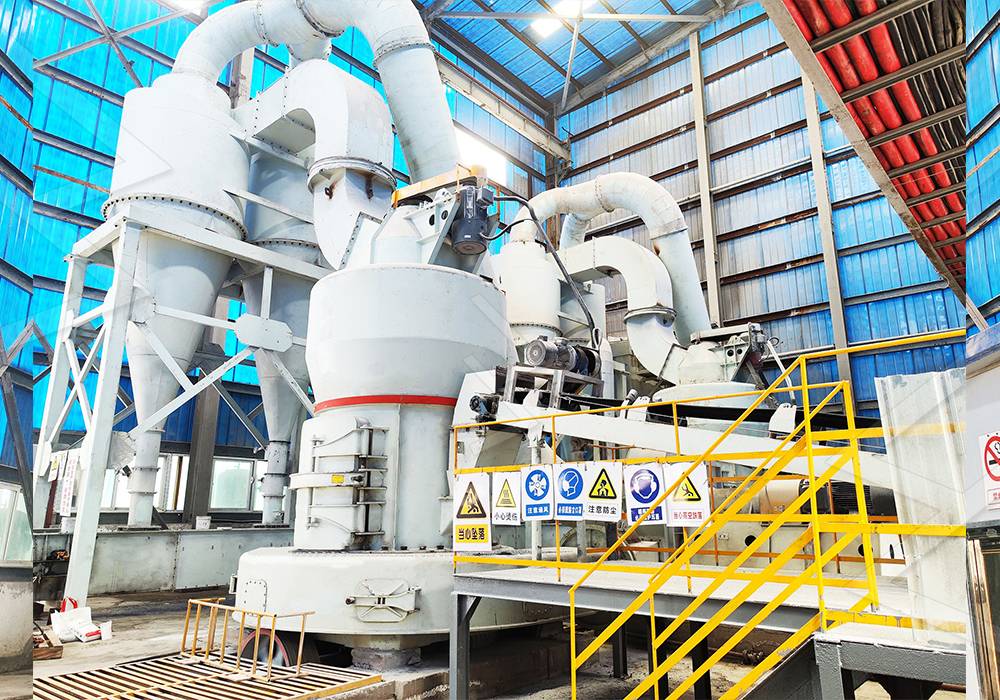
The legacy Raymond mill design has been refined to address historical limitations. A significant advancement is the integration of comprehensive environmental controls. Modern systems are equipped with high-efficiency pulse jet baghouse dust collectors and multi-stage silencers, ensuring the entire milling process operates under negative pressure with minimal dust emission and noise pollution, fully complying with stringent international environmental standards.
Maintenance and reliability have also seen major improvements. Some next-generation models have eliminated rolling bearings and screws from the high-wear grinding chamber entirely, preventing catastrophic failures from bearing seizure or loose components. External lubrication systems allow for servicing without shutdown. Additionally, features like fully reversible grinding rollers and hydraulic-assisted roller withdrawal systems drastically reduce downtime for wear part inspection and replacement.
Selecting the Right Mill for Your Application
The choice of mill hinges on your material and product goals. For standard mineral grinding (limestone, calcite, barite) to 325 mesh, a robust MTW European Trapezium Mill offers excellent balance of capacity and energy efficiency. However, for producers targeting the ultra-fine powder market, a specialized mill is non-negotiable.
For these demanding applications, we highly recommend our MW Ultrafine Grinding Mill. This machine is engineered specifically for customers requiring ultra-fine powders between 325 and 2500 meshes. It incorporates a high-precision, German-technology cage-type powder selector for accurate particle classification. Its design yields 40% higher capacity than jet or stirred mills at the same power, while system energy consumption is drastically lower. Notably, its grinding chamber contains no rolling bearings or screws, eliminating associated failure risks and enabling worry-free, continuous 24/7 operation for materials like limestone, talc, and advanced industrial fillers.
For operations that also require integrated drying of moist materials or exceptionally stable, large-scale production, the LUM Ultrafine Vertical Grinding Mill presents a superior alternative. Integrating grinding, drying, and classifying in a single tower, it features unique roller shell geometry for higher yield and better product whiteness. Its double position-limiting technology guarantees operational stability, and its reversible structure makes maintenance remarkably straightforward. It is ideal for producing superfine dry powder from non-metallic ores.
Conclusion
Understanding the detailed specifications and technical parameters of Raymond mills is essential for making a capital investment that delivers long-term profitability and product quality. From feed size and capacity to fineness control, energy efficiency, and environmental compliance, each factor interplays to define the mill’s suitability. By focusing on modern designs that prioritize precision, lower operating costs, and operational reliability—such as our MW and LUM series mills—businesses can secure a decisive advantage in the competitive powder processing industry.
Frequently Asked Questions (FAQ)
1. What is the main difference between a traditional Raymond mill and your MW Ultrafine Grinding Mill?
The core difference lies in fineness capability and internal design. While traditional Raymond mills typically max out around 325 mesh, the MW Mill is specifically engineered for ultra-fine grinding up to 2500 mesh. It achieves this through a high-precision cage-type powder selector and optimized grinding curve. Crucially, the MW Mill’s grinding chamber eliminates rolling bearings and screws, a design that dramatically improves reliability for continuous ultra-fine production.
2. Can your mills handle moist materials, or is pre-drying required?
It depends on the mill model. Standard Raymond or MTW mills often require feed materials with low moisture content. However, our vertical mill designs, like the LUM Ultrafine Vertical Grinding Mill and LM Vertical Coal Mill, integrate hot air intake systems that allow them to simultaneously dry and grind materials with moderate moisture, eliminating the need for a separate, energy-intensive drying step.
3. How is the final product fineness adjusted during operation?
In our advanced mills (MW, LUM, MTW-Z), fineness is primarily adjusted by changing the rotational speed of the powder separator/classifier via the PLC control system. Increasing the speed typically yields a finer product. Additionally, in vertical mills, the grinding pressure applied by the hydraulic system can be adjusted to influence particle size distribution. This allows for quick and precise changes without stopping production.
4. What are the key factors affecting the wear life of grinding rollers and rings?
Key factors include: the abrasiveness of the processed material; the hardness and wear resistance of the roller/ring alloy (our mills use proprietary wear-resistant alloys); the grinding pressure applied; and the uniformity of material feed. Our designs feature optimized grinding curves to ensure even wear, and reversible roller shells to double the service life before replacement is needed.
5. How do you ensure the mill system is environmentally friendly?
Our modern mill systems are designed as closed-circuit, negative-pressure systems. They are equipped with high-efficiency pulse jet baghouse dust collectors that capture over 99.9% of process dust. Furthermore, silencers and sound insulation enclosures are fitted to reduce noise emissions. The entire system is engineered to meet or exceed national and international environmental protection standards for dust and noise.
6. What kind of after-sales support and spare parts availability can we expect?
As a manufacturer covering both production and sales, we take full responsibility for every machine. We guarantee a sufficient supply of original spare parts, including wear-resistant rollers, rings, and classifier blades. Our global service network provides technical support, installation guidance, and maintenance training to ensure your worry-free operation and maximize equipment uptime.