
Medium Speed Grinding Machinery for Soil and Rock Processing
We provide a wide range of mills — including Raymond mill, trapezoidal mill, vertical mill, ultrafine mill, and ball mill, obtained ISO9001 international quality certification, EU CE certification, and Customs Union CU-TR certification. Suitable for processing minerals such as limestone, phosphate, quicklime, kaolin, talc, barite, bentonite, calcium carbonate, dolomite, coal, gypsum, clay, carbon black, slag, cement raw materials, cement clinker, and more.
The discharge range of these mills can be adjusted to meet specific processing needs, typically from 80-400 mesh, 600-3250 mesh, and can achieve the finest particle size of up to 6000 mesh(D50).
If you are looking for a reliable grinding solution to turn stone or minerals into fine powder, please feel free to contact our online customer service.
Medium Speed Grinding Machinery for Soil and Rock Processing
In the demanding fields of construction, mining, and mineral processing, the efficient reduction of soil and rock into fine powders is a cornerstone of productivity. The choice of grinding machinery directly impacts operational costs, product quality, and environmental compliance. Medium-speed grinding mills occupy a critical niche, offering an optimal balance between the high energy intensity of high-speed systems and the sometimes limited fineness range of slower, traditional methods. These mills are engineered to handle a diverse range of materials—from limestone and calcite to barite, coal, and various industrial slags—transforming them into consistent, market-ready powders.
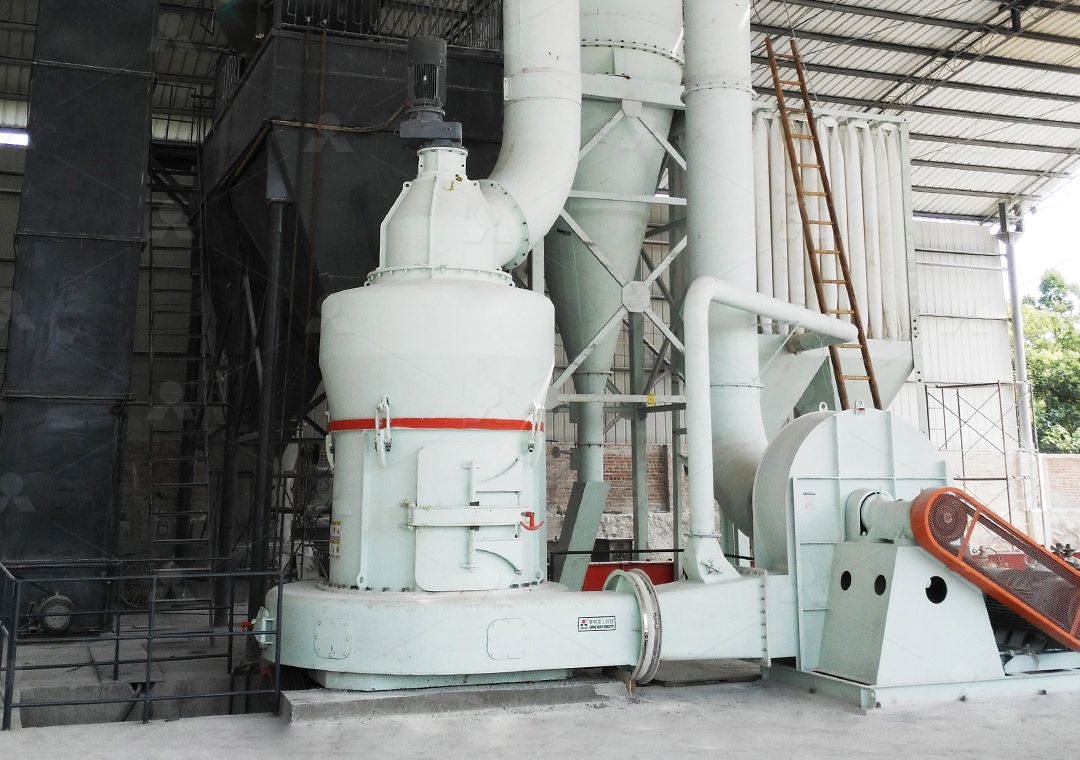
The core advantage of modern medium-speed technology lies in its integrated design philosophy. Contemporary systems seamlessly combine crushing, drying, grinding, classification, and conveying into a single, compact unit. This integration drastically reduces the plant’s footprint—often by up to 50% compared to traditional ball mill circuits—and minimizes points of potential dust emission. Furthermore, the grinding mechanism itself has evolved. By utilizing large-diameter grinding rollers that apply pressure to a bed of material on a rotating table or raceway, these mills achieve size reduction through a combination of compression and inter-particle attrition. This method is inherently more energy-efficient than the impact-dominated action of many high-speed mills, leading to significant power savings, frequently cited between 30% and 50%.
Key Considerations in Mill Selection
Selecting the right medium-speed grinder requires a careful analysis of several interdependent factors. The feed size and hardness of the raw material dictate the necessary robustness of the grinding elements. Required production capacity (typically measured in tons per hour) and the target product fineness (often specified in mesh or micrometers) are primary drivers. Beyond these, operational stability, ease of maintenance, and environmental controls are no longer luxuries but necessities for sustainable operation.
A critical trend is the move towards ultra-fine processing. Industries such as paints, coatings, advanced ceramics, and high-performance plastics demand powders with extremely tight particle size distributions, often down to a few microns. Meeting this demand requires not just powerful grinding but also highly precise classification technology integrated within the mill system.
Technological Advancements Driving Performance
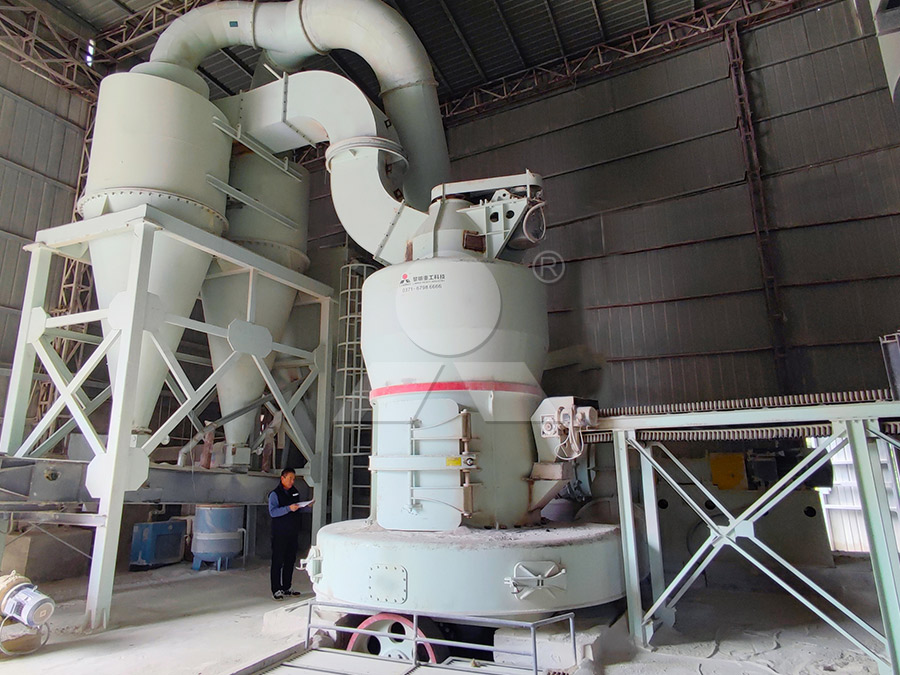
Today’s leading medium-speed mills incorporate proprietary technologies that address historical pain points. Advanced powder separators, often multi-head cage-type designs, allow for real-time, precise control over product fineness without stopping production. Innovations in grinding curve design for rollers and liners enhance material bed formation and grinding efficiency, directly boosting yield. Maintenance has been simplified through features like external lubrication systems, reversible roller assemblies that can be swung out of the mill body, and the elimination of internal screws and rolling bearings in the grinding chamber, which are common failure points.
Environmental and operational safety is engineered into the system. Efficient pulse-jet dust collectors ensure the entire milling circuit operates under negative pressure, preventing dust spillage. Integrated silencers and sound-dampening rooms bring noise levels well within regulatory limits. From a control perspective, full digital automation via PLC systems enables precise regulation of grinding pressure, roller speed, feed rate, and temperature, ensuring consistent product quality and allowing for remote monitoring and operation.
Spotlight on Advanced Solutions: The MW Series
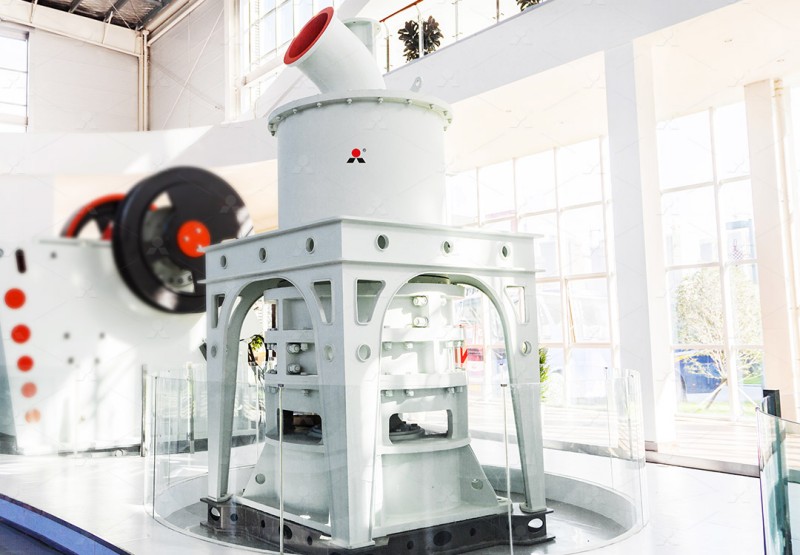
For operations prioritizing ultra-fine powder production with exceptional environmental and operational efficiency, the MW Ultrafine Grinding Mill represents a significant leap forward. This machine is specifically engineered for customers requiring precise powders in the range of 325 to 2500 meshes. Its design incorporates a German-technology cage-type powder selector, which dramatically increases classification precision, enabling a single-pass screening rate that can achieve d97≤5μm.
The MW Mill addresses core reliability concerns with a groundbreaking design: there are no rolling bearings or screws in the grinding chamber. This eliminates the primary causes of bearing seizure and machine damage from loose components, offering unparalleled operational peace of mind. Furthermore, its lubrication points are externally accessible, allowing for maintenance without shutdowns. Paired with its efficient pulse dust collector and muffler, the MW Ultrafine Grinding Mill delivers higher yields with lower energy consumption while fully complying with national environmental protection standards, making it an ideal choice for processing materials like limestone, calcite, dolomite, and talc into high-value additives.
Conclusion
The evolution of medium-speed grinding machinery is characterized by a relentless pursuit of efficiency, reliability, and cleanliness. By integrating multiple processes, leveraging intelligent control systems, and incorporating wear-resistant materials and maintenance-friendly designs, these mills have become the backbone of modern soil and rock processing. Whether the goal is high-volume production of construction materials or the precise creation of ultra-fine powders for specialty chemicals, selecting a mill with proven technology and robust support is crucial for long-term profitability and compliance in an increasingly regulated industry.
Frequently Asked Questions (FAQs)
- What is the primary advantage of a medium-speed grinding mill over a traditional ball mill?
Medium-speed mills, particularly vertical roller mills, offer significantly higher energy efficiency (saving 30-50% on power), a smaller physical footprint, integrated drying and classification, and faster product quality adjustment due to shorter material retention time. - Can these mills handle abrasive materials like certain slags or quartzite?
Yes, but it is crucial. High-performance models are equipped with wear-resistant alloys for grinding rollers and tables. For highly abrasive feeds, discuss specific material properties with the manufacturer to ensure the selection of appropriate wear protection and consider the operational cost of replacement parts. - How is product fineness controlled during operation?
Fineness is primarily controlled by the integrated dynamic classifier (or separator). By adjusting the speed of the classifier rotor, the cut point for particle size is changed. Higher rotor speeds allow only finer particles to pass, resulting in a finer product. - What kind of environmental protection features are standard?
Modern mills are designed as negative-pressure systems. They are equipped with high-efficiency pulse-jet baghouse dust collectors to capture over 99.9% of particulates, and silencers are used on air inlets and outlets to reduce noise pollution to acceptable levels. - How long does it take to perform routine maintenance on the grinding rollers?
Maintenance time varies by design. Advanced mills feature hydraulic systems that allow grinding rollers to be turned out of the mill body independently and safely, reducing roller inspection or liner replacement downtime to a matter of hours, rather than days. - What is the typical feed size for a medium-speed mill?
Feed size depends on the specific mill model. It can range from coarse feeds of 50-70mm for larger vertical mills (like the LM series) down to 10-20mm for ultra-fine mills (like the MW or LUM series), often requiring preliminary crushing. - Are these systems suitable for fully automated, unmanned operation?
Yes. With comprehensive PLC control systems, these mills can be fully automated, including start-up, shutdown, and continuous adjustment based on process parameters. They can be integrated into central control rooms for remote operation and monitoring.